
Audi brake pads wear differently depending on where and how you drive. West Sussex puts particular demands on braking systems, from salt-laden coastal air around Worthing and Shoreham to steep descents off the South Downs and stop-start queues on the A27. Understanding how these local conditions affect your Audi's brakes helps you spot problems early and avoid expensive repairs.
How Long Do Audi Brake Pads Last in West Sussex?
Audi brake pads generally last between 30,000 and 60,000 miles. West Sussex drivers tend to sit closer to the 30,000-mile mark because local driving conditions create more braking demand than long motorway runs.
Front pads wear faster than rears on every Audi model. The front brakes handle roughly 70% of stopping force, so they need replacing more often. On a typical Audi A3 or A4 used for commuting between Worthing and Brighton, front pads might last 25,000-35,000 miles while rears stretch to 40,000-50,000 miles.
Heavier models wear pads quicker. An Audi Q5 or Q7 carrying extra weight through Findon Village or up Clapham Hill puts significantly more load through the braking system than a lighter A1. The legal minimum pad thickness in the UK is 1.5mm, but most manufacturers (including Audi) recommend replacement at 3mm to maintain full braking performance.
Brake discs last longer, typically 30,000-70,000 miles, though they should always be measured when pads are changed. Discs and pads work as a pair. Fitting new pads onto worn discs reduces braking efficiency and shortens the life of both components.
What Makes West Sussex Driving Hard on Audi Brakes?
Coastal salt air, hilly terrain and heavy A-road traffic combine to wear Audi brakes faster in West Sussex than in many other parts of the UK. Urban drivers replace brake components up to 40% more frequently than those covering mostly motorway miles.
Coastal corrosion is the biggest hidden factor. Salt carried in sea air settles on brake discs, calipers and slide pins. This causes surface rust on discs (visible as an orange film after a few days parked near the coast) and can seize caliper slide pins over time. Seized pins cause uneven pad wear, where one pad wears down while the other barely touches the disc. Worthing, Lancing and Shoreham-by-Sea are all within the coastal corrosion zone.
South Downs descents demand sustained braking. Dropping down from the Downs into Worthing via the A24, or descending Bury Hill on the A29, generates heat in the braking system. Repeated heavy braking on steep roads raises disc temperatures, which accelerates pad wear and can cause disc warping on vehicles with undersized or worn components.
A27 congestion between Worthing and Brighton creates constant stop-start braking cycles. This type of driving is the hardest on brake pads because it never allows the system to cool properly between applications. Morning and evening commuters on this stretch should expect pad wear at the faster end of the scale.
Rural lanes around Storrington, Steyning and the Arun Valley require frequent speed changes for sharp bends, blind corners and agricultural traffic. These short, sharp braking events add up over thousands of miles.
What Does the Audi Brake Wear Sensor Warning Mean?
Audi's electronic brake wear sensor triggers a dashboard warning when pad thickness drops below a set threshold. The amber warning light typically activates with 15-25% of pad life remaining, giving you enough time to book an inspection.
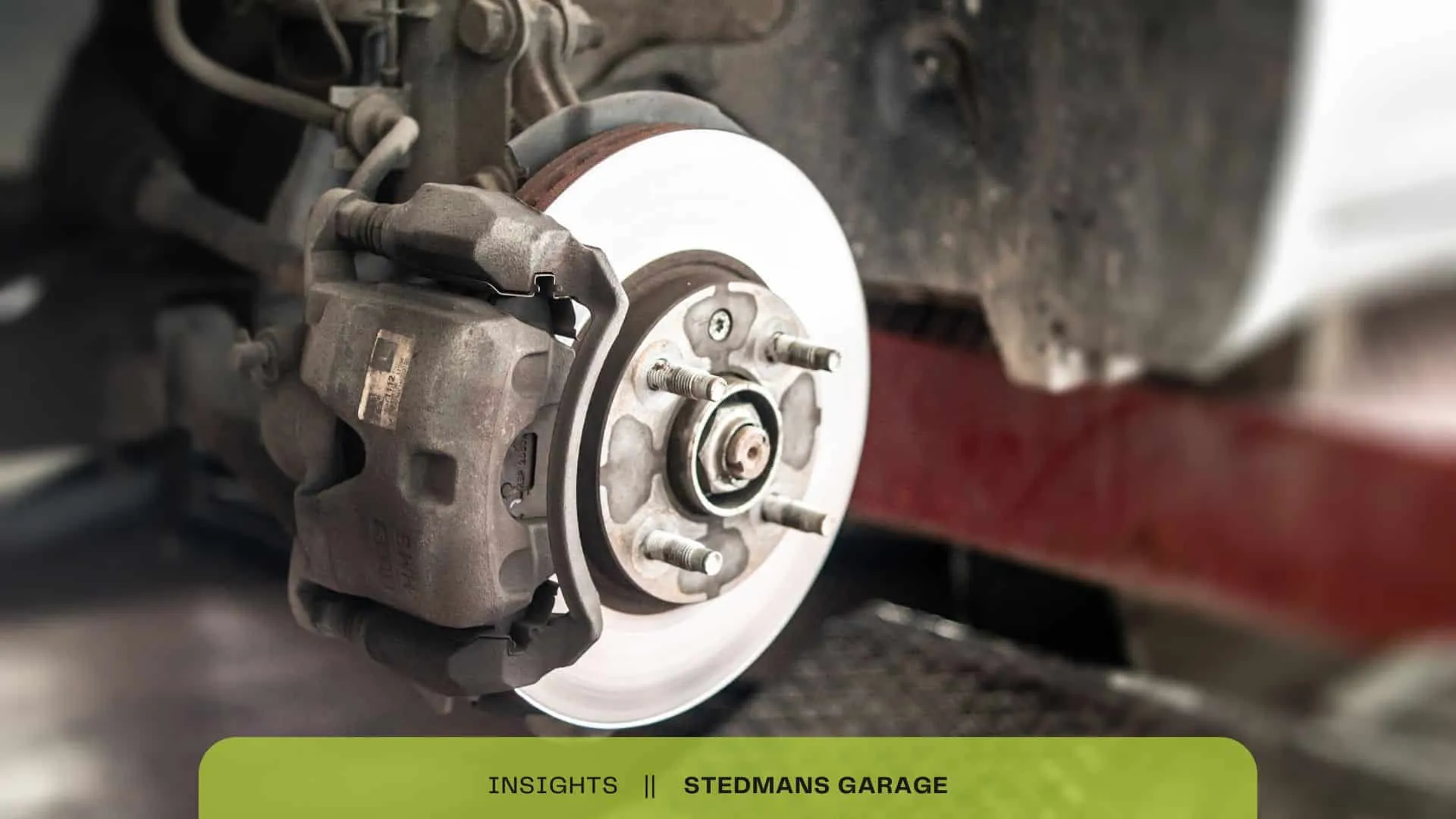
The sensor is a small wire loop embedded in the brake pad. As the pad material wears down, the wire contacts the brake disc and breaks the circuit. This sends a signal to the dashboard. It is a one-time sensor, so it needs replacing along with the pads each time.
When the light appears, you can still drive safely for a short period. Most drivers have between one and two weeks of normal driving before the pads reach their minimum safe thickness. That said, continuing to drive on worn pads risks metal-on-metal contact, which damages brake discs and turns a pad replacement into a much more expensive disc and pad job.
What to do when the light comes on:
- Book an inspection within the next few days. Do not ignore the warning.
- Reduce heavy braking where possible until the pads are replaced.
- Avoid long downhill stretches like the A24 descent into Worthing if you can take an alternative route.
- Tell your mechanic the warning appeared so they can check sensor wiring and caliper condition at the same time.
If the warning light stays on after a pad replacement, the new sensor may not be seated correctly in the caliper slot, or the wiring harness could have damage from corrosion (common on coastal vehicles).
How Much Does Audi Brake Pad Replacement Cost at an Independent Garage?
Audi brake pad replacement at an independent specialist typically costs £280-£580 per axle, around 30% less than a main dealer. Forum reports from Audi owners consistently show independent garages quoting £350-£400 for work that dealers price at £500-£550.
Here is what to expect for common Audi models at an independent garage:
| Component | Per Axle Cost (Independent) | Per Axle Cost (Dealer) |
|---|---|---|
| Brake pads only | £150-£250 | £200-£350 |
| Pads and discs together | £350-£650 | £500-£850 |
| Brake fluid change | £60-£90 | £80-£120 |
These prices include parts and labour. Labour rates at independent garages in West Sussex typically run £50-£90 per hour, and a pad replacement takes 45-90 minutes per axle.
OEM-equivalent parts from brands like Brembo, ATE and TRW match Audi's original specifications without the dealer markup. A good independent specialist will use parts that meet or exceed the original equipment standard.
At Stedmans, we fit quality parts to manufacturer specifications and have been working on Audi and other VAG group vehicles for decades. As a long-established Audi specialist garage in Worthing, we can inspect your brakes and give you an honest assessment of remaining pad and disc life.
How Can You Reduce Brake Wear on Your Audi in West Sussex?
Engine braking on South Downs descents, keeping safe following distances on the A27, and washing salt from your wheels and arches every two weeks during winter all extend brake life noticeably.
Use engine braking on hills. Dropping down a gear before descending Bury Hill or the A24 lets the engine slow the car without relying entirely on the brakes. This keeps disc temperatures lower and reduces pad wear. Audi models with automatic gearboxes allow manual gear selection through the gear lever or steering wheel paddles.
Increase following distances in traffic. Tailgating on the A27 forces constant braking and acceleration. Leaving a three-second gap smooths out your braking, reduces pad wear and cuts fuel consumption at the same time.
Wash salt buildup regularly. During winter months (October to March), coastal salt and road grit accumulate on brake components. A fortnightly wash that includes the wheel arches and underside prevents corrosion from seizing calipers and corroding disc surfaces. Pay particular attention after storms or periods of heavy gritting.
Keep brake fluid fresh. Brake fluid absorbs moisture over time, which lowers its boiling point and reduces braking performance. Audi recommends a brake fluid change every two years. In coastal areas, this interval matters more because moisture levels in the air are higher.
Book regular inspections. A visual brake check during each service catches wear early. Replacing pads at 3-4mm costs far less than waiting until they damage the discs. Read our full car brake repair guide for more detail on how braking systems work and what to look for between services. If the pads or discs are worn, our garage handles brake pad and disc replacement in Worthing.
Frequently Asked Questions
How often should Audi brakes be inspected?
Audi brakes should be inspected at every service interval, typically every 12 months or 10,000 miles. If you drive mainly in urban West Sussex (Worthing, Brighton, Littlehampton) with frequent stop-start traffic, a six-monthly visual check is sensible. Your mechanic will measure pad thickness and check disc condition, caliper movement and fluid level.
Do front or rear Audi brake pads wear out first?
Front brake pads almost always wear out first on Audi vehicles. The front brakes handle roughly 70% of stopping force because weight transfers forward during braking. On a typical Audi A3, front pads might need replacing at 30,000 miles while rears last to 45,000 miles. Quattro models with all-wheel drive can show slightly more even wear across both axles.
Can I drive with the Audi brake pad warning light on?
You can drive short distances with the brake pad warning light illuminated, but you should book an inspection within a few days. The sensor triggers with roughly 15-25% pad life remaining. Continuing to drive beyond this risks metal-on-metal contact between the pad backing plate and disc, which damages the disc surface and increases repair costs.
Does coastal driving in West Sussex damage Audi brakes?
Coastal driving accelerates brake wear through salt corrosion rather than friction. Salt air and road spray cause surface rust on discs, corrode caliper slide pins and can deteriorate brake lines over time. Vehicles regularly parked or driven near Worthing seafront, Shoreham Beach or Littlehampton harbour are most exposed. Regular washing and annual brake inspections reduce the risk of corrosion-related failures.
Stedmans Garage has been looking after vehicles in Worthing since 1923. If your Audi's brakes need attention, book a brake inspection online or call us to arrange an appointment.