
Introduction
Whether you are navigating the winding country lanes of the South Downs or commuting along the A27, your vehicle's braking system is your most critical safety feature. Yet, while most drivers in Sussex know to check their brake pads, brake fluid changes are frequently overlooked.
Brake fluid plays a pivotal role in your car's operation, ensuring that when you press the brake pedal, your vehicle responds with the exact stopping power needed to bring you to a safe halt.
The Importance of Brake Fluid
What is Brake Fluid?
Brake fluid is a specially formulated hydraulic fluid used within your car's braking system. Its primary job is to transfer the mechanical force from your foot on the brake pedal directly to the braking mechanisms (calipers and wheel cylinders) at each wheel.
Key Functions of Brake Fluid
- Transferring Force: Because liquids cannot be compressed, brake fluid instantly transmits pressure to the brake pads, clamping them against the brake discs to slow the car down.
- Lubrication: It acts as a lubricant for the moving parts within the hydraulic system, preventing premature wear and tear.
- Corrosion Protection: High-quality brake fluid contains anti-corrosion additives that protect the internal metal components of your braking system, extending their lifespan and saving you money on costly repairs.
The Impact on Safety
Brake fluid is hygroscopic, meaning it naturally absorbs moisture from the atmosphere over time. If too much water mixes with the fluid, its boiling point drops significantly. Under heavy braking, this moisture can boil and turn into vapour (vapour lock). Because gas is compressible, your brake pedal will feel spongy, and your car's stopping distance will drastically increase.
Signs It’s Time for a Brake Fluid Change
Being aware of the warning signs can prevent a minor maintenance issue from becoming a major safety hazard. Look out for:
- A Spongy Brake Pedal: If your brake pedal feels soft, spongy, or travels closer to the floor than usual, your fluid has likely absorbed too much moisture or there is air in the system.
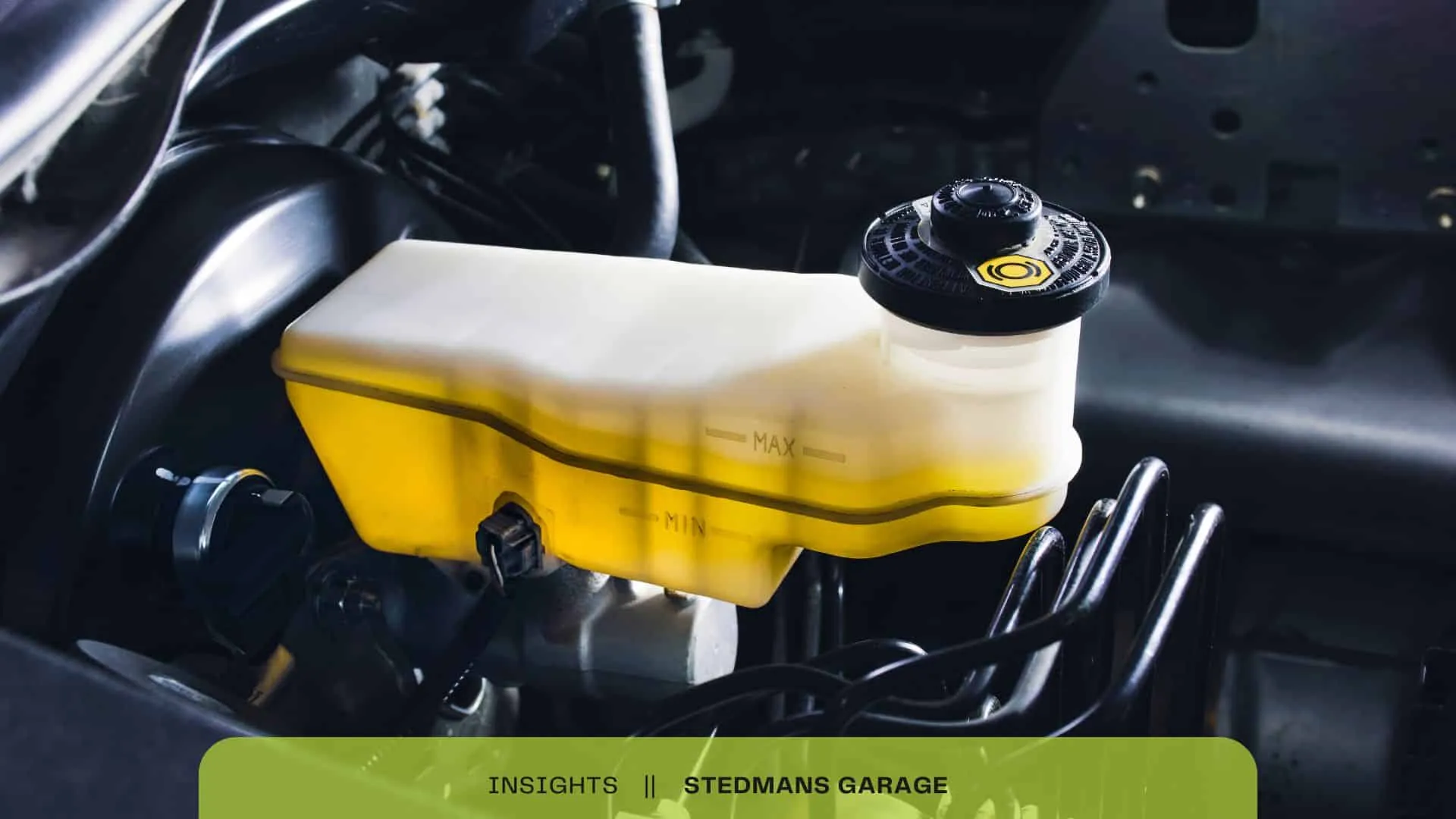
- Discoloured Fluid: Fresh brake fluid is clear with a slight golden tint. If you check your reservoir and the fluid looks dark, brown, or murky, it is contaminated and needs replacing.
- Decreased Braking Efficiency: If your car takes longer to stop than it used to, degrading brake fluid is a common culprit.
- Dashboard Warning Lights: Modern vehicles will often illuminate an ABS or brake warning light on the dashboard if hydraulic pressure is compromised.
Note: A spongy brake pedal is a common reason for MOT failures in the UK. Keeping your fluid fresh ensures your car remains road legal.
Types of Brake Fluid: Which is Right for Your Car?
Using the correct brake fluid is essential. The most common types are categorised under the US Department of Transportation (DOT) standard, which UK manufacturers also specify:
- DOT 3: A standard glycol-based fluid used in many older, everyday vehicles. It has a lower boiling point and absorbs moisture relatively quickly.
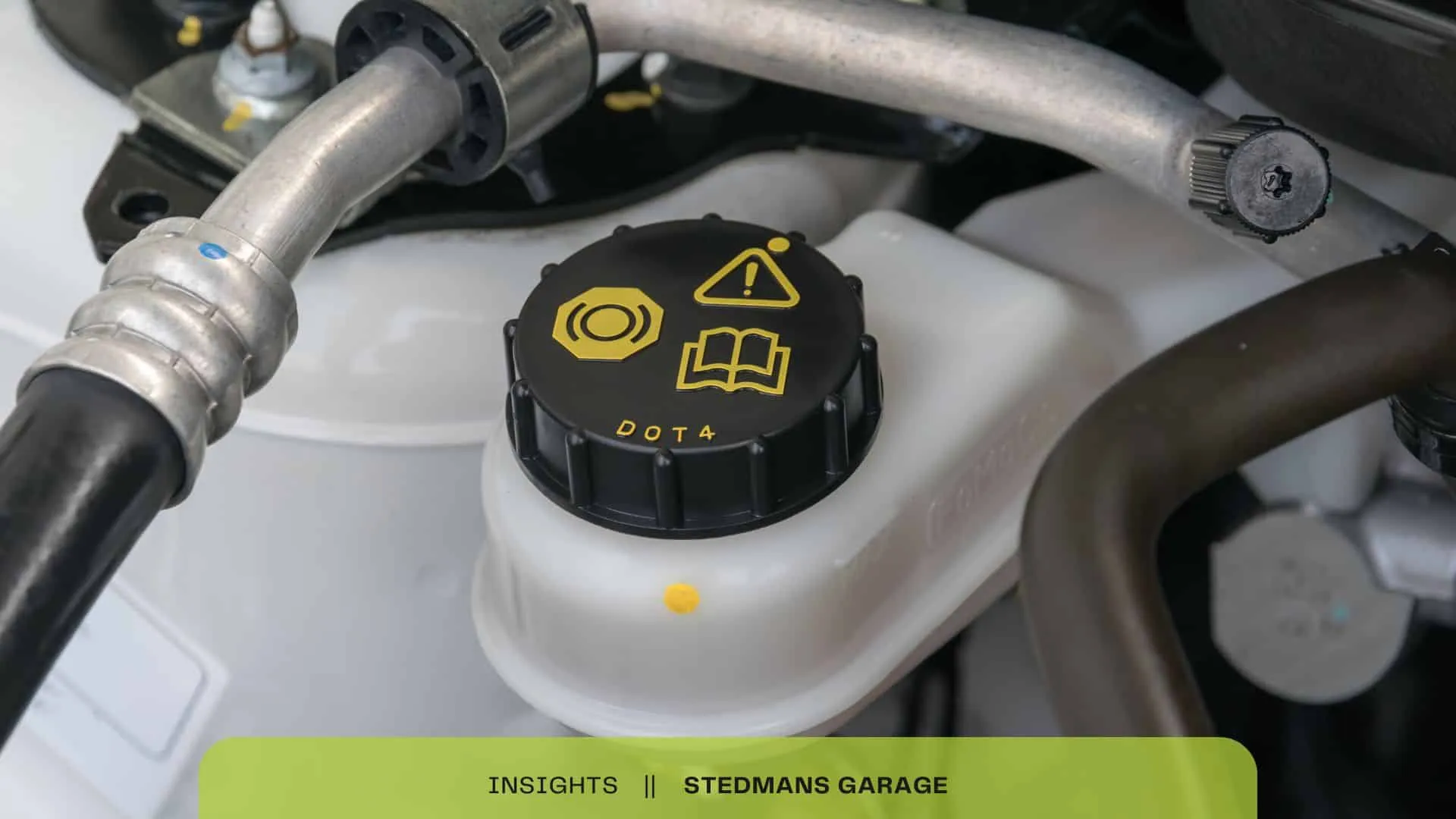
- DOT 4: The most common fluid used in modern UK cars. It is glycol-based but features a higher boiling point than DOT 3, making it better suited for heavier vehicles and modern ABS systems.
- DOT 5: A silicone-based fluid that does not absorb moisture. It has a very high boiling point but cannot be mixed with DOT 3 or DOT 4. It is typically reserved for classic cars, military vehicles, or specific high-performance applications.
Always consult your vehicle handbook or speak to our Sussex mechanics to ensure the correct fluid is used for your make and model.
The Brake Fluid Change Process
While some car enthusiasts prefer to tackle maintenance at home, a brake fluid change (often called brake bleeding) is best left to professionals to ensure no air enters the hydraulic system. Here is how our garage handles the process:
- Inspection: We check the fluid reservoir for contamination and test the moisture content of the current fluid.
- Draining the Old Fluid: The car is safely elevated. We start at the brake furthest from the master cylinder, opening the bleeder valves to flush out the degraded fluid.
- Flushing and Refilling: As the old fluid is expelled, fresh, manufacturer-approved brake fluid is continuously added to the reservoir to prevent air from entering the lines.
- Bleeding the System: We systematically bleed all four brake lines until the new fluid runs perfectly clear and free of air bubbles.
- Final Safety Checks: We check the system for leaks, top up the reservoir to the maximum line, and test the brake pedal pressure to ensure optimal stopping power. We also dispose of the toxic old fluid in an environmentally friendly manner.
FAQs About Brake Fluid Maintenance
How often should I change my brake fluid?
Most manufacturers recommend a complete brake fluid change every 2 years or every 24,000 miles, whichever comes first.
Can I just top up the brake fluid instead of changing it?
Topping up the fluid might turn off a dashboard warning light, but it does not remove the moisture or contaminants already in the system. A full flush is required to restore safe braking performance.
What happens if I don't change my brake fluid?
Neglecting this service leads to internal corrosion of your brake lines and calipers, resulting in expensive repairs. More importantly, it drastically increases the risk of complete brake failure due to vapour lock.
Conclusion
Understanding the importance of a brake fluid change is essential for maintaining your vehicle's performance and keeping you safe on Sussex roads. Regular checks and timely replacements ensure your braking system functions exactly as it should when you need it most.
Don't wait for your brake pedal to feel spongy or for an MOT failure to prompt action. Proactive automotive care is the best way to protect your car and your passengers.
Is your car due for a service? Our expert mechanics in Sussex are fully equipped to handle brake fluid changes, pad replacements, and comprehensive safety checks. Contact our garage today to book your appointment and drive away with total peace of mind!