
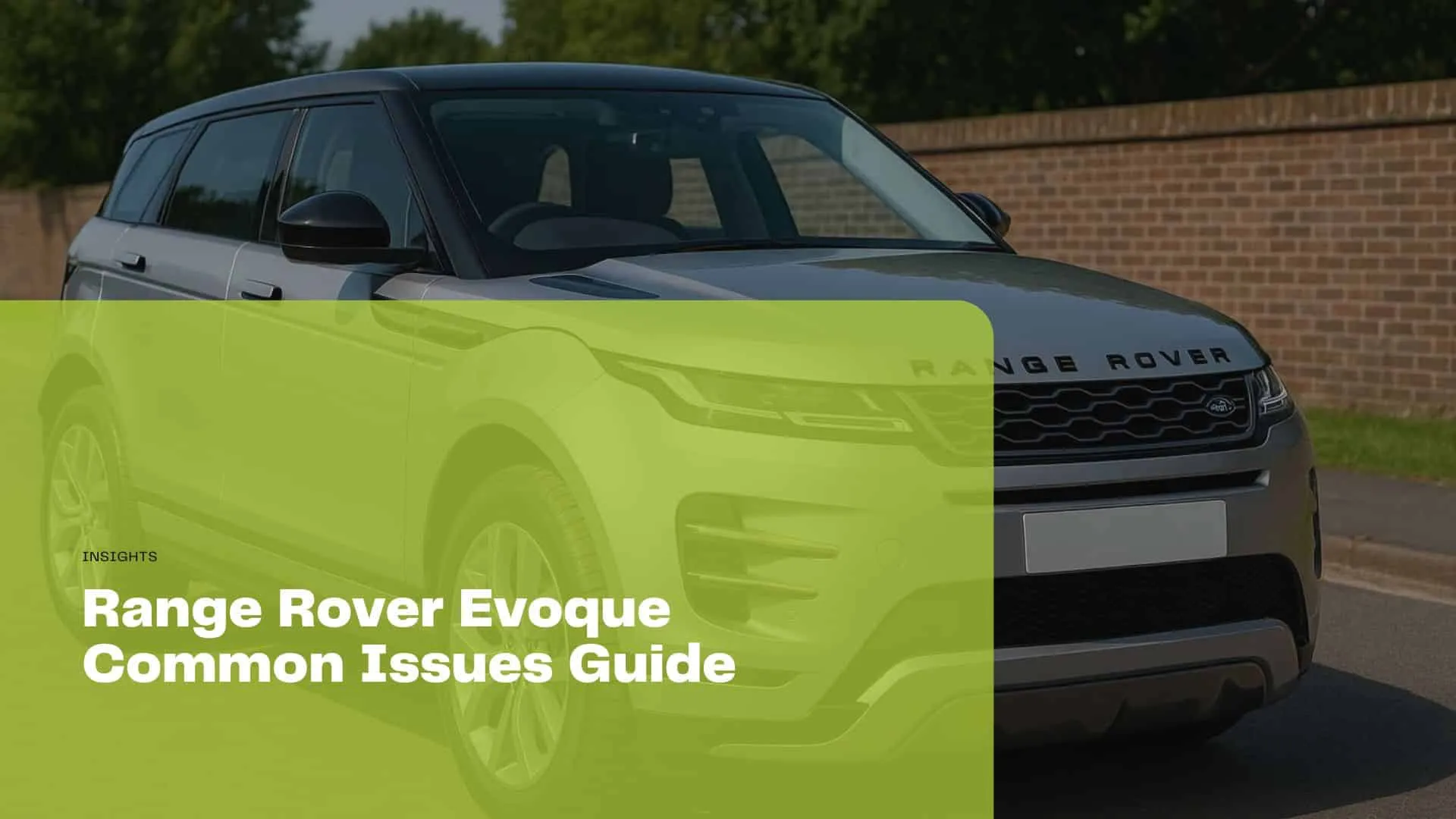
The most common Range Rover Evoque issues are engine and turbocharger faults on the 2.0 diesel, automatic gearbox and four-wheel drive problems, cooling system leaks, suspension wear, electrical faults and DPF blockages on cars used for short trips. Most can be caught early with the right diagnostics and servicing to the indicator. This guide covers each area, the recalls worth checking, and what to look for as an owner or buyer.
The Range Rover Evoque at a Glance
Overview of the Range Rover Evoque Model and Its Popularity
The Range Rover Evoque is the compact model in the Range Rover family, renowned for its stylish design and luxurious appeal. Introduced in 2011, the Evoque quickly became a popular choice in the compact luxury SUV market. Its compact dimensions coupled with a high-end aesthetic appeal made it an attractive option for urban drivers and those looking for a statement vehicle. The Evoque’s appeal lies not only in its sleek design but also in its capability to handle off-road conditions, albeit to a lesser extent compared to other models in the Range Rover lineup.
For faults across the whole range, see our overview of common Range Rover problems by model.
Brief History and Significance in the Range Rover Range
The Evoque was a significant introduction to the Range Rover family, marking a departure from the traditional, more rugged designs with a focus on sleek, modern aesthetics. The model was a strategic move to attract a younger, more style-conscious clientele. Over the years, the Evoque has undergone several updates, yet it has retained its core design language that includes the floating roof, continuous waistline, and an elegant three-dimensional grille, aligning with the Range Rover design DNA.
General Reputation for Style Versus Reliability Concerns
While the Range Rover Evoque stands out as a style icon with impressive design and luxurious features, its reputation for reliability has been less stellar. Consumer reports and owner feedback frequently highlight various reliability issues. In particular, the Evoque has been noted in reliability surveys for its poor performance, often ranking low in comparison to other family SUVs. The first-generation Evoque in particular has drawn reliability complaints, many of them concerning engine electrics.
This contrasts starkly with the model’s reputation for style and comfort. The Evoque is praised for its aesthetic appeal and interior luxury which closely mirrors that of its larger Range Rover siblings. However, this excellence in design often comes with a trade-off in terms of reliability. While the styling and comfort are consistently high-rated, reliability tends to be a point of contention among owners.
It’s crucial to consider these aspects when evaluating the Range Rover Evoque. The model has undeniably carved out a niche in the luxury compact SUV market, yet potential buyers and current owners should be mindful of its documented reliability issues. By acknowledging both its strengths and weaknesses, one can make a more informed decision regarding the Evoque.

Engine and Turbocharger Issues
Common Problems with the 2.0-Litre Turbocharged Engine
The Range Rover Evoque's 2.0-litre turbocharged engine has been a focal point for various mechanical issues. One of the most common problems reported by owners includes oil leaks and excessive oil consumption. These issues are often due to worn gaskets or faulty piston rings, which can lead to environmental hazards and further mechanical damage if not addressed promptly.
Another frequent issue on the 2.0 Ingenium diesel, fitted from the 2016 model year, involves the timing chain tensioner. The chain sits at the rear of the engine and runs on a hydraulic tensioner, so it cannot be adjusted. Failures in the tensioner can result in a loose timing chain, causing poor engine performance and strange noises. In worst-case scenarios, this can lead to catastrophic engine damage, severely impacting the vehicle's durability.
A stretched chain makes much the same noise as a failing tensioner, which is why the two get confused so often. We set out how to tell them apart in our guide to timing chain stretch on the Evoque Ingenium engines.
Turbocharger Failures and Their Symptoms
Despite its role in enhancing engine performance, the turbocharger in the Range Rover Evoque's 2.0-litre engine has been prone to failures. Symptoms of a failing turbocharger include a noticeable loss of power, excessive blue or grey smoke from the exhaust, and strange whistling noises during acceleration. These symptoms indicate that the turbocharger is not functioning correctly and may require immediate attention.
Fuel Rail End Cap Issues and Associated Recalls
Another critical issue affecting the Evoque's engine revolves around the fuel rail end caps. Inconsistencies in the brazing of these end caps can compromise their sealing, leading to a possible fuel leak. DVSA recall R/2018/036 covers Evoques built from May 2016 to January 2018, and recall work is carried out free of charge. Not sure which engine your Evoque has? Our guide on how to identify an Ingenium engine explains the checks.
These engine and turbocharger issues bring to light some of the critical reliability concerns associated with the Range Rover Evoque, underscoring the importance of regular maintenance and prompt attention to any arising symptoms. From oil leaks to turbocharger failures and fuel rail concerns, these issues can significantly affect the vehicle's performance and longevity.
Transmission and Drivetrain Problems
Automatic Gearbox Failures and Harsh Gear Changes
The Range Rover Evoque is known to experience significant transmission issues, particularly with its automatic gearbox. Owners commonly report failures resulting in rough or harsh gear changes. These issues can often arise in models with higher mileage or lack of proper maintenance, leading to inconvenient and costly repairs. Symptoms of failing gearboxes include lag in acceleration, difficulty in shifting gears, and strange noises during gear changes. Regular servicing and prompt attention to early warning signs can mitigate prolonged damage and improve overall transmission performance.
Haldex All-Wheel-Drive System Issues and Maintenance Requirements
The Evoque's Haldex all-wheel-drive system is lauded for providing a balanced driving experience across varying terrains. However, this system is not without its problems. Common issues involve the Haldex unit failing to engage AWD properly, resulting in loss of traction and compromised driving safety. Regular maintenance of the Haldex system, including timely oil changes and inspections, is crucial to maintaining its effectiveness. Owners have also reported electronic faults within the system that cause intermittent AWD engagement, requiring detailed diagnostic checks to address.
Premature Flywheel Wear and Associated Symptoms
Premature flywheel wear is another frequent problem affecting the Range Rover Evoque's transmission system. The dual-mass flywheel, designed to reduce vibration and improve drivetrain efficiency, can wear out quicker than expected. Symptoms indicating flywheel issues include abnormal vibration during acceleration, rattling noises, and difficulty in gear shifting. If left unchecked, a damaged flywheel can lead to more significant transmission and drivetrain issues, necessitating costly replacements and repairs. It is advisable for owners to be vigilant for these symptoms and seek prompt diagnostic and repair services.
While these transmission and drivetrain issues highlight some of the drawbacks of the Evoque, informed maintenance strategies can help owners manage and prevent severe damage. Ensuring regular inspections and adhering to recommended servicing intervals are vital to preserving the vehicle's reliability and performance.
Cooling System Failures
Cooling system failures in the Range Rover Evoque can pose significant risks to engine performance and longevity. Common issues include radiator leaks, thermostat malfunctions, and water pump failures. Understanding these problems and their symptoms is crucial for maintaining the vehicle's health and preventing severe engine damage.
Radiator Leaks and Their Impact on Engine Performance
Radiator leaks are a prevalent issue in the Range Rover Evoque, often caused by cracks or damage to the radiator itself. These leaks can lead to significant coolant loss, compromising the cooling system's efficiency and causing the engine to overheat. Signs of a leaking radiator include visible coolant pooling beneath the vehicle, a drop in coolant levels, and an overheating engine.
Overheating due to radiator leaks can lead to decreased engine performance, fuel inefficiency, and potential long-term damage such as warped cylinder heads or a blown gasket. Promptly addressing radiator leaks by inspecting and replacing damaged parts when necessary is essential to maintain the engine's optimal operating temperature.
Thermostat and Water Pump Malfunctions
Both the thermostat and the water pump play critical roles in regulating the engine's temperature. A failing thermostat can cause erratic temperature fluctuations, with symptoms including high temperature readings, irregular changes in engine temperature, and coolant leaks from the thermostat housing. Thermostats that stick closed can prevent coolant from flowing through the engine, leading to overheating.
Water pump failures are another common issue in the Evoque's cooling system. Symptoms include coolant leaks at the front of the engine, overheating, and unusual noises such as grinding or whining from the engine compartment. Regular inspections and timely replacement of worn-out water pumps and thermostats are necessary to prevent engine damage.
Overheating Issues and Prevention Strategies
Overheating issues in the Range Rover Evoque can arise from various factors, including low coolant levels, clogged radiators, failed thermostats, and malfunctioning water pumps. To prevent overheating, it is crucial to maintain an appropriate coolant mixture, regularly inspect the cooling system for leaks, and ensure that the radiator and coolant passages are free from blockages.
Routine maintenance should include:
- Checking and topping off coolant levels regularly.
- Inspecting the radiator, hoses, thermostat, and water pump for leaks or damage.
- Replacing the coolant with long-life coolant to JLR's specification when the schedule says, without mixing types.
By keeping the cooling system in good condition, owners can mitigate the risk of overheating and ensure the longevity and reliability of their Range Rover Evoque.
Ensuring the cooling system is well-maintained is critical to avoiding the severe consequences of overheating on the engine's performance and longevity.
Suspension and Steering Problems
Common Suspension Wear Issues and Symptoms
The Range Rover Evoque, while lauded for its elegance, often falls short with its suspension system. One prevalent issue is the accelerated wear of suspension components, especially notable with the anti-roll bar bushes and drop links. Symptoms of suspension failure can include persistent knocking noises, a bumpy ride, and uneven tyre wear. Additionally, the vehicle may sit lower than usual or fail to remain level, which can also be indicative of air suspension problems. Identifying these early signs is crucial to prevent further damage.
Steering Control Problems
Owners of the Evoque have frequently reported steering control issues. Problems with steering can manifest as a lack of responsive handling, a slack or vague feel when steering, or unusual noises during manoeuvres. Specific components such as the dynamic control sensor may fail, impacting overall steering and ride quality. It is essential to regularly inspect and, if needed, replace these sensors to maintain optimal control.
Control Arm Wear
The control arms of the Evoque are another area prone to wear. The arms, along with their ball joints and bushes, are worth checking at every service as the car ages. Worn bushes show up as knocks over bumps, vague steering and uneven tyre wear, and the arm is usually replaced as a complete part.
Understanding these common suspension and steering issues is vital for prospective and current owners alike. Through regular checks and swift corrective actions, one can mitigate the wearing impacts on the Evoque's riding comfort and control. This proactive approach ensures the vehicle maintains its esteemed driving experience, despite its known mechanical vulnerabilities.
Electrical System Faults
Electrical issues in the Range Rover Evoque are among the most significant reliability concerns for owners. These issues can manifest in various forms, from engine-related problems to general electrical faults affecting the overall vehicle operation.
Engine Electrical Issues
Engine electrical issues are a major reliability concern for the Range Rover Evoque. Frequently reported problems include battery drainage, faulty alternators, and issues with the start/stop technology. These issues can lead to a range of symptoms, such as dimming headlights, frequent stalling, slow-starting, and malfunctioning infotainment systems including Bluetooth and GPS.
Common Electrical Faults and Their Symptoms
Owners of the Range Rover Evoque often report random electrical faults, including issues with the gearbox, dashboard lights, and fuel gauge inaccuracies. Common symptoms include:
- Dimming or flickering headlights
- Frequent stalling or difficulty starting
- Infotainment and electronic system glitches
- Malfunctioning fuel gauge
- Warning lights appearing on the dashboard
These faults can be frustrating and might require professional diagnostic tools to identify the root cause.
Diagnostic Approaches and Repair Considerations
Diagnosing electrical issues in the Range Rover Evoque can be complex, often requiring specialised diagnostic equipment and expertise. Here are some common diagnostic steps:
- Battery and Alternator Testing: Test the battery's condition and check that the alternator's charging voltage is within specification with the engine running.
- Check Fuse Boxes: Inspect all fuse boxes (consult the owner's manual for locations). Shorted fuses can cause serious electrical issues. Replace any blown fuses carefully.
- Inspect Wiring and Connections: Regularly check for faulty wires, worn terminals, and loose connections. These can lead to intermittent electrical faults that are hard to diagnose.
- Read Every Module: Scan all of the car's control modules, not just the engine, with equipment that reads JLR systems. Faults stored in one module often explain warning lights in another.
Given the complexity of the Range Rover Evoque’s electrical systems, professional help is often necessary. Qualified mechanics possess the expertise and specialised diagnostic tools needed to pinpoint and repair sophisticated electrical faults.
Emissions and Exhaust System Issues
AdBlue System Problems in Diesel Models
The AdBlue system, which is essential for reducing nitrogen oxide (NOx) emissions in diesel engines, has been a frequent source of trouble in the Range Rover Evoque. Owners often report issues related to the AdBlue injector, where crystallisation around the injector leads to blockages. These blockages can cause the vehicle to enter a restricted performance mode to prevent further damage, resulting in reduced power and efficiency. Regular maintenance and timely refilling of the AdBlue tank can help mitigate these issues. Use non-drip bottles rather than HGV pumps, whose flow is too high, and wipe up any spills, as AdBlue is corrosive. If the AdBlue tank runs dry, the car will not restart.
Diesel Particulate Filter (DPF) Blockages and Cleaning Requirements
Diesel Particulate Filters (DPF) are designed to capture and store exhaust soot to reduce emissions. However, DPF blockages are a common issue for the Evoque diesel models, particularly those subjected to low-speed, short-distance urban driving. On the Evoque the filter sits further back, under the floor, so it takes longer to get hot enough to clean itself on short trips. Interrupted regenerations also put fuel into the engine oil. When the DPF becomes clogged, the engine may experience a loss of power and a warning light will illuminate on the dashboard. If the amber DPF light shows, Land Rover's UK advice is to drive above about 37mph for around 20 minutes so the filter can regenerate; a red light means get it checked. In severe cases, professional cleaning or replacement of the DPF may be necessary.
Warning Light Issues Related to Emissions Systems
Emissions control systems in the Range Rover Evoque are closely monitored by the onboard diagnostics system, which turns on the engine management light if a fault is detected. Common causes for the warning light include a faulty oxygen sensor, defective catalytic converter, and issues with the mass air flow (MAF) sensor. Oxygen sensors, exposed to high temperatures and exhaust gases, may fail over time, leading to incorrect air-fuel mixture readings and increased emissions. Similarly, a damaged catalytic converter will fail to effectively reduce harmful pollutants, and a faulty MAF sensor can disrupt the engine's performance and efficiency.
Addressing these warning light issues promptly is crucial. Diagnostic equipment that reads JLR systems can identify the specific problem, allowing for targeted repairs; a generic code reader often shows only a fault code. It is advisable to consult a professional technician to ensure that the emissions system functions as intended and to avoid consequential damage.
Recent Recalls and Safety Concerns
Overview of Major Recalls Affecting Evoque Models
The Range Rover Evoque has been subject to several recalls, addressing various safety and reliability concerns across different build dates. There has been no UK recall for the Ingenium timing chain. To see which recalls apply to a particular car, and whether the work has been done, enter its registration on the GOV.UK vehicle recall checker.
Turbocharger Oil Feed Pipe Issues
One significant recall involves the turbocharger oil feed pipe, a critical component responsible for lubricating the turbocharger. Under DVSA recall R/2024/113, the oil feed pipe may loosen on Evoques built from March 2020 to July 2024, which can lead to an oil leak. Our guide to Range Rover Evoque turbocharger problems covers the turbo in more detail.
Fuel System Recall
The fuel system has also been a subject of scrutiny. DVSA recall R/2018/036 covers the fuel rail end caps on Evoques built from May 2016 to January 2018, where inconsistent brazing could cause a fuel leak. Other recalls have covered different parts of the car, so the GOV.UK checker is the reliable way to confirm a specific vehicle.
These recalls underscore the importance of addressing both minor and major defects to maintain vehicle safety and reliability. Regular inspections and timely maintenance in line with manufacturer guidelines are crucial in preventing these issues.
Maintenance Tips and Preventative Measures
Essential Maintenance Schedules to Prevent Common Issues
Adhering to a consistent maintenance schedule is crucial for ensuring the longevity and reliability of your Range Rover Evoque. The Evoque runs a flexible, indicator-driven schedule, so follow the service indicator and the handbook rather than a fixed mileage. Key maintenance actions include:
- Changing the engine oil and filter when the service indicator calls for it, with oil to the JLR specification in the handbook. Do not reset an early service message on a diesel: the engine computer estimates fuel in the oil and brings the message forward when it is needed.
- Replacing the air filter at the intervals the schedule sets.
- Inspecting and replacing the brake pads and discs as needed.
- Checking and topping off fluids, including coolant, brake fluid, and transmission fluid, during every service interval.
- Performing a comprehensive inspection of the suspension, steering components, and drivetrain at least once a year.
Early Warning Signs of Potential Problems
Being aware of early warning signs can help prevent more serious issues. Pay attention to the following indicators:
- Unusual sounds: Knocking, whining, or clunking noises from the engine, suspension, or steering system can signal underlying issues.
- Warning lights: Do not ignore dashboard warning lights for the engine, transmission, or other systems.
- Leaks: Regularly check for signs of oil, coolant, or transmission fluid leaks under your vehicle.
- Vibrations: Excessive vibrations while driving can indicate problems with the drivetrain, suspension, or tyres.
Critical Components and Their Servicing
To keep your Range Rover Evoque running smoothly, follow the vehicle's schedule for these critical components:
- Timing Chain or Cam Belt: Ingenium engines use a timing chain with no fixed replacement interval. Only the earlier 2.2 litre diesel, fitted before the 2016 model year, has a cam belt, which is replaced to its schedule.
- Battery: Test it at each service and replace it when its condition falls off.
- Coolant: Use long-life OAT coolant to JLR's specification, replaced when the schedule says. Do not mix coolant types.
- Brake Fluid: Change it when the schedule says to keep the braking system working properly.
- Transmission Fluid: Follow the schedule for the gearbox and the four-wheel drive unit, and ask about fluid condition if gear changes become harsh.
Regular maintenance and addressing early warning signs promptly can help mitigate common issues and enhance your ownership experience. As you continue to enjoy the luxurious features of the Range Rover Evoque, staying committed to these maintenance practices ensures optimal performance and reliability.

Conclusion: Is the Range Rover Evoque Worth It?
Balancing Style and Luxury Against Reliability Concerns
The Range Rover Evoque stands out in the automotive market with its chic design, opulent interiors, and commendable on-road performance. Its stylish façade and luxurious appeal have made it a favourite among urban dwellers who prioritise aesthetics and comfort. However, the Evoque is plagued by a considerable number of reliability issues, which cannot be ignored, and early car diagnostics is the best way to stay ahead of them.
While the Evoque's exterior design and high-quality interior materials make it a head-turner, its charm is often overshadowed by its maintenance and repair concerns. Routine maintenance is a must, and potential owners should prepare for regular visits to the service centre. Reports indicate that the Evoque's turbocharged engine, cooling system, and electrical systems are prone to frequent issues. The automatic gearbox and suspension also exhibit problems that can become expensive if not addressed promptly.
Considerations for Potential Buyers and Current Owners
For those considering purchasing a Range Rover Evoque, it's crucial to weigh its stylish appeal against its maintenance demands. Here are a few considerations:
- Maintenance and Repairs: Buyers should budget for maintenance and repairs. Investing in an extended warranty could mitigate unforeseen expenses.
- Known Faults: Prospective owners should be aware of common issues such as turbocharger failures, fuel rail end cap issues, and suspension problems.
- Regular Inspections: Routine inspections and sticking to maintenance schedules can preempt some of the more severe issues that may arise.
Current owners should monitor their vehicle for early warning signs of common problems, such as unusual noises, warning lights, or fluid leaks. Regular servicing will go a long way in maintaining the vehicle's performance and extending its lifespan.
Final Assessment of the Evoque's Strengths and Weaknesses
In conclusion, the Range Rover Evoque presents a dual-edged sword. Its undeniable strengths lie in its aesthetic design, luxurious interior, and commendable comfort levels. However, these benefits come with significant reliability concerns that potential buyers need to consider seriously. The Evoque's propensity for mechanical and electrical issues, combined with its maintenance demands, often detracts from its overall appeal.
Ultimately, whether the Evoque is worth the investment depends on what the potential buyer values more: the prestige of driving a stylish luxury SUV or the peace of mind that comes with dependable reliability. While the Evoque may meet the needs of those prioritising style and urban performance, those looking for a trouble-free ownership experience might find it lacking.
For engine-specific detail, see our guides to Range Rover Ingenium engine problems and Range Rover Ingenium engine care. As Range Rover specialists with main-dealer equipment, we use diagnostic tools that read the Evoque's systems properly and carry out Evoque servicing and repairs. Contact Stedmans Garage to book your Evoque in.
Frequently Asked Questions
Does the Range Rover Evoque have a timing belt?
Only the earlier 2.2 litre diesel, fitted before the 2016 model year, has a cam belt. The 2.0 Ingenium diesel from the 2016 model year and the Ingenium petrol from the 2018 model year use a timing chain with no fixed replacement interval. See our guide to Evoque timing chain stretch for the signs to listen for.
What recalls affect the Range Rover Evoque engine?
Two DVSA recalls touch the Evoque's engine bay: R/2018/036 for fuel rail end caps on cars built from May 2016 to January 2018, and R/2024/113 for a turbocharger oil feed pipe that may loosen on cars built from March 2020 to July 2024. There has been no UK recall for the timing chain. Check any Evoque by registration on the GOV.UK vehicle recall checker.
Why does my Evoque's DPF light keep coming on?
On the Evoque the particulate filter sits further back, under the floor, so it takes longer to get hot enough to clean itself, and short trips keep interrupting its regenerations. If the amber light shows, Land Rover's UK advice is to drive above about 37mph for around 20 minutes. A red light means the car needs checking.
How often should a Range Rover Evoque be serviced?
The Evoque runs a flexible, indicator-driven schedule, so follow the service indicator and the handbook rather than a fixed mileage. On a diesel, never reset an early service message: the engine computer brings it forward when it estimates there is fuel in the oil.
Is the Range Rover Evoque a reliable used buy?
It can be, if you buy on condition and history. Look for servicing to the indicator with the correct JLR oil, listen for a rattle from the back of the engine on a cold start, check that recall work is done, and be wary of a diesel that has only done short trips. A diagnostic check before you buy shows faults the dashboard does not.
Does Stedmans Garage service and repair the Range Rover Evoque?
Yes. Stedmans Garage are Range Rover specialists with main-dealer equipment. We use diagnostic tools that read the Evoque's systems properly and carry out Evoque servicing and repairs. Contact us to book your Evoque in.