
As environmental consciousness grows and UK MOT standards become increasingly strict, understanding emissions fault diagnosis has never been more important for vehicle owners. Your car’s emissions system plays a vital role in managing harmful pollutants, and any faults within this network can severely impact your engine’s performance, fuel economy, and legal compliance.
Understanding Your Vehicle's Emissions System
Modern vehicles are equipped with complex emissions systems designed to minimise the release of harmful gases while ensuring the engine runs smoothly. These systems consist of several key components:
- Exhaust Gas Recirculation (EGR) System: The EGR valve recycles a small portion of exhaust gases back into the engine's intake. This lowers combustion temperatures, which significantly reduces the formation of harmful nitrogen oxides (NOx).
- Catalytic Converters: Often referred to simply as the 'cat', this vital component transforms highly toxic gases (like carbon monoxide and unburned hydrocarbons) into less harmful substances (like carbon dioxide and water vapour) through high-temperature chemical reactions.
- Oxygen (Lambda) Sensors: Positioned within the exhaust system, these sensors monitor the amount of unburned oxygen in your exhaust gases. They send constant feedback to the Engine Control Unit (ECU), which adjusts the air-fuel mixture for optimal combustion.
When one of these components fails, it disrupts the entire system, leading to heightened emissions and noticeable performance issues.
Why Proper Emissions Fault Diagnosis Matters
The significance of accurate emissions fault diagnosis goes far beyond simply turning off a dashboard light. It directly impacts your wallet, your driving experience, and the environment.
- Protecting Vehicle Performance: A fault in the emissions system often leads to improper combustion, which can be caused by issues as simple as worn spark plugs. This can result in a noticeable loss of engine power, sluggish acceleration, and a generally poor driving experience.
- Improving Fuel Economy: If a faulty oxygen sensor feeds incorrect data to the ECU, your engine may run 'rich' (using too much fuel). Prompt diagnosis ensures your air-fuel mixture is optimised, saving you money at the petrol pump.
- MOT Compliance and Legality: In the UK, a vehicle must meet strict emissions thresholds to pass its annual MOT. An emissions failure is a major defect. Diagnosing and repairing these faults ensures your car remains road-legal and saves you from the inconvenience of an MOT retest.
- Preventing Costly Repairs: Ignoring a minor emissions fault can cause a domino effect. For example, a misfiring engine or a faulty oxygen sensor can eventually destroy a catalytic converter, a repair that is significantly more expensive than fixing the initial fault.
Common Symptoms of Emissions Faults
As a vehicle owner, recognising the early warning signs of an emissions issue can save you time and money. Look out for the following symptoms:
- Dashboard Warning Lights: The most common indicator is the Engine Management Light (EML) or Check Engine Light. If this illuminates, your vehicle’s ECU has detected a fault in the emissions control system.
- Rough Idling or Stalling: If your car feels juddery when stationary, or if it hesitates and stalls when you try to accelerate, the engine is likely struggling to maintain the correct air-fuel mixture.
- Increased Fuel Consumption: A sudden drop in your miles per gallon (MPG) is a strong indicator that your engine is burning fuel inefficiently due to an emissions system error.
- Unpleasant Odours: A strong smell of unburned fuel, or a distinct "rotten egg" (sulphur) smell coming from the exhaust, usually points directly to a failing catalytic converter.
How Specialists Conduct Emissions Fault Diagnosis
Accurate emissions fault diagnosis requires more than just a basic code reader; it necessitates specialist tools, advanced software, and expert knowledge. Here is how professional technicians approach the problem:
On-Board Diagnostics (OBD-II) and Scan Tools
Modern vehicles feature an OBD-II port. Our technicians connect advanced, dealer-level diagnostic scan tools to this port to retrieve Diagnostic Trouble Codes (DTCs). However, a code only tells us where the system has detected an anomaly, not necessarily what the exact broken part is.
Live Data Analysis
To pinpoint the exact issue, technicians monitor "live data" while the engine is running. By observing real-time voltage readings from oxygen sensors or the operational status of the EGR valve, experts can identify discrepancies that a simple code read would miss.
Advanced Diagnostic Software
Sophisticated software helps technicians interpret complex data patterns. This allows us to correlate various sensor readings, ensuring we find the root cause of the problem rather than just replacing parts on a guesswork basis.
MOT Regulations and the Future of Emissions
Understanding the legal framework is crucial. The UK government enforces strict air quality standards, and the MOT emissions test is the primary way this is policed for passenger vehicles. Vehicles are subjected to tailpipe emissions testing to measure carbon monoxide and hydrocarbon levels, alongside a visual inspection of the exhaust system and an OBD-II check.
As the automotive industry evolves, emissions standards are only getting stricter. With the rise of hybrid vehicles and increasingly complex modern diesel and petrol engines, the technology required for emissions fault diagnosis is advancing rapidly. From artificial intelligence aiding in predictive maintenance to stricter Real Driving Emissions (RDE) testing, staying compliant requires the expertise of a dedicated vehicle specialist.
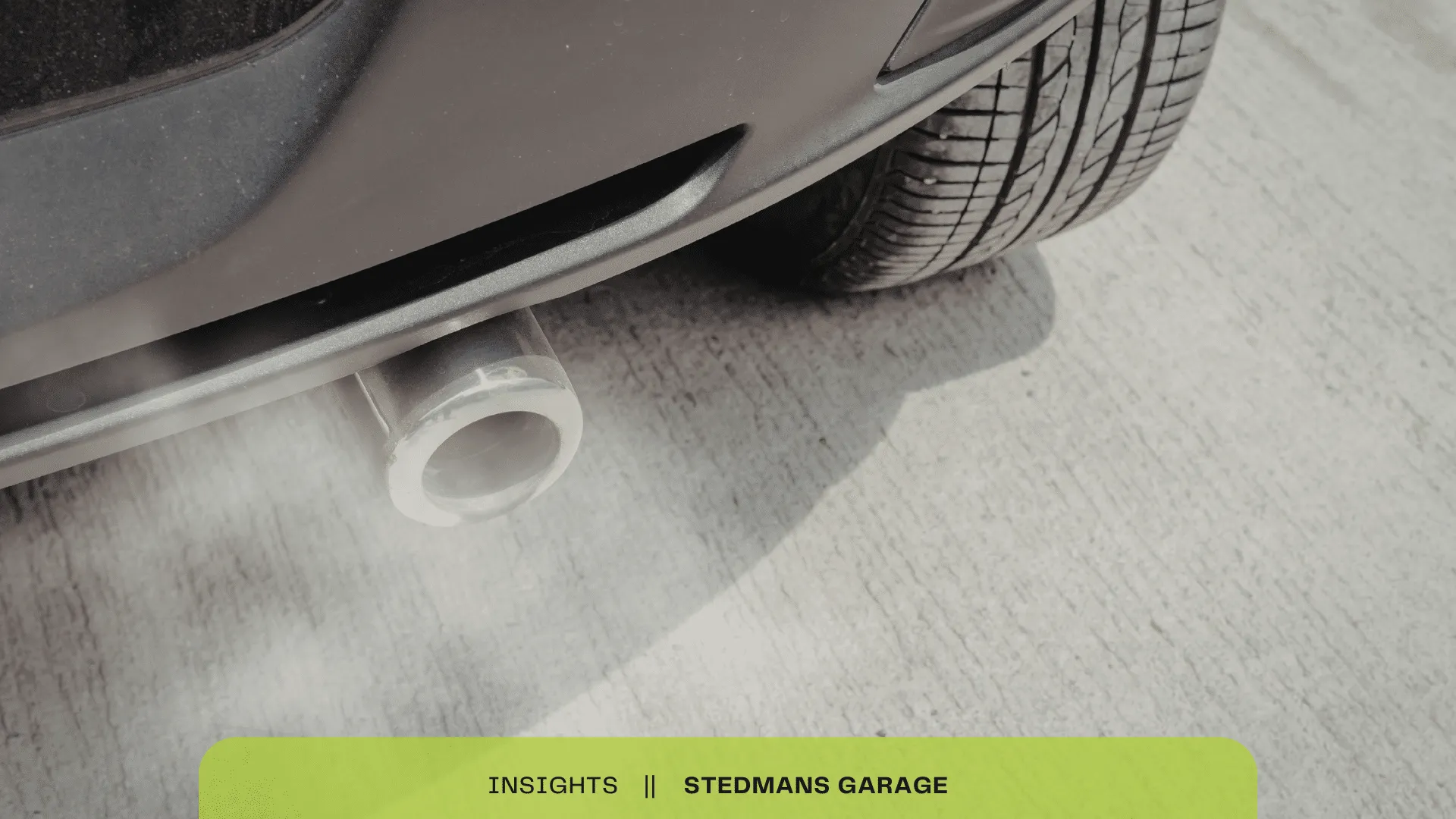
A corroded or leaking exhaust changes the readings before it ever changes the noise, so it pays to know what to listen for. Our guide to car exhausts in Worthing covers the sounds a failing system makes and what an MOT tester does with them.
Conclusion
Emissions fault diagnosis is a vital aspect of vehicle maintenance that safeguards your car's performance, ensures MOT compliance, and protects the environment. By understanding how your emissions system works and recognising the early symptoms of a fault, you can act quickly to prevent minor issues from becoming major, costly repairs.
If your engine management light is on, your fuel economy has dropped, or you are worried about your next MOT, don't leave it to chance. Contact our specialist servicing and diagnostics team today to book a comprehensive emissions fault diagnosis, and let our experts ensure your vehicle is running cleanly, efficiently, and legally.
Related reading: advanced vehicle diagnostics