
On many BMWs the first sign of overheating is a warning message on the display rather than a needle creeping round a gauge. Several models, including the E90 3 Series, have no conventional coolant temperature gauge at all, so a red coolant warning or a Check Control message about engine temperature may be the first thing you see. The causes are specific to how BMW builds its cooling systems: an electric water pump that can stop with little warning, plastic expansion tanks and pipes that crack with age, and a thermostat controlled by the engine management. If a red coolant warning appears, stop as soon as it is safe and switch the engine off.
Introduction
BMW engines, known for their high performance, demand keen attention to cooling systems to prevent overheating. This guide aims to enlighten BMW owners about the causes of engine overheating and effective solutions. We'll delve into common issues like coolant leaks and faulty components, offering both preventative strategies and reactive measures. Our goal is to help you recognise early signs of trouble and safeguard your vehicle's performance and longevity.
The Importance of Addressing BMW Engine Overheating
BMW engines, sophisticated and high-performing, typically run at higher temperatures than average passenger car engines. Overheating can rapidly escalate, potentially causing severe damage like warped cylinder heads or cracked engine blocks. Timely intervention is crucial to avoid costly repairs, often running into thousands of pounds.
Exploring Causes and Solutions for Overheating
This post will dissect common overheating triggers in BMW engines and suggest practical, proven solutions. From checking coolant levels to replacing faulty parts, we cover essential knowledge for every BMW driver. By adopting these practices, you can prevent expensive repairs and maintain your BMW's optimal performance.
Common Causes of BMW Engine Overheating
- Coolant Leaks: Often stemming from damaged hoses or a cracked radiator, coolant leaks reduce the system's efficiency, leading to overheating.
- Thermostat and Water Pump Issues: Malfunctions in these components disrupt coolant flow and temperature regulation, causing the engine to overheat.
- Blocked Radiator and Low Coolant: Debris in the radiator or insufficient coolant levels impair heat dissipation, resulting in increased engine temperatures.
Warning Signs Your BMW Is Overheating
Catching overheating early is the difference between a straightforward repair and a cracked cylinder head. Watch for these warning signs:
- A rising temperature gauge or a red coolant warning light on the dashboard.
- A sweet, syrupy smell around the engine bay, which usually points to leaking coolant.
- Coolant pooling under the car, or a steadily dropping level in the expansion tank.
- The heater blowing cold when the engine is warm, often a sign of low coolant or a stuck thermostat.
- Steam or a hot, metallic smell from under the bonnet. Stop as soon as it is safe to do so.
Why Your BMW May Have No Temperature Gauge
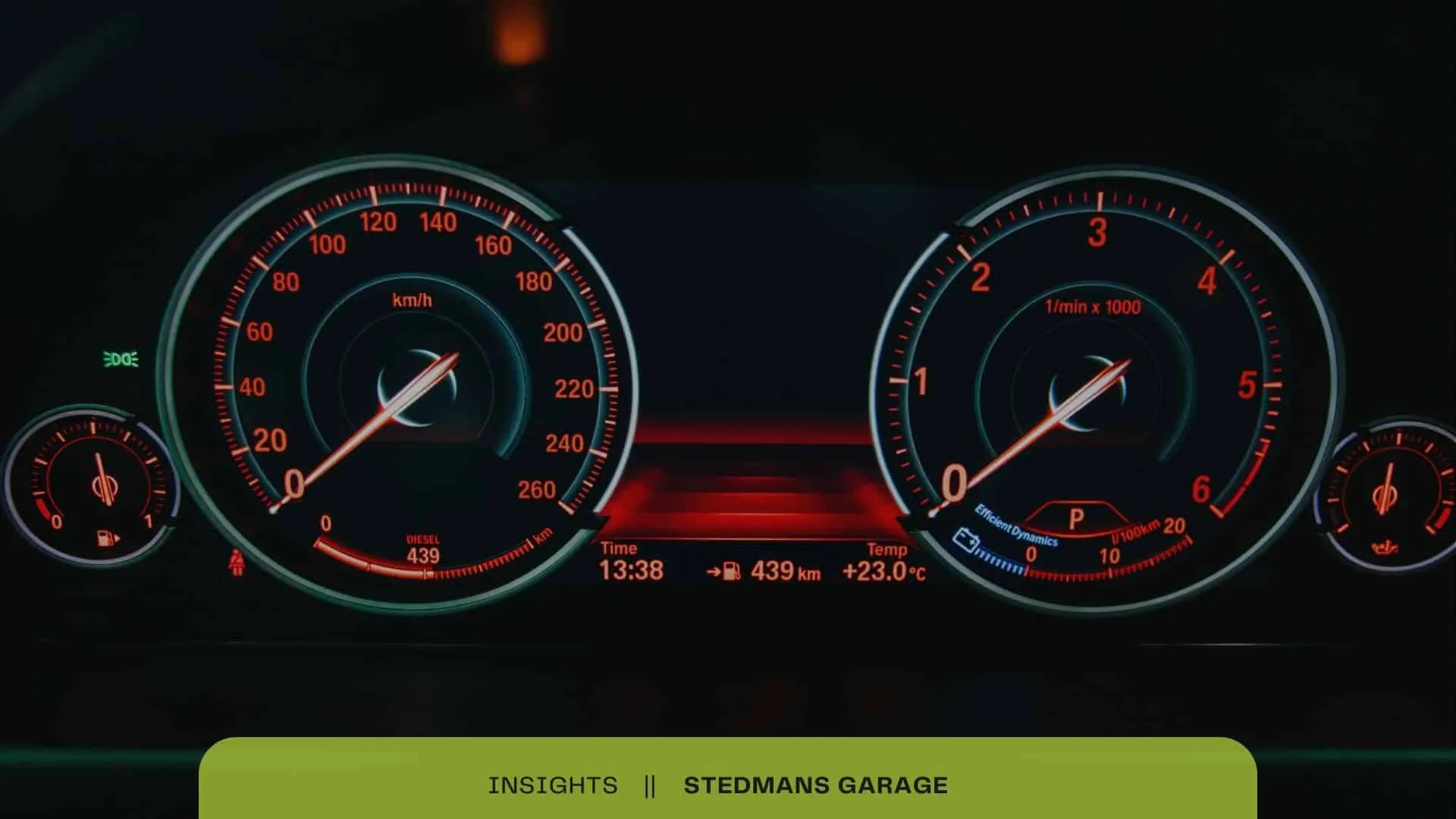
BMW varies the engine's running temperature with load to suit efficiency, and on cars such as the E90 3 Series it fitted an oil temperature gauge instead of a coolant gauge. The practical result is that you get no slow warning from a needle. The car tells you through the coolant warning light and a Check Control message on the display, and some engines will also reduce power to protect themselves. Treat any engine temperature message as a reason to stop and look, not one to drive home on.
Common BMW Cooling System Failures in Detail
Most BMW overheating traces back to a handful of well-known weak points. Understanding them helps you spot a problem before it becomes expensive.
The Electric Water Pump
Many modern BMW petrol engines use an electric water pump rather than a traditional belt-driven one. It is efficient, but it is also a known failure point, and because it is electronically controlled it can stop working with little warning, letting the engine overheat quickly. The water pump and thermostat are commonly replaced together, since both are central to coolant flow and tend to wear over a similar period.
Brittle Plastic Cooling Components
To save weight, BMW uses reinforced plastic for several cooling parts, including the thermostat housing, the expansion (header) tank and various coolant pipes. Years of heat cycling make this plastic brittle, and it is one of the most common sources of a BMW coolant leak. A hairline crack in the expansion tank or a split coolant pipe can drop the level enough to cause overheating, so these parts are often renewed as preventative maintenance once a BMW reaches higher mileage.
Thermostat Faults
BMW thermostats are usually map-controlled, with the engine management adjusting them for efficiency. A thermostat stuck open leaves the engine running cooler than it should, hurting fuel economy; one stuck closed blocks coolant flow and causes rapid overheating. Either way, it is a part worth checking when temperatures look unusual.
Radiator, Cooling Fan and Coolant Condition
A radiator blocked internally with scale, or externally with road debris, cannot shed heat properly, and a failed electric cooling fan has the same effect at low speeds and in traffic. Old or incorrect coolant also loses its protective qualities over time, so using the correct specification and flushing the system at the right intervals matters. If you run an xDrive model, cooling is just one part of staying on top of maintenance, and our BMW xDrive maintenance essentials guide covers the wider service priorities.
Air Locks After Cooling System Work
BMW cooling systems trap air easily, and air left in the system after a hose, thermostat or water pump replacement can make the engine overheat or the heater blow cold, even though every part is new. On engines with an electric water pump the system is bled with a set routine in which the pump is run with the ignition on and the engine off, so a quick top-up is not enough. An overheat soon after cooling system work is often a bleeding problem rather than a failed part.
Solutions to BMW Engine Overheating
- Regular Maintenance: Routine checks, such as monitoring coolant levels and inspecting hoses and plastic pipes for cracks, are vital.
- Coolant System Care: Use coolant that meets BMW's specification, and have its condition and the level checked at each service rather than topping up and forgetting it.
- Component Replacement: Addressing faulty thermostats, water pumps, and clearing blockages are key steps in resolving overheating issues.
- Professional Help: For complex problems, consulting a BMW specialist is advisable. They possess the expertise and tools for accurate diagnosis and repair.
Conclusion
BMW engine overheating is a pressing issue that demands immediate attention. Regular maintenance, vigilant coolant system care, and timely component replacements are effective in preventing severe damage. Ignoring signs of overheating can lead to catastrophic engine failures. Stay proactive in your BMW's care to avoid these costly scenarios.
Key Takeaways
- Regularly check and maintain coolant levels.
- Replace faulty components like thermostats and water pumps promptly.
- Seek professional help for complex overheating issues.
FAQs About BMW Engine Overheating
What are the most common causes of BMW overheating?
The usual culprits are a failing water pump, a faulty thermostat, brittle plastic cooling parts that crack and leak, a blocked radiator and a failed electric cooling fan. Low or old coolant makes any of these worse.
Why do BMW water pumps fail?
Many modern BMWs use an electrically controlled water pump, which can stop working suddenly and with little warning. Because it is so central to coolant flow, a failed pump leads to rapid overheating, so it is often replaced together with the thermostat.
Can I drive my BMW if it is overheating?
No. Pull over as soon as it is safe, switch off the engine and let it cool. Continuing to drive risks serious and costly damage such as a warped cylinder head or a cracked engine block.
What are the signs of a failing BMW thermostat?
A thermostat stuck open leaves the engine slow to warm up and can hurt fuel economy, while one stuck closed causes the temperature to climb quickly. An erratic temperature gauge is a common warning sign.
Why do BMW cooling systems leak so often?
BMW uses a lot of reinforced plastic in the cooling system, including the expansion tank, thermostat housing and coolant pipes. This plastic becomes brittle with age and heat, making cracks and coolant leaks a frequent issue on higher-mileage cars.
How can I prevent BMW overheating?
Check coolant regularly, use the correct specification, flush the system at the recommended intervals and replace worn pumps, thermostats and ageing plastic parts before they fail. If in doubt, have the cooling system inspected by a BMW specialist such as Stedmans Garage in Worthing.
Why does my BMW not have a coolant temperature gauge?
Several BMWs, including the E90 3 Series, were built without a conventional coolant temperature gauge because the engine management varies the running temperature to suit the conditions. Instead you get a coolant warning light and a Check Control message if the engine gets too hot, so any temperature warning on the display should be treated as a reason to stop.