
Looking after a Volkswagen DSG gearbox comes down to five things: change the gearbox oil and filter on schedule, use the correct oil, drive it smoothly (especially from cold and in traffic), keep it cool, and keep the software current. Do those and the expensive failures that DSGs are known for become rare. This guide explains each of them, what a DSG service actually involves, what you can sensibly check yourself, and the signs that the gearbox is overdue for attention.
It applies to every DSG-equipped car in the Volkswagen Group range: Volkswagen, Audi (where the gearbox is badged S tronic), SEAT, Skoda and Cupra. If you are trying to work out whether your gearbox already has a fault, start with our guide to Volkswagen DSG problems. If it does, what each repair involves is in our guide to DSG gearbox repairs.
Why a DSG Needs Different Care from a Conventional Automatic
A conventional automatic transfers drive through a torque converter, a fluid coupling that is tolerant of abuse. A DSG takes up drive on a clutch, two of them in fact, one for the odd gears and one for the even gears, with a computer-controlled hydraulic unit (the mechatronic unit) deciding when each engages. That is why it shifts so quickly and returns such good fuel economy, and it is also why it needs looking after differently.
Two things follow from that design. The clutches wear, like any clutch, and how you drive decides how fast. And the mechatronic unit is a precision hydraulic component that depends completely on clean oil at the right pressure, so old or contaminated oil is the root cause of most of the faults that end up as big bills.
Dry Clutch or Wet Clutch Changes the Maintenance
Volkswagen fits two families of DSG. The DQ200 seven-speed has dry clutches and is found on the smaller engines (1.0, 1.2, 1.4 and 1.5 TSI): Polo, Golf, T-Roc, T-Cross and their SEAT and Skoda equivalents. The DQ250, DQ381 and DQ500 have wet clutches that run in oil and are fitted to the larger petrols and diesels, the GTI and R models, the Tiguan and the Transporter.
The wet-clutch gearboxes have a scheduled oil and filter change. The DQ200 does not, in Volkswagen's own schedule, but its clutches wear faster and its mechatronic unit runs its own small supply of hydraulic oil. Knowing which you have is the first step, because it changes what "maintenance" means.
The DSG Oil and Filter Change: The One Job That Matters Most
When It Is Due
Volkswagen specifies an oil and filter change for the wet-clutch gearboxes (DQ250 and DQ500) every 40,000 miles. Some newer variants carry a longer interval, and the exact figure for your car is in the service schedule in the handbook, so check it rather than assume. These are maximum intervals: if the car spends its life in town, in traffic, or towing, changing the oil earlier is sensible, because that is the driving that ages it fastest.
The dry-clutch DQ200 has no scheduled gearbox oil change. Its mechatronic unit, though, is a sealed hydraulic system with its own oil, and many specialists recommend renewing that oil at intervals, since a mechatronic fault is the most common expensive failure on this gearbox. Ask when the car is in for a service.
Why It Matters So Much
DSG oil does three jobs at once. It lubricates the gears and bearings, it cools the clutches on a wet-clutch gearbox, and it is the hydraulic fluid that the mechatronic unit uses to select gears and engage the clutches. As it ages it loses viscosity, picks up fine metal particles and clutch material, and stops transmitting pressure cleanly. Dirty oil is what scores solenoids, clogs the tiny passages in the mechatronic unit and lets the clutches overheat. Almost every serious DSG failure has neglected oil somewhere in its history.
What a DSG Service Involves
- Draining the old oil with the gearbox at the correct temperature
- Replacing the internal filter
- Refilling with the correct Volkswagen-specification oil, to the correct level, again at a set temperature, which needs the right adapter and pump
- Resetting the gearbox adaptation values with a diagnostic tool so the gearbox relearns clutch engagement with the fresh oil
- A road test and a check for stored fault codes
It is a straightforward job for a specialist and a poor one to improvise, because the fill level is set by temperature and a wrong level shows up as exactly the harsh shifts you were trying to prevent.
Use the Right Oil
DSG oil is not generic automatic transmission fluid. Volkswagen publishes a specific part number for each gearbox family, and the oil for a wet-clutch gearbox is not the same as the hydraulic oil for a DQ200 mechatronic unit. Any competent specialist will use the specification for your gearbox. The wrong oil causes poor lubrication, harsh engagement and, in time, damage to the clutches and the mechatronic unit.
What Happens If It Is Neglected
Old oil overheats the clutches, which then burn and slip. It degrades the solenoids in the mechatronic unit, which then shift roughly, hesitate or refuse gears altogether. Owners who have gone years past the interval commonly report a gradual decline in shift quality followed by a sudden failure, and by then the repair is a mechatronic unit or a clutch pack rather than an oil change.
Driving Habits That Protect a DSG
How the car is driven has more effect on DSG life than anything except the oil. None of this is difficult; it is mostly about not treating a DSG like a conventional automatic in slow traffic.
Let It Warm Up
Cold oil is thick oil, and the clutches and mechatronic unit work hardest in the first few minutes. Drive gently until the gearbox is up to temperature before asking for hard acceleration. Rapid launches from cold are one of the most wearing things you can do to a DQ200.
Do Not Creep in Traffic
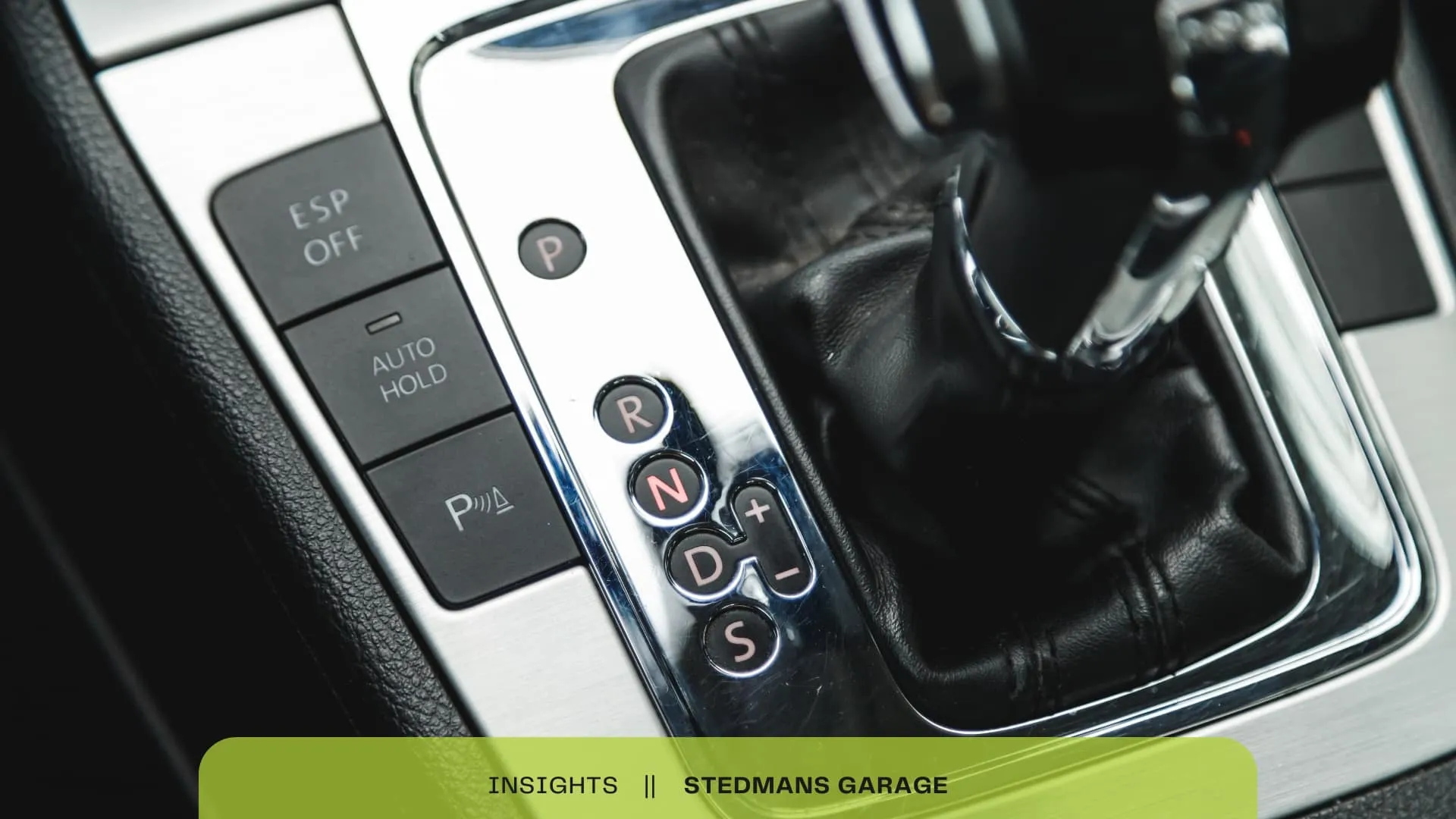
Creeping forward in a queue with your foot lightly on the brake in Drive keeps the clutch slipping and generates heat with nothing to carry it away, particularly on a dry-clutch gearbox. Leave a gap and move up in one go rather than inching forward, and when you stop, use the handbrake (or Auto Hold, if fitted).
Do Not Hold the Car on a Hill with the Throttle
Holding the car on an incline by balancing the throttle is slipping the clutch on purpose. Use the footbrake or the handbrake, or let the hill-hold function do its job if the car has one, and then pull away. Hill-hold stops the car rolling back; it does not stop clutch wear if you then sit on the throttle.
Drive Smoothly
Smooth, progressive acceleration and early, gentle braking keep the gearbox at a steady temperature and let it pre-select the right gear. Repeated hard launches and sustained aggressive driving heat the clutches. A DSG also adapts its shift behaviour to how it is driven, and it adapts most cleanly to a consistent driver.
Use Manual Mode Where It Helps
Manual mode or the paddles are genuinely useful when towing, on a long descent, or on a twisting road, because holding a gear stops the gearbox hunting between two ratios. Selecting Sport for overtaking is fine.
Do Not Ignore the Warning Light
A transmission warning, a flashing PRNDS display, or the gearbox dropping into limp mode is the gearbox protecting itself. Have the codes read before driving any distance. This is the difference between a small repair and a large one more often than anything else in this guide.
Keep It Cool
Heat is the other enemy of a DSG, and it is closely tied to oil. The wet-clutch gearboxes shed heat through an oil cooler, a heat exchanger connected to the engine cooling system. If that is compromised, the gearbox runs hot and everything above starts to happen faster.
What to Keep an Eye On
- The oil cooler. A leak at the cooler or its pipes lowers the oil level and lets the gearbox run hotter. It is worth a look whenever the car is on a lift.
- The engine cooling system. Neglected coolant can corrode the heat exchanger and, in the worst case, let coolant into the gearbox oil. Keep the coolant fresh and the level correct.
- Oil level. Less oil means less cooling capacity. A slow leak from the gearbox casing, the cooler pipes or the mechatronic housing lowers the level before it shows up as a fault.
- The way it is driven. Slow stop-start driving, queues and towing build heat; motorway cruising rarely does, because the clutches are fully engaged rather than slipping.
Signs the Gearbox Is Running Hot
- Slow or sluggish gear changes that were previously crisp
- Gear slip, with the revs rising faster than the road speed
- Dark or burnt-smelling oil when it is checked
- A burning smell from under the car, or a gearbox temperature warning
If a temperature warning appears, pull over safely and let the gearbox cool before continuing, then have it looked at. Do not assume the problem has gone because the warning cleared.
Software Updates and Adaptation Resets
The mechatronic unit runs on software, and Volkswagen has released updates over the years that change shift logic, improve clutch engagement and address known glitches. If your DSG has developed a habit, such as a hesitation or a harsh downshift, that is not accompanied by any fault codes, a software update or an adaptation reset is often the first thing a specialist will try, and it is the least expensive fix in the DSG repertoire.
How It Is Done
A specialist or a franchised dealer connects a manufacturer-level diagnostic tool (ODIS, Volkswagen's own system, or the VCDS aftermarket equivalent) to the car, checks the software version on the gearbox control unit, applies any update, and resets the adaptation values so the gearbox relearns the clutch engagement points from scratch. Ask for it to be checked whenever the car is in for a service.
An adaptation reset on its own is also worth doing after a DSG oil change and after any clutch or mechatronic work. Cheap code readers and phone apps can read fault codes, but they cannot reliably do either job, and a half-completed update can leave the gearbox worse than it started. This is one to leave to the diagnostic equipment.
What You Can Check Yourself, and What Needs a Specialist
Sensible Owner Checks
- Look for leaks. A sheet of cardboard under the middle of the car overnight will show a weep from the gearbox casing, the cooler pipes or the mechatronic housing. Gearbox oil is not easy to tell from engine oil by colour alone, so note where the drip sits: under the gearbox rather than the engine sump.
- Watch the dashboard. A transmission warning, a flashing PRNDS display or a check engine light alongside a change in shift behaviour is worth acting on straight away.
- Listen and feel. A new judder when pulling away, a whine or grind from the gearbox, a clunk on take-up, or a delay that has got longer are all changes worth noting and reporting.
- Keep the service history. On a wet-clutch car, receipts for DSG oil changes are the single most valuable thing in the file when you come to sell.
- Read the codes if you have a reader. A basic code reader will tell you whether the gearbox has stored a fault. It will not tell you what to do about it, so treat it as a prompt to book a diagnosis, not as the diagnosis.
Leave These to a Specialist
- The oil and filter change. The level is set by temperature and the adaptations need resetting afterwards; it is not an oil change in the driveway sense.
- Anything involving the mechatronic unit. Diagnosis needs live data and pressure readings, and the unit itself is a precision hydraulic component.
- Clutch work. Replacing DSG clutch packs means opening the gearbox and setting the new clutches up correctly.
- Noises from inside the gearbox. Bearing noise needs proper diagnosis before anything is condemned.
- Software. Updates and adaptation resets need manufacturer-level tools and a stable connection to the car.
The pattern across all of these is the same: the owner's job is to notice early and keep to the schedule, and the specialist's job is everything that needs the gearbox open or the diagnostic tool connected. Our guide to DSG gearbox repairs covers what each of those jobs involves.
Signs Your DSG Is Overdue for Attention
Most DSG faults announce themselves before they become expensive. These are the early signs that the gearbox is asking for attention, and any of them is a reason to book a check rather than wait for the next service.
- A judder or shudder when pulling away, especially when cold, which on a dry-clutch DQ200 is the classic early sign of clutch wear
- Gear changes that have become harsh, clunky or delayed, or a hesitation off the line that is getting longer
- A whine, grind or rumble from the gearbox that changes with speed
- The revs rising without the road speed following
- A flashing PRNDS display, a transmission warning light, or the gearbox dropping into limp mode
- A wet patch under the car, or an oil level that has dropped between services
Each of these is covered in detail, with its likely cause and urgency, in our guide to Volkswagen DSG problems. If you drive an Audi, the Audi DSG warning signs guide covers the same gearbox from the Audi side.
Has Your Car Been Recalled?
Volkswagen Group has issued DSG-related recalls and service campaigns over the years, and recall work is carried out free of charge by a franchised dealer. It is worth checking whether your car has anything outstanding, particularly if you have bought it used. The DVSA's vehicle recall checker lets you look up recalls by make and model, and a dealer can check the VIN against manufacturer service campaigns that do not appear there.
Frequently Asked Questions
How often should a Volkswagen DSG gearbox be serviced?
Volkswagen specifies an oil and filter change for the wet-clutch gearboxes (DQ250 and DQ500) every 40,000 miles, with some newer variants on a longer interval; the schedule in the handbook gives the figure for your car. The dry-clutch DQ200 has no scheduled gearbox oil change, but many specialists recommend renewing its mechatronic hydraulic oil. If the car does mostly town driving, towing or sits in traffic, servicing earlier than the maximum interval is sensible.
Does the DQ200 dry-clutch DSG need an oil change?
Not in Volkswagen's own schedule: the gearbox oil is a lifetime fill. The mechatronic unit, however, runs its own small supply of hydraulic oil, and because mechatronic faults are the most common expensive failure on this gearbox, many specialists recommend renewing that oil at intervals. Ask about it when the car is in for a service.
What does a DSG service involve?
Draining the old oil at the correct temperature, replacing the internal filter, refilling with the correct Volkswagen-specification oil to the correct level, resetting the gearbox adaptation values with a diagnostic tool, and a road test with a fault-code check. The fill level is temperature-dependent, which is why it is a job for the right equipment.
Can I change DSG oil myself?
It is not a driveway oil change. The gearbox has to be at a set temperature for both the drain and the fill, the fill needs a specific adapter and pump, the oil has to be the exact Volkswagen specification, and the adaptations need resetting with a diagnostic tool afterwards. Getting the level wrong produces the harsh shifting the service was meant to prevent. Most owners are better served having a specialist do it.
What driving habits damage a DSG gearbox?
Creeping in traffic with a foot on the brake in Drive, holding the car on a hill with the throttle, hard acceleration from cold, and repeated aggressive launches. All of them slip or overheat the clutches, and on a dry-clutch DQ200 the clutches have no oil to carry that heat away. Avoid creeping, use the handbrake or Auto Hold when stopped, let the gearbox warm up, and drive smoothly.
Does Stedmans Garage service DSG gearboxes?
Yes. Stedmans Garage in Worthing specialises in Volkswagen and Audi and maintains and repairs DSG gearboxes, with manufacturer-approved diagnostic software to find what has actually failed.
Keeping Your DSG Healthy in Worthing
A DSG that has had its oil changed on schedule, been driven with a little sympathy in traffic and had its software kept current is a gearbox that tends to go on for a very long time. Most of the DSG repairs we see trace back to one of those three things having been missed, usually years earlier.
If your DSG is due an oil change, if you are not sure when it last had one, or if it has started to behave differently, book online or call us on 01903 691666. Stedmans Garage is Worthing's VW and Audi specialist, and we will tell you what the gearbox actually needs. Get in touch with any questions.