
The quickest way to identify a 2.0 Ingenium engine is to check the model and model year first, then confirm it from the paperwork: Ingenium production began in 2015, but the Range Rover Evoque and Land Rover Discovery Sport only switched to the Ingenium diesel for the 2016 model year. Under the bonnet you will find an aluminium four-cylinder engine with Ingenium branding on its cover, and the V5C, the DVLA vehicle enquiry service and the engine number settle any doubt. The one trap to know about is the badge: an Evoque or Discovery Sport badged Td4 or Sd4 from before the 2016 model year has the older 2.2 litre diesel, not an Ingenium.
What the Ingenium Engine Family Is
Ingenium is Jaguar Land Rover's own modular engine family, built at its Engine Manufacturing Centre in Wolverhampton. Every version is aluminium and shares a cylinder size of about 500cc, so the family comes as a 1.5 litre three-cylinder, a 2.0 litre four-cylinder and a 3.0 litre straight-six. Production began in 2015, and the first car to use it was the Jaguar XE, followed by the XF.
Before Ingenium, Jaguar Land Rover's smaller models relied on engines from outside suppliers: a 2.2 litre diesel developed by Ford and PSA, which uses a cam belt, and a Ford-based 2.0 litre GTDi petrol. Ingenium replaced both, and that changeover is exactly why identification matters. Two cars that look identical from the outside can carry engines with different oils, different timing drives and different known faults.
Both fuels are turbocharged and use direct injection. The 2.0 diesel uses a single variable geometry turbocharger on most outputs, while the most powerful 240PS version uses two turbochargers working in sequence. The 2.0 petrol uses a twin-scroll turbocharger and electrohydraulic control of the inlet valves. For a model-by-model view of the Land Rover side, see which Land Rover models use the Ingenium engine.
Which Jaguar, Land Rover and Range Rover Models Use It
Jaguar, Land Rover and Range Rover are separate makes, so the lists below keep them apart. Each list covers the 2.0 Ingenium, with the hybrid exceptions noted.
Jaguar models
- Jaguar XE: the first Ingenium application in 2015. The diesel launched at 163PS and 180PS. See our guide to common Jaguar XE problems.
- Jaguar XF: followed the XE with the same 163PS and 180PS diesels. Our Jaguar XF common issues guide covers the wider car.
- Jaguar F-PACE: 2.0 Ingenium diesel and petrol versions, mounted longitudinally. See the Jaguar F-PACE problems owners report most often.
- Jaguar E-PACE: the transverse Jaguar, sharing its layout with the Evoque and Discovery Sport.
- Jaguar F-TYPE: offered with a 2.0 Ingenium petrol, mounted longitudinally.
For how the Ingenium compares with Jaguar's other engines, read our Jaguar engine problems guide.
Land Rover models
- Land Rover Discovery Sport: the Ingenium diesel arrived for the 2016 model year and the Ingenium petrol for the 2018 model year, replacing the 2.2 diesel and the GTDi petrol it launched with. Later cars added a mild hybrid diesel, and the P300e plug-in hybrid followed in 2020. Our rundown of Land Rover Discovery Sport problems covers the whole car.
- Land Rover Discovery (fifth generation, from 2017): the 2.0 Ingenium diesel as the Td4 (180PS) and the twin-turbo Sd4 (240PS), plus the 2.0 Ingenium petrol Si4 (300PS). The 3.0 Td6 V6 diesel sold alongside them is not an Ingenium. See the most common Land Rover Discovery faults.
- Land Rover Defender (from 2020): at launch the D200 and D240 diesels and the P300 petrol were 2.0 Ingenium four-cylinders. There was also a P400e plug-in hybrid and a P400 3.0 six-cylinder petrol, and later model years moved the diesels to the 3.0 six-cylinder Ingenium.
Range Rover models
- Range Rover Evoque: the Ingenium diesel arrived for the 2016 model year as the TD4 in 150PS and 180PS outputs, with a 150PS eD4 for the two-wheel drive version. The Ingenium petrol followed for the 2018 model year at 240PS and 290PS, and the P300e plug-in hybrid in 2020. Our Range Rover Evoque common issues guide covers the whole car.
- Range Rover Velar: 2.0 Ingenium diesel and petrol versions, mounted longitudinally. See Range Rover Velar common issues.
- Range Rover Sport: the P400e plug-in hybrid from 2018 pairs a 2.0 Ingenium petrol with an electric motor. See Range Rover Sport common faults.
- Range Rover: also offered as the P400e plug-in hybrid with the 2.0 Ingenium petrol.
The Pre-2016 Td4 Trap: Why Badges Can Mislead
Badges alone can mislead. An Evoque or Discovery Sport badged Td4 or Sd4 from before the 2016 model year has the older 2.2 litre Ford/PSA diesel, not an Ingenium. The petrol is the same story: Evoques and Discovery Sports from before the 2018 model year used the Ford-based 2.0 GTDi petrol, not the Ingenium petrol.
Two details make this easy to get wrong:
- Model year is not the registration year. A model year goes on sale before the calendar year it is named after, so a car registered in 2015 can be either engine. The registration date narrows it down but does not settle it.
- The same badge spans both engines. Land Rover kept the Td4 name when the Ingenium diesel arrived, so "Td4" on the tailgate tells you it is a diesel, not which diesel.
It matters for more than curiosity. The 2.2 diesel has a cam belt that needs replacing on schedule, while the Ingenium has a timing chain with no scheduled replacement. The two engines take different oils, different parts and have different known faults, so the wrong assumption leads to the wrong service and the wrong pre-purchase questions.
Identifying the Engine From the Paperwork and VIN
The paperwork is the most reliable route for an owner or buyer, because it does not depend on badges or engine covers that may have been changed. Work through these in order.
The V5C logbook
The V5C shows the engine size and the fuel type. That alone separates the two engines that cause most of the confusion: a 2.0 Ingenium shows a capacity of about 2.0 litres, while the older diesel shows about 2.2 litres. The V5C also gives the date of first registration, which narrows down the model year.
The DVLA vehicle enquiry service
If you are looking at a car you do not own yet, the DVLA vehicle enquiry service on GOV.UK gives the same engine size and fuel type from the registration number alone. It is free and takes a minute, so it is worth doing before you travel to view a car.
The engine number on the block
The engine block carries its own engine number, separate from the VIN. It identifies the engine actually fitted, which matters if the car has ever had a replacement engine. It is not always easy to read without removing covers, so a specialist is the practical route if you need it confirmed.
What the VIN can and cannot tell you
The VIN is the 17-character number on the V5C and on a plate visible through the windscreen. Jaguar VINs start SAJ and Land Rover VINs, including Range Rover models, start SAL. On recent Jaguar and Land Rover VINs, one character in the descriptor section records the engine fitted, but the code letters vary by model and year, so they need Jaguar Land Rover data to interpret. There is no simple rule that reads the engine straight off the VIN.
The ninth character is a check digit, which is required on vehicles built for North America. European vehicles do not have to use it, so do not read anything into it on a UK car.
Why American online decoders get UK cars wrong
Many free VIN decoders, including the NHTSA tool, are built on data that manufacturers submit for vehicles sold in the United States. A UK car with a UK engine and right-hand drive may decode partly or wrongly, and the engine field is one of the most likely to be missing or incorrect. For a UK vehicle, use the V5C, the DVLA vehicle enquiry service and the engine number instead.
Jaguar Land Rover engine codes
Invoices, parts catalogues and workshop records often use Jaguar Land Rover's engine codes rather than marketing names:
- AJ200D: the 2.0 four-cylinder Ingenium diesel (also catalogued as 204DTD).
- AJ200P: the 2.0 four-cylinder Ingenium petrol.
- AJ300D: the 3.0 six-cylinder Ingenium diesel. It is a different engine, not a more powerful 2.0.
Ask a specialist to read the build data
Equipment that reads Jaguar Land Rover systems can read the vehicle's build data directly from the car, which removes any doubt about the engine and its output. This is the definitive answer if the paperwork and the badges disagree.
Under the Bonnet: Physical Checks
A look under the bonnet confirms what the paperwork says. These are the checks that genuinely separate the engines.
Engine cover and model badges
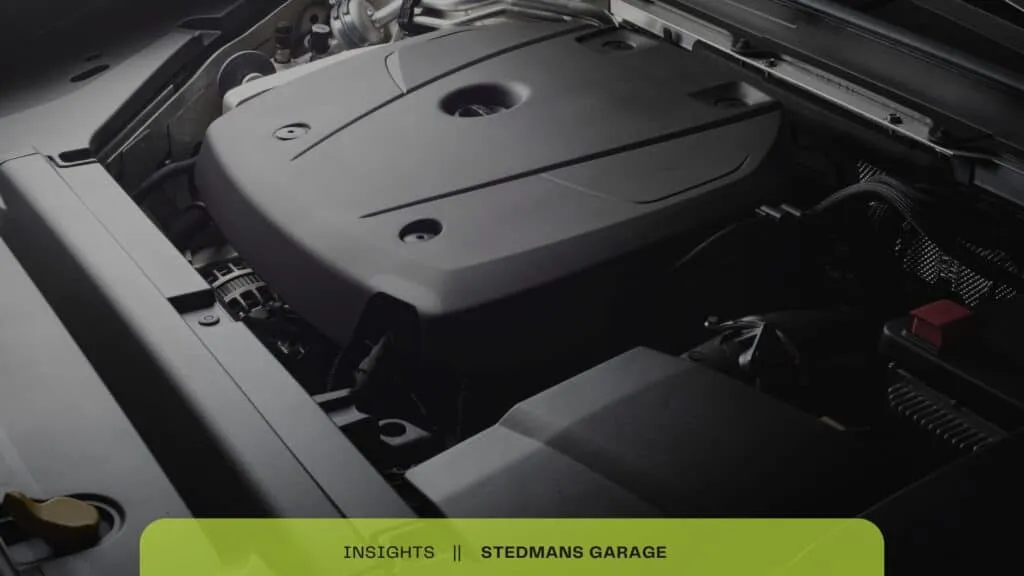
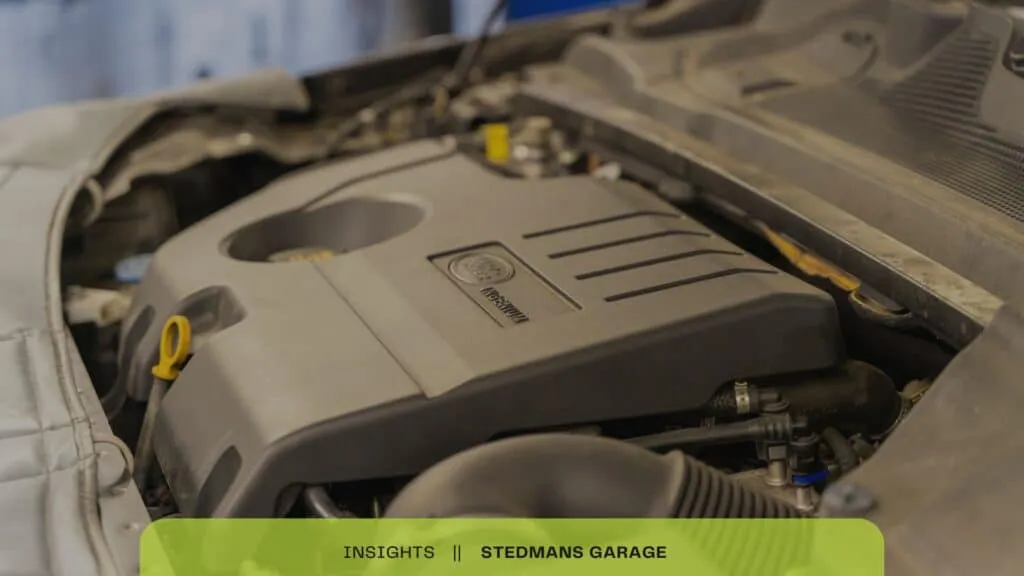
The engine cover carries Ingenium branding. The model badge on the tailgate, such as D180 or P300, shows the fuel and the output. Covers and badges can be swapped or removed, so treat them as supporting evidence rather than proof.
Petrol or diesel
The label inside the fuel filler flap is the fastest check. Under the bonnet, the petrol has ignition coils on top of the engine, while the diesel has glow plugs and the exhaust aftertreatment that goes with it, including a diesel particulate filter. Both fuels use direct injection, so injection alone does not tell them apart: the diesel uses a high-pressure common rail feeding injectors directly into each cylinder, and the petrol's direct injection system runs at around 200 bar.
Turbocharger arrangement
Most 2.0 diesels have a single variable geometry turbocharger. The 240PS diesel, badged Sd4 in the Discovery and later D240, uses two turbochargers in series. The 2.0 petrol uses a twin-scroll turbocharger.
Transverse or longitudinal
The 2.0 Ingenium is mounted transversely (across the car) in the Evoque, Discovery Sport and E-PACE. It is mounted longitudinally (front to back) in the XE, XF, F-PACE, F-TYPE, Velar, Range Rover Sport, Range Rover, Discovery and Defender. The layout matters later, because it changes where the diesel particulate filter sits and how the engine is reached for some jobs.
The Discovery Sport's later cars sit on Land Rover's Premium Transverse Architecture, while earlier cars used a different platform. Both mount the engine transversely, so the platform is not a way to tell the engines apart.
What you will not see: the timing chain
The 2.0 Ingenium's timing chain sits at the rear of the engine, at the gearbox end. It cannot be seen at a service and cannot be adjusted, because it runs on a hydraulic tensioner. Replacing it means fitting a revised chain, guides and tensioner kit with the gearbox removed or the engine out. If you want to know why the chain matters on the diesel, our guide to 2.0 Ingenium engine problems covers it in depth.
Mild hybrid and plug-in hybrid versions
The 2.0 mild hybrid uses a 48 volt belt-integrated starter generator. The 48 volt electric supercharger belongs only to the 3.0 straight-six petrol, and no Ingenium engine has a belt-driven supercharger. The P300e plug-in hybrid in the Evoque and Discovery Sport is not a 2.0 at all: it pairs a 1.5 litre three-cylinder Ingenium petrol of 200PS with a 109PS electric motor on the rear axle, giving 309PS combined. The P400e in the Range Rover Sport and Range Rover pairs a 300PS 2.0 Ingenium petrol with an electric motor for 404PS combined.
Power Outputs and What the Badges Mean
The 2.0 Ingenium has been sold at several outputs, and the badges changed over the years:
- Jaguar diesels: the XE and XF launched with 163PS and 180PS.
- Land Rover and Range Rover diesels: 150PS and 180PS from the 2016 model year, badged Td4 (and eD4 for the 150PS two-wheel drive Evoque), with a 240PS twin-turbo version from 2017.
- Later mild hybrid diesels: badged D165 and D200, with the output in the name.
- Petrols: 240PS and 290PS Si4 in the Evoque and Discovery Sport from the 2018 model year, and up to 300PS elsewhere, badged Si4 300 in the Discovery and P300 in later models.
- Plug-in hybrids: the P300e (1.5 three-cylinder, 309PS combined) and the P400e (2.0 four-cylinder, 404PS combined).
Use the badge as a starting point and the paperwork to confirm. A Td4 from the 2016 model year onwards is an Ingenium; an earlier one is not. For how the outputs and fuels compare in day-to-day ownership, see whether the 2.0 Ingenium is a good engine.
Why Knowing Your Engine Matters at Service Time
Identification is not just for buyers. The petrol and diesel versions need different things, and getting them confused is one of the easiest ways to shorten an engine's life.
- Oil specification: the 2.0 Ingenium petrol needs oil to JLR specification STJLR.03.5006 (0W-20). The 2.0 diesel needs STJLR.03.5007 (0W-30), a low-SAPS oil that protects the particulate filter. Check the specification printed on the bottle, not just the viscosity, and treat the handbook as the authority.
- Oil filter: the 2.0 Ingenium uses a replaceable filter element inside a housing rather than a spin-on canister. Check the workshop information for your model before starting, as access differs between transverse and longitudinal installations.
- Fuel filter: the position varies by model, so check the workshop information for your vehicle.
- Service schedule: Jaguar Land Rover uses a flexible, indicator-driven schedule, so follow the service indicator and the handbook rather than a general figure.
- Diesel-only issues: fuel in the oil from particulate filter regeneration, and the timing chain stretch that mainly affects the 2.0 diesel.
Our Ingenium engine maintenance guide covers oil, the schedule and protecting the chain in detail, and our servicing in Worthing page explains how we look after these cars.
Which Car Do You Have?
Once you know the engine, the next step depends on the make. We look after Jaguar, Land Rover and Range Rover models with main-dealer equipment, so we can read the build data and confirm exactly which engine and output your car has. If the paperwork and the badges do not agree, or you are checking a car before you buy it, get in touch with our team.
Frequently Asked Questions
How do I know if my car has a 2.0 Ingenium engine?
Start with the model and model year. Ingenium production began in 2015, with the Jaguar XE first, and the Evoque and Discovery Sport switched to the Ingenium diesel for the 2016 model year and the Ingenium petrol for the 2018 model year. Then confirm it from the V5C or the DVLA vehicle enquiry service, which show the engine size and fuel type, or ask a specialist to read the build data from the car.
How can I tell a 2.0 Ingenium diesel from the older 2.2 diesel?
The engine size on the V5C is the simplest check: the Ingenium shows about 2.0 litres and the older Ford/PSA diesel about 2.2 litres. The badge will not help, because both engines were sold as Td4 in the Evoque and Discovery Sport. An Evoque or Discovery Sport badged Td4 or Sd4 from before the 2016 model year has the 2.2 litre diesel, which uses a cam belt rather than the Ingenium's timing chain.
How do I find out which engine my car has from the paperwork?
Check the V5C logbook for the engine size, fuel type and date of first registration. If you do not have the V5C, the DVLA vehicle enquiry service on GOV.UK gives the engine size and fuel type from the registration number. The engine number on the block identifies the engine actually fitted, and a Jaguar Land Rover specialist can read the build data from the car to confirm the exact engine and output.
Can I use an online VIN decoder to find my engine?
Not reliably on a UK car. Jaguar VINs start SAJ and Land Rover VINs start SAL, and one character in the descriptor section records the engine, but its code letters vary by model and year and need Jaguar Land Rover data to interpret. Free decoders such as the NHTSA tool are built on data for cars sold in the United States, so they can give wrong or incomplete results for a UK vehicle.
Is the P300e a 2.0 Ingenium?
No. The P300e plug-in hybrid in the Evoque and Discovery Sport uses a 1.5 litre three-cylinder Ingenium petrol of 200PS with a 109PS electric motor on the rear axle, giving 309PS combined. The P400e in the Range Rover Sport and Range Rover is the plug-in hybrid with the 2.0 Ingenium petrol, at 404PS combined.
Can Stedmans Garage confirm which Ingenium engine is in my car?
Yes. Stedmans Garage are Jaguar, Land Rover and Range Rover specialists with main-dealer equipment, so we can read the build data from the car and confirm the engine and output. That is the quickest answer if the badge, the paperwork and the seller's description do not agree.