
Most Jaguar engine problems come down to which engine the car has. On the 2.0 Ingenium four-cylinder diesel fitted to most newer XE, XF, F-Pace and E-Pace models, the faults to know about are timing chain stretch and emissions-system problems. On the older 3.0 V6 diesel it is bottom-end wear. On the supercharged V6 and V8 petrols it is supercharger, cooling system and timing chain tensioner wear. Knowing your engine tells you which symptoms to take seriously, and which warning signs mean stop driving now.
Which Jaguar Engine Do You Have?
Modern Jaguars have used a small number of engine families, and each has its own pattern of faults:
- 2.0 Ingenium four-cylinder diesel and petrol: the engine in most newer XE, XF, F-Pace and E-Pace cars, and also used across Land Rover and Range Rover models.
- 3.0 V6 diesel: found in the larger-engined XF, XJ and F-Pace.
- 3.0 V6 supercharged petrol: used in the F-Type and in the faster versions of the XE, XF and F-Pace.
- 5.0 V8 supercharged petrol: the engine in the F-Type R and SVR, the XFR and XJR, and the F-Pace SVR.
The engine size and fuel type are on the V5C logbook, and the badge on the back of the car is usually a good guide. If you are not sure, a diagnostic scan will identify the engine as well as reading any stored fault codes.
2.0 Ingenium Diesel Problems (XE, XF, F-Pace and E-Pace)
This is the engine behind most of the Jaguar engine problems people search for, simply because it is in so many cars. Three faults account for most of it.
Timing chain stretch
The Ingenium's timing chain sits at the back of the engine, against the gearbox, rather than at the front where it is easier to reach. Early engines in particular are known for the chain stretching. The first sign is usually a metallic rattle for a few seconds after a cold start, sometimes with a fault code for camshaft and crankshaft timing. Jaguar revised the chain, guides and tensioner more than once, so the risk varies with the build of the engine, but on any Ingenium diesel a cold-start rattle should be checked rather than lived with. Our guide to Jaguar XF timing chain problems covers the symptoms in more detail.
Oil dilution and DPF regeneration
The diesel particulate filter cleans itself by burning off soot, which needs a sustained run at speed. On short journeys the regeneration often starts and never finishes, and the extra fuel injected to raise the exhaust temperature can find its way into the engine oil. Diluted oil is thinner oil, which protects the chain and bearings less well, and it is one reason short-journey Ingenium diesels need their oil watched closely. A rising oil level on the dipstick or the car's oil level display is a warning sign, not a bonus.
EGR, DPF and AdBlue faults
The emissions hardware on these engines is where many warning lights come from. A clogged EGR valve or cooler can put the car into limp mode with a sudden loss of power, which we cover in Jaguar XF EGR valve failure and limp mode. Later diesels also use AdBlue, and an AdBlue warning has its own countdown: once the tank runs dry the car will not restart. Our Jaguar F-Pace AdBlue guide explains what each warning means.
3.0 V6 Diesel Problems
The 3.0 V6 diesel is a strong, smooth engine, but it has one failure mode that matters more than any other: wear in the bottom end. The main and big-end bearings can wear or spin, starving the crankshaft of oil, and in the worst cases the crankshaft fails. Once that happens, the engine usually needs rebuilding or replacing.
The warning signs are a knocking noise from low down in the engine that rises with revs, an oil pressure warning, and metal particles in the oil. If you hear a deep knock or see the oil pressure light on a V6 diesel, stop and switch off. Driving on is what turns a bearing problem into a broken crankshaft. Regular oil changes with the correct specification of oil are the best protection.
Turbocharger faults and oil leaks from the oil cooler and its pipework are also commonly reported on this engine as it gets older. Both are worth catching early, because a turbo starved of oil fails quickly.
3.0 V6 and 5.0 V8 Supercharged Petrol Problems
The supercharged petrols, in the F-Type, XFR, XJR, F-Pace SVR and the faster XE and XF models, share a family of faults:
- Supercharger coupler rattle: a rattle at idle, often most noticeable on start-up and shut-down, usually comes from the worn coupling (isolator) between the supercharger and its drive. A revised part exists, and the fix is far smaller than the noise suggests.
- Water pump and coolant leaks: these engines are known for water pump failures and leaks from plastic coolant pipes. A slowly dropping coolant level, a sweet smell after a drive or a temperature warning all need checking quickly, because an alloy engine that overheats can warp its cylinder heads.
- Timing chain tensioners and guides: early V8 and V6 supercharged engines can wear their timing chain tensioners and guides, which shows up as a rattle and timing-related fault codes. Left alone, the chain can jump.
Problems Any Jaguar Engine Can Have
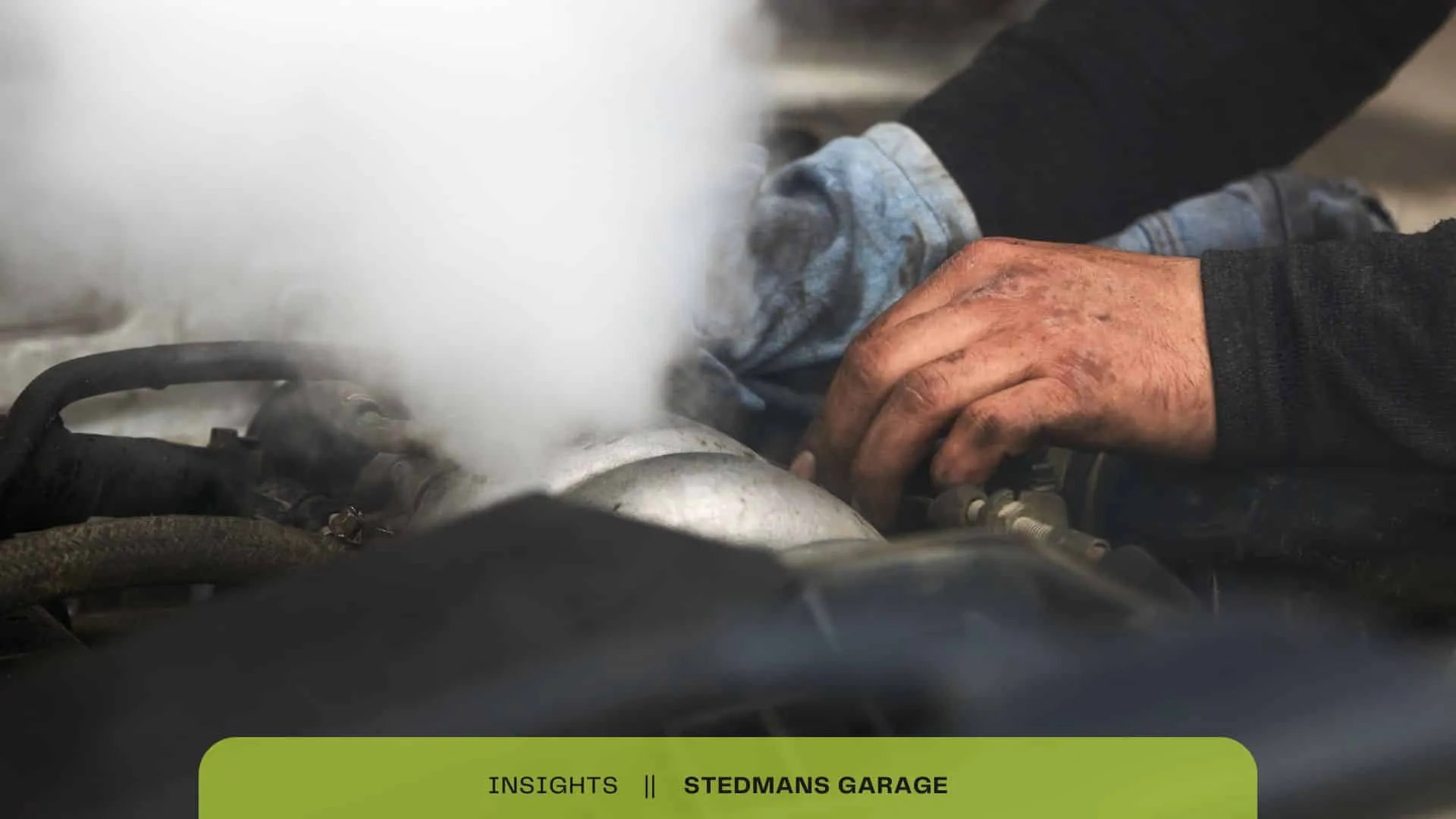
Some faults are not tied to one engine family, and every Jaguar can suffer them:
- Oil leaks: seals and gaskets harden with heat and age. Spots under the car or a burning smell after a drive are the usual signs. If you are topping up between services but cannot see a leak, read is your Jaguar burning oil.
- Misfires: worn spark plugs or failing ignition coils on petrol engines, and injector faults on diesels, cause rough running, hesitation and a flashing engine light.
- Overheating: coolant leaks, a sticking thermostat or a failing water pump. Never keep driving with the temperature warning on.
Jaguar Engine Warning Lights: When to Stop
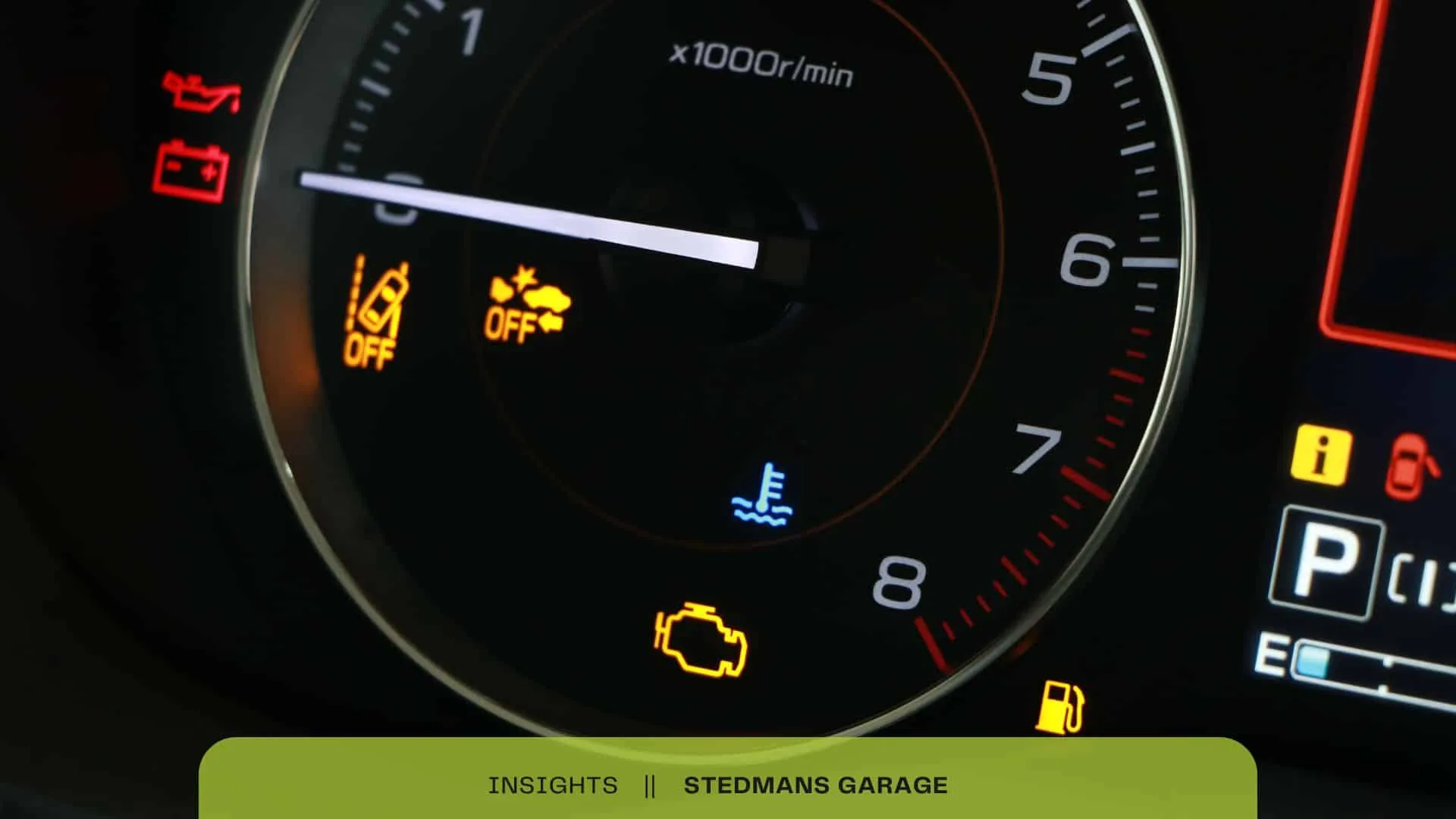
Jaguar warning lights fall into two groups, and the difference matters:
- Stop as soon as it is safe: the oil pressure warning, the temperature warning, a flashing engine management light, or any warning that comes with knocking, smoke or a sudden loss of power.
- Get it checked soon: a steady engine management light with the car driving normally, a DPF or AdBlue warning, or a message telling you to visit a retailer.
A warning light tells you which system has reported a fault, not which part has failed. Reading the stored fault codes with the right equipment is the only way to find out what is actually wrong, and it stops a simple sensor fault being treated as a major engine repair.
Model-by-Model Guides
Each model has its own wider list of common faults beyond the engine. If you know which Jaguar you have, these go into more detail:
- Jaguar XE common problems
- Jaguar XF common problems
- Jaguar F-Pace common problems
- Jaguar E-Pace common problems
How to Avoid the Expensive Jaguar Engine Failures
Most of the serious failures above give warning first. These habits make the difference:
- Service on time, with the right oil: follow the service indicator and the handbook, and use oil to the specification Jaguar sets for your engine. If most of your driving is short local trips, ask whether an extra oil change between services makes sense for your car.
- Give a diesel a proper run: a regular longer drive at steady speed lets the DPF regenerate fully and keeps oil dilution down.
- Listen on a cold start: a rattle that fades after a few seconds is easy to ignore and is often the earliest warning of timing chain wear.
- Watch the levels: oil rising on a diesel, oil falling on any engine, or coolant dropping are all worth a check before they become a warning light.
- Never drive on a red warning: oil pressure and temperature warnings are the two that separate a repair from a replacement engine.
Jaguar Engine Diagnostics in Worthing
Stedmans are Jaguar specialists in Worthing with main-dealer equipment, so we can read the engine's own fault data rather than guessing from the dashboard. Whether it is a cold-start rattle on an Ingenium, a knock from a V6 diesel or a coolant leak on a supercharged petrol, we can diagnose the cause and talk you through the options.
Frequently Asked Questions
What is the most common Jaguar engine problem?
It depends on the engine. On the 2.0 Ingenium four-cylinder diesel used in the XE, XF, F-Pace and E-Pace, timing chain stretch and emissions-system faults (EGR, DPF and AdBlue) are the ones owners report most. On the older 3.0 V6 diesel, bottom-end bearing and crankshaft failures are the serious concern. On the supercharged 3.0 V6 and 5.0 V8 petrols, supercharger coupler rattle, water pump and coolant leaks, and early timing chain tensioner wear are the usual suspects.
Which Jaguar engines are the most reliable?
No engine family is trouble-free, and the condition of an individual car matters more than its badge. A car with a full service history, oil changed on time and no warning lights stored is a better bet than a lower-mileage car that has been neglected. If you are buying, a pre-purchase diagnostic check that reads the engine's stored fault codes is worth more than any general reliability ranking.
What does a rattle on a cold start mean on a Jaguar diesel?
On a 2.0 Ingenium diesel, a metallic rattle for the first few seconds after a cold start is a classic early sign of a stretched timing chain. It can also be other things, so it needs checking rather than assuming, but it should never be ignored. A chain that keeps stretching can eventually jump a tooth, and that can cause serious engine damage.
Can I keep driving if my Jaguar engine warning light is on?
If the light is steady and the car drives normally, get it checked soon rather than straight away. If the light is flashing, the car has gone into limp mode, or the oil pressure or temperature warning is showing, stop as soon as it is safe and do not keep driving. Those warnings can mean damage is happening in real time, and driving on is how a repair turns into a replacement engine.
Why does short-journey driving cause problems on Jaguar diesels?
A diesel particulate filter needs regular longer runs to clean itself. On short trips the regeneration often starts but does not finish, and the extra fuel it injects can end up in the engine oil and dilute it. Thinner oil protects the timing chain and bearings less well, and a filter that never fully clears will eventually block. Regular longer drives help, and so does having the oil and DPF status checked if most of your driving is local.
Can Stedmans diagnose Jaguar engine problems in Worthing?
Yes. Stedmans are Jaguar specialists with main-dealer equipment, and carry out full vehicle computer diagnostics, engine work and emissions repairs on Jaguars at our Worthing garage. Read more on our Jaguar specialist page, or get in touch to book a diagnostic check.