
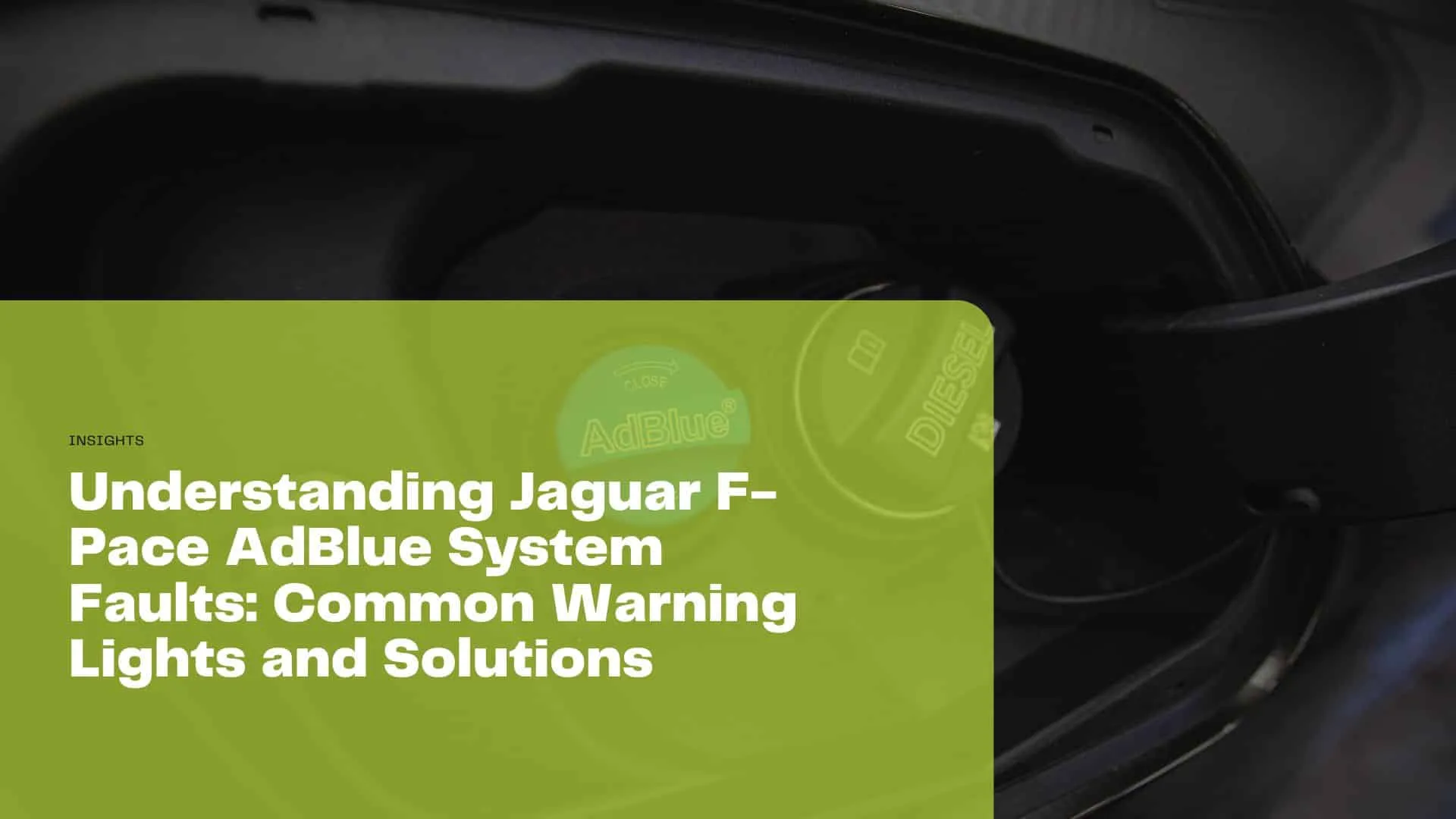
An AdBlue warning on a Jaguar F-Pace usually means the fluid is low, but it can also mean the AdBlue does not meet specification or the SCR system itself has a fault. Top up first with compliant AdBlue. If the light stays on afterwards, the fault is in the system rather than the fluid and needs reading properly, because once the tank runs empty the car will not restart.
Introduction
The Jaguar F-Pace is a stunning blend of performance and luxury, equipped with advanced technology that enhances both the driving experience and environmental responsibility. A vital component of this technology is the AdBlue system, which plays a crucial role in reducing nitrogen oxides (NOx) emissions in compliance with stringent UK regulations. Understanding how this system functions, its common faults, and the associated warning lights is essential for UK drivers to ensure their vehicles operate optimally.
This blog will explore the intricacies of the AdBlue system in your Jaguar F-Pace, delve into common faults that may arise, discuss warning lights related to the AdBlue system, provide troubleshooting advice, and offer preventative maintenance measures. By the end of this comprehensive guide, UK Jaguar F-Pace owners and automotive enthusiasts will be better equipped to handle AdBlue system faults effectively, ensuring their vehicles remain in peak condition.
The Role of the AdBlue System in Your Jaguar F-Pace
What is the AdBlue System?
The AdBlue system is a critical part of diesel engine technology designed to reduce harmful emissions produced during combustion. AdBlue is a non-toxic fluid made up of 32.5% urea and 67.5% deionised water, which is injected into the exhaust system. Its primary function is to convert nitrogen oxides (NOx) into harmless nitrogen and water vapour through a process known as Selective Catalytic Reduction (SCR).
In the UK, where emissions standards are strictly enforced, AdBlue is essential for diesel vehicles, including the Jaguar F-Pace, which aims to balance performance with environmental responsibility. The AdBlue system not only helps achieve compliance but also enhances the longevity and efficiency of your diesel engine.
None of this applies on the battery-electric side of the range, where there is no exhaust aftertreatment to look after at all. What replaces it is set out in our guide to caring for the Jaguar I-PACE.
How the AdBlue System Works
As your Jaguar F-Pace operates, the engine generates exhaust gases, including harmful NOx emissions. When these gases pass through the SCR catalytic converter, a controlled amount of AdBlue is injected into the exhaust stream. This fluid breaks down NOx into nitrogen and water, which can safely exit the vehicle. Thus, the AdBlue system is pivotal in ensuring that Jaguar F-Pace owners remain compliant with UK regulations, significantly reducing their vehicle's environmental impact.
An important aspect to note is the necessity of maintaining proper AdBlue fluid levels. Low levels can lead to various performance issues, triggering warning lights and potentially compromising your driving experience.
Common Faults Related to the AdBlue System

Low AdBlue Fluid Levels
Low AdBlue levels are among the most common faults encountered by Jaguar F-Pace owners. The system typically triggers a warning light when the AdBlue fluid level is critically low. Ignoring this warning can lead to severe consequences, including reduced engine power and even engine shutdown.
Impact on Vehicle Performance:
- When the AdBlue tank is low, the vehicle may enter "limp mode," reducing performance to prevent potential damage.
- This can make acceleration challenging and impact driving uphill, severely affecting your driving experience.
Real-World Examples:
- Several UK drivers have reported experiencing a sudden loss of power when attempting to overtake on the motorway after ignoring the low AdBlue warning light, highlighting the need for timely maintenance.
AdBlue Quality Issues
Not all AdBlue fluids are created equally. Using low-quality or non-compliant AdBlue can lead to substantial issues, including degradation of the SCR system.
Problems with Non-Compliant AdBlue:
- Non-compliant AdBlue may contain impurities that lead to crystallisation within the system, triggering warning lights indicating SCR problems.
AdBlue System Malfunction
AdBlue system malfunctions can arise from various issues, such as faulty sensors, pumps, or wiring problems. When these components fail, they can trigger warning lights and limit engine performance.
Definitions and Examples:
- Faulty Sensors: Sensors can become damaged due to extreme temperatures or poor maintenance, leading to inaccurate readings and triggering warning lights.
- Pump Failures: These issues may prevent proper AdBlue injection into the exhaust system, directly impacting emission reduction.
Being aware of these potential faults and their symptoms allows UK drivers to take proactive measures before serious issues arise.
Understanding Common Warning Lights Related to the AdBlue System
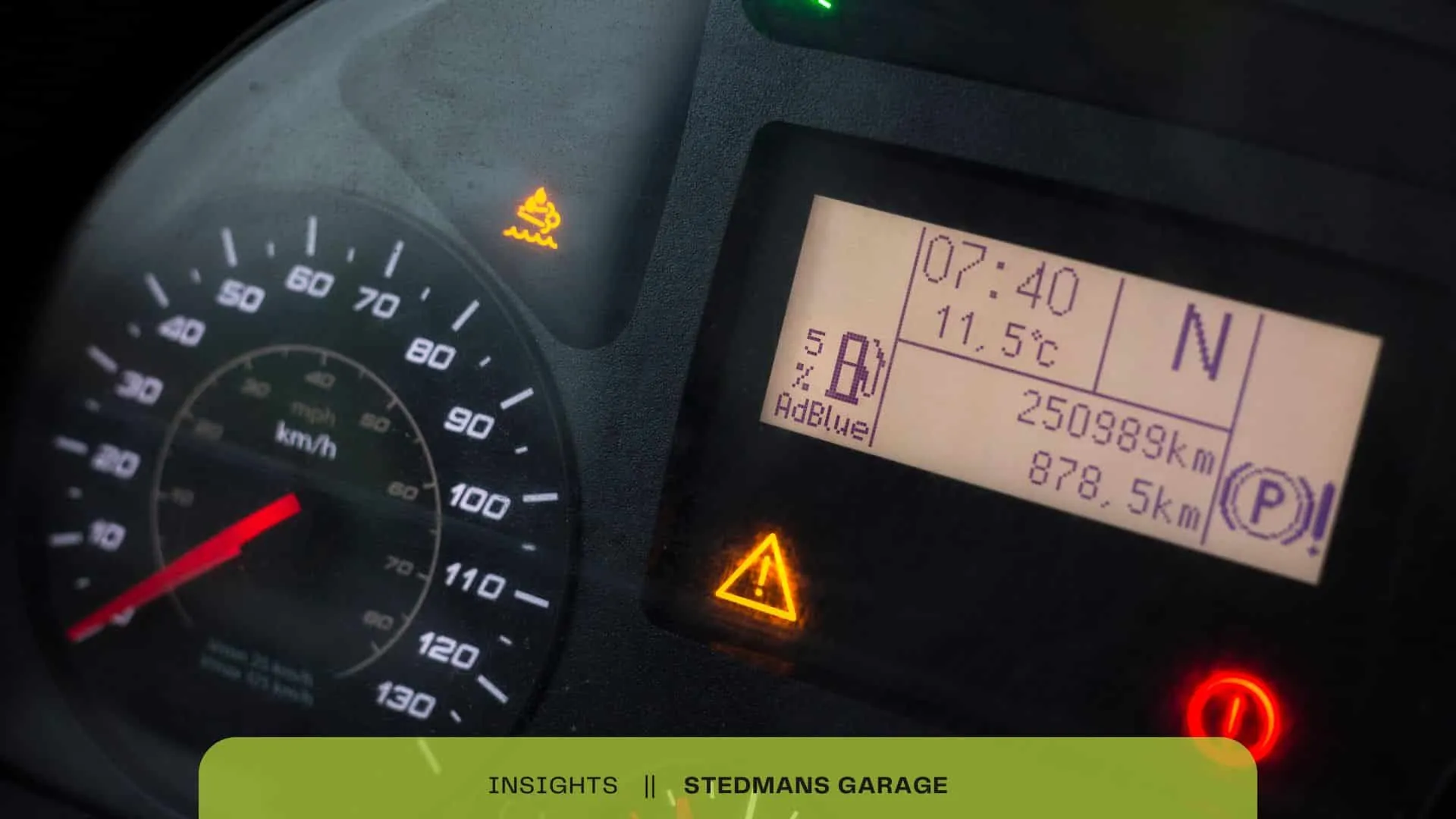
AdBlue System Warning Light
The AdBlue system warning light is a crucial indicator for Jaguar F-Pace owners. It typically illuminates in the following scenarios:
- Low AdBlue Levels: This alerts you that the fluid is nearing depletion and requires immediate attention.
- Quality Problems: If the system detects non-compliant AdBlue, this warning light may also activate.
Action to Take:
- If this light comes on, first check the AdBlue levels and refill if necessary.
- If the light persists after refilling, seeking professional diagnostics may be necessary to pinpoint the underlying issue.
Engine Warning Light
The engine warning light may also be linked to AdBlue system faults, representing a broader spectrum of concerns.
Connection to Emissions:
- If the AdBlue system fails, it can cause emission reduction inefficiencies, prompting the engine management system to trigger an alert.
Troubleshooting Steps:
- Check AdBlue Levels: Ensure that you have adequate AdBlue fluid.
- Examine Other Indicators: Look for other warning lights that might indicate additional problems.
- Consult Professionals: If both lights are illuminated, immediately seek diagnostic help to prevent further complications.
Understanding the significance of these warning lights can significantly influence your vehicle's performance and reliability.
Troubleshooting AdBlue System Faults
If you encounter issues with the AdBlue system, UK drivers can follow these actionable steps to identify and rectify problems.
Step-by-Step Troubleshooting:
- Check Fluid Levels: Start by checking the AdBlue fluid level; if it’s low, refill it with compliant AdBlue to the recommended level.
- Inspect for Leaks: Examine the AdBlue tank and hoses for leakage signs, which can lead to fluid loss and performance drops.
- Examine Warning Lights: Note any warning lights and refer to your vehicle manual for specific diagnostic messages related to the AdBlue system.
- Use an OBD-II Scanner: If possible, utilise an OBD-II scanner to retrieve diagnostic trouble codes (DTCs), invaluable in pinpointing the issue accurately.
- Professional Assistance: If troubleshooting proves ineffective or warning lights remain illuminated, consult a certified technician experienced with Jaguar vehicles.
AdBlue faults rarely turn up on their own on an older diesel Jaguar, and the particulate filter and timing chain are the two that tend to arrive with them. Both are covered in the Jaguar XF common issues guide.
Common Diagnostic Messages
Numerous fault codes can appear when your Jaguar F-Pace experiences AdBlue system issues, including:
- P20E8: reductant pressure too low, meaning the AdBlue is not reaching the required delivery pressure.
- P204F: reductant system performance, meaning the SCR system is not reducing emissions as effectively as it should.
Understanding these codes helps you grasp the underlying problem and communicate effectively with your technician.
Preventative Measures for AdBlue System Maintenance
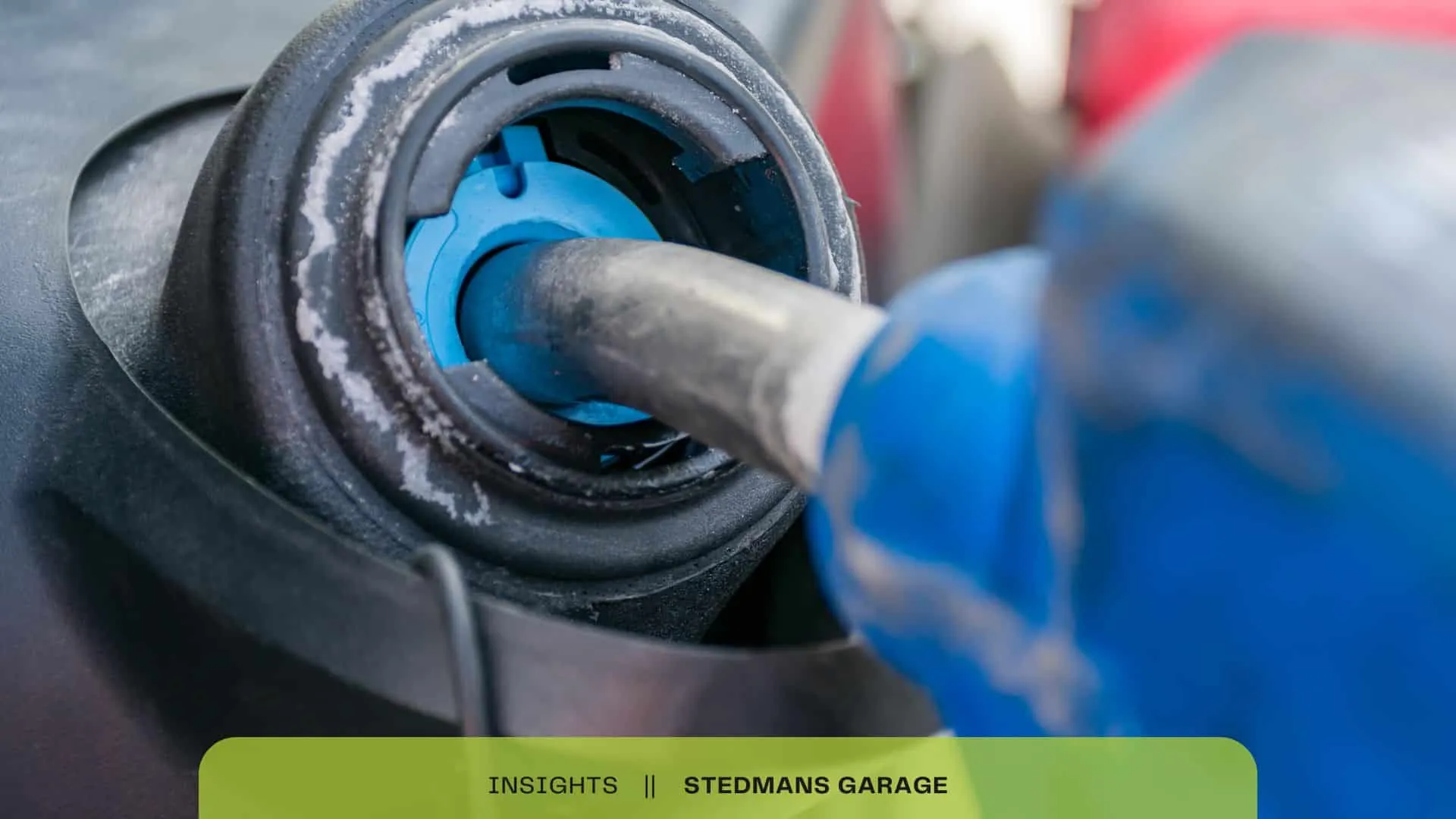
Maintaining the AdBlue system in excellent condition can prevent many common issues Jaguar F-Pace owners face. Here are best practices for UK drivers:
Best Practices for Maintaining the AdBlue System
- Regular Checks: Establish a routine to check AdBlue levels, especially before long journeys.
- Use Compliant AdBlue Fluid: Only utilise high-quality, compliant AdBlue from reputable retailers.
- Monitor Warning Lights: Be diligent about warning lights and address them promptly to forestall severe problems.
- Keep the System Clean: Regularly inspect and clean components such as tank fillers and hoses to prevent contamination.
- Scheduled Servicing: Adhere to manufacturer service intervals to ensure the AdBlue system remains in optimal condition.
Implementing these preventative measures allows UK drivers to enhance the longevity and efficiency of their Jaguar F-Pace's AdBlue system, contributing to a better ownership experience.
Checking and Maintaining the AdBlue System
Step-by-Step Guidance on Checking and Maintaining the AdBlue System
- Locate the AdBlue Tank: In the Jaguar F-Pace, the AdBlue tank is often accessible through the fuel filler area.
Check Fluid Levels:
- Open the AdBlue filler cap.
- Use a dipstick or funnel to check fluid levels; refill if necessary.
Top Up with Compliant AdBlue:
- Purchase compliant AdBlue fluid from trusted suppliers.
- Pour carefully while avoiding spills; clean up any spills immediately to prevent damage.
Inspect for Leaks:
- Regularly check around the AdBlue tank and application system for visible leaks.
Scan for Fault Codes:
- If warning lights illuminate, use an OBD-II scanner or visit a garage for a diagnostic check.
Document Maintenance:
- Keep a log of your checks and any maintenance performed to ensure continuity over time.
Following these steps enables proactive maintenance of your AdBlue system, potentially saving you from costly repairs.
Jaguar AdBlue Diagnostics in Worthing
If the light has stayed on after a correct top-up, the next step is reading what the SCR system itself is reporting. We do that at our Worthing workshop as Jaguar specialists. For the wider picture on this model, see our guide to the most common Jaguar F-Pace problems, and if your car is going into limp mode rather than showing an AdBlue warning, the likelier culprit is covered in our guide to EGR valve failure and limp mode.
Frequently Asked Questions
What does the AdBlue warning light mean on a Jaguar F-Pace?
Most often that the AdBlue level is getting low and needs topping up. The same light can also come on if the system detects AdBlue that does not meet the required specification, so if it stays on after a correct top-up, the cause is in the system rather than the fluid and needs diagnosing.
Can I keep driving with the AdBlue warning light on?
For a while, yes, and the car will tell you roughly how far you have left. Do not leave it, though. Once the AdBlue tank runs dry the car will not restart, by design, because emissions rules require it. That turns a refill into a recovery, so treat the warning as a countdown rather than a suggestion.
What happens if I put the wrong AdBlue in?
AdBlue has to meet a defined specification, and the system can detect fluid that does not. Using non-compliant fluid, or contaminating the tank, can bring on the warning light and in some cases damage the injector and lines. Only use AdBlue sold as meeting the ISO 22241 specification, and never top up with anything else.
What do fault codes P20E8 and P204F mean?
Both point at the SCR system that the AdBlue feeds. P20E8 is reported when reductant pressure is too low, and P204F when the system is not performing as expected. Neither names the failed part: a code identifies the circuit reporting the fault, so the pressure, the pump, the injector and the sensors all still need testing before anything is replaced.
Why does the engine warning light come on with an AdBlue fault?
Because the AdBlue system is part of how the car controls emissions. If the SCR system is not doing its job, the engine management system sees the emissions result and flags it, which is why an AdBlue problem can show as a general engine warning rather than an AdBlue-specific one.
Can Stedmans Garage fix a Jaguar F-Pace AdBlue fault?
Yes. We are a Jaguar specialist in Worthing with main-dealer equipment and an emission repair facility, so we can read the F-Pace AdBlue and SCR fault data directly rather than working from the dashboard light alone. That matters here, because a low-level warning and a failed injector or pressure fault look the same to the driver.
Conclusion
Understanding the AdBlue system in your Jaguar F-Pace is crucial for optimal vehicle performance and adherence to environmental regulations. With knowledge of common faults and related warning lights, UK drivers can address issues promptly, preventing complications. By establishing a routine of regular maintenance, paying attention to warning lights, and acting swiftly, drivers can prolong the life and efficiency of their AdBlue system.
Take a proactive approach: routinely check your AdBlue system and drive confidently, knowing you are contributing to cleaner driving while enjoying the superb performance Jaguar is known for.