
Tuning a Land Rover Ingenium engine almost always means remapping its engine control unit, and it stays legal only if every emissions system remains fitted and working. A remap has to be declared to your insurer, and Land Rover can decline warranty claims linked to non-approved tuning, whoever carries it out. How much a remap changes depends on the exact engine, and on the 2.0 diesel it adds load to an engine already known for timing chain stretch and oil dilution. This guide explains what a remap involves, what to expect, the rules you must follow and the myths worth ignoring.
Start by Knowing Which Ingenium Engine You Have
The Ingenium name covers several different engines. In Land Rover models the 2.0 four-cylinder has run from 150PS in the entry diesels to 300PS in the most powerful petrol, and the diesel and petrol are separate engines with different hardware. The Discovery Sport also offered a 1.5 three-cylinder plug-in hybrid, and later Defenders use the 3.0 six-cylinder. Any honest conversation about tuning starts with the exact engine, output and model year.
Badges can mislead. A Discovery Sport badged Td4 or Sd4 from before the 2016 model year has the older 2.2 litre diesel, not an Ingenium. The V5C logbook and the DVLA vehicle enquiry service give the engine size and fuel type, and our guide on how to identify an Ingenium engine covers the other checks. For the engines fitted to each model, see which Land Rover models have the Ingenium engine.
What Remapping an Ingenium Involves
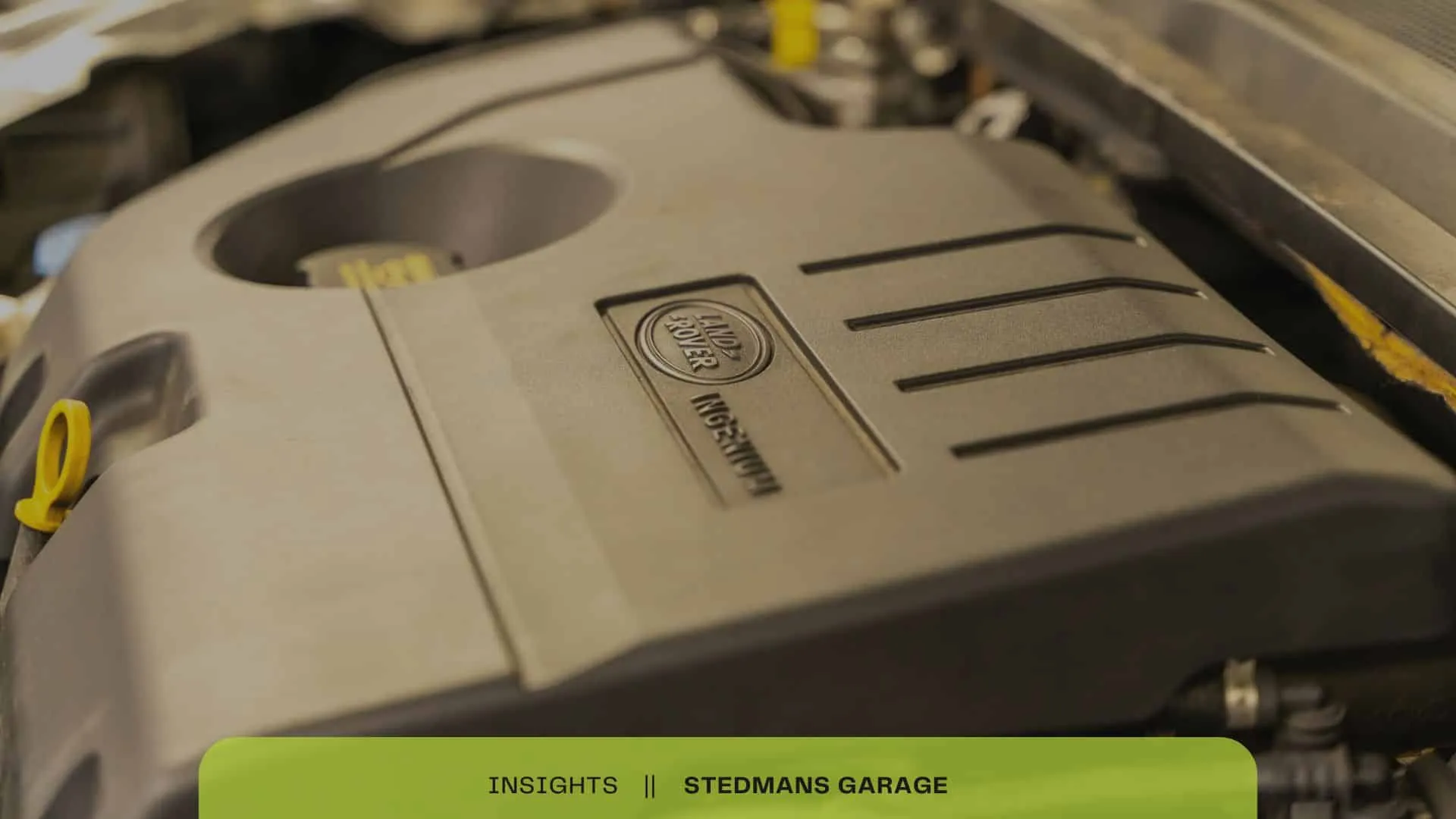
Remapping changes the software in the engine control unit, the computer that decides how much fuel is injected, when, and how much boost the turbocharger makes. Ingenium control units are reprogrammed either through the car's diagnostic port or on the bench, with the unit removed from the car, using tools that support Jaguar Land Rover software. The old idea of fitting a "performance chip" does not really apply to these engines. Plug-in tuning boxes, which sit between the sensors and the control unit, are a different approach, but they raise exactly the same warranty, insurance and emissions questions as a remap.
Before anyone touches your car, ask:
- Which tool will they use to read and write the control unit?
- Have they mapped your exact engine and output before, rather than a similar one?
- Will the original software be saved, so it can be put back later?
- Will every emissions system, including the particulate filter, EGR and AdBlue, stay fully working?
A tuner who cannot answer those questions clearly is not one to trust with a modern diesel.
Diesel, Petrol and Hybrid Versions
On the diesel, a remap mainly changes how much fuel is injected and how much boost the turbocharger makes. That also changes exhaust temperatures and how much soot the engine produces, so the particulate filter, EGR and AdBlue systems all have to keep working as designed. On the petrol, the engine control unit constantly adjusts ignition timing to protect against knock, so a remap has to leave that protection in place, and the car should run on the fuel grade the handbook specifies. On the mild hybrid and plug-in hybrid versions, the engine software works alongside the hybrid system, so ask whether the tuner has mapped that exact hybrid version, not just the same engine size.
Realistic Expectations
There is no honest single figure for what a remap will add to an Ingenium engine. Gains depend on the variant, its existing output and the hardware fitted. Jaguar Land Rover sells higher-output versions of the same engine with different hardware: the 240PS diesel, for example, uses two turbochargers where the 150PS and 180PS versions use one. Software alone cannot turn a lower-output engine into the higher-output one, so a remapped car will not necessarily match it.
Treat any promise of a specific gain with caution, especially one made before the tuner has seen your car. A responsible remap on a road car is about how the power is delivered as much as how much there is, and it should leave the engine running cleanly with no new warning lights.
Risks Specific to the Ingenium Engine
The 2.0 Ingenium diesel already has two well-known weak points. The timing chain, which sits at the rear of the engine at the gearbox end, can stretch, particularly on engines built before revised parts arrived around 2019. And short journeys that interrupt particulate filter regeneration let fuel wash into the oil, which thins it and protects the chain, bearings and turbocharger less well.
A remap does not fix either problem. More torque means more load on the chain, the bearings and the turbocharger, and any change to how the engine fuels can affect how it regenerates its filter. The automatic gearbox and the rest of the drivetrain also have to handle any extra torque. If an engine already has a stretched chain or diluted oil, tuning it adds load to parts that are already under strain. Before considering a remap, have a specialist check the chain from live camshaft and crankshaft correlation data and confirm the oil is in good condition. Our guide to 2.0 Ingenium engine problems explains both faults in detail.
A Health Check Before Any Remap
If you are considering a remap, find out the condition of the engine first. A remap on a healthy, well-serviced engine is a different proposition from one on an engine with an existing fault. A sensible pre-remap check covers:
- Service history: regular oil changes with oil to the correct JLR specification, and no ignored early service messages.
- Timing chain: live camshaft and crankshaft correlation data to show whether the chain has started to stretch, plus a listen on a cold start.
- Oil condition: the level on the dipstick or display and any smell of diesel, which point to fuel dilution.
- Particulate filter: soot loading and regeneration history, which show whether the car is managing to clean its filter on its normal journeys.
- Stored fault codes: any existing faults in the engine, turbocharger or emissions systems, which should be fixed before anything else.
- Recalls and software: any open recall on the GOV.UK vehicle recall checker, and whether the car has the manufacturer's latest software.
The Law, the MOT and Your Insurance
Removing or disabling a diesel particulate filter, EGR valve or AdBlue system so the car no longer meets the emissions standard it was built to is an offence on UK roads. A remap that switches any of these systems off counts, even if the parts are still physically fitted. The same goes for an offer to "delete" a recurring AdBlue, EGR or particulate filter fault in software: switching the system off is not a repair, and the fault is still there for the next owner to inherit.
A missing particulate filter fails the MOT. Since May 2018, visible smoke of any colour from a diesel fitted with a particulate filter, or evidence that the filter has been tampered with, is a Major MOT defect. A car that has had its filter removed or disabled will not pass.
A remap is a modification, so tell your insurer before driving the car. Insurers ask about modifications, and failing to declare one can leave a claim unpaid. Keep the paperwork from the tuner so you can show exactly what was changed.
Warranty and Service Plans
Land Rover's warranty and service plan terms let it decline claims linked to non-approved aftermarket tuning, whoever carries it out. There is no "authorised" or Land Rover-recognised remap route that keeps a car's cover intact, and Land Rover does not certify aftermarket tuners. If your car is still under warranty or a service plan, read the terms before modifying it, and assume that a fault linked to the engine's software or output may not be covered.
Remaps, Software Updates and Selling the Car
A remap lives in the same engine control unit that receives manufacturer software. If that unit is later reprogrammed with manufacturer software, for example during an update, the remap can be overwritten. Tell any garage working on the car that it has been remapped, so nothing is done to the engine software without you knowing.
This is also why it matters that the tuner saves the original software. With a copy of the original, the engine can be returned to standard later, for example before the car is sold or if a fault needs to be diagnosed against the factory calibration. If you sell a car that is still remapped, tell the buyer, so they can tell their insurer and decide for themselves.
Tuning Myths That Do Not Apply to the Ingenium
- Supercharger pulley upgrades: no Ingenium engine has a belt-driven supercharger. The 2.0 engines are turbocharged only. Pulley upgrades belong to JLR's older supercharged 3.0 V6 and 5.0 V8, which are not Ingenium engines.
- The 3.0 straight-six: the 3.0 six-cylinder Ingenium petrol, used in the Defender P400, pairs a turbocharger with a 48 volt electric supercharger. It is driven electrically, so there is no pulley to change.
- American tuning platforms: platforms such as HP Tuners cover JLR's older supercharged engines, not the Ingenium family, so advice built around them does not apply here.
- Air filters and exhausts: on a modern turbocharged diesel, a performance air filter or aftermarket exhaust is unlikely to make a meaningful difference. Any exhaust change must keep the particulate filter and catalyst in place and working.
Looking After a Tuned Ingenium Engine
- Service to specification: follow the service indicator and the handbook, and use oil to the correct JLR specification: STJLR.03.5007 (0W-30) for the 2.0 diesel and STJLR.03.5006 (0W-20) for the 2.0 petrol.
- Do not reset an early service message: on a diesel, the engine computer estimates fuel in the oil and brings the service forward when it judges the oil needs changing.
- Watch the DPF light: if the amber light comes on, Land Rover's advice is to drive above about 37mph for around 20 minutes so the filter can regenerate. A red light means reduced performance and a check straight away.
- Listen on a cold start: a metallic rattle from the back of the engine for a few seconds after a cold start is the first sign of chain stretch, and it should be checked promptly.
- Use proper diagnostics: a generic code reader shows only fault codes. Equipment that reads Jaguar Land Rover systems can show live data such as camshaft timing and particulate filter soot levels.
Our Ingenium engine maintenance guide covers oil, dilution and protecting the timing chain in more detail.
Where Stedmans Garage Fits
Stedmans Garage services and diagnoses Ingenium-equipped Land Rovers in Worthing, including manufacturer software updates. As Land Rover specialists with main-dealer equipment, we carry out complete vehicle computer diagnostics, engine work, fuel system services and oil changes, and we have an emission repair facility. If you are weighing up a remap and want to know the condition of your engine first, or your Land Rover is showing a warning, contact us to book a check.
Frequently Asked Questions
Is it legal to remove the DPF?
No. Removing or disabling a diesel particulate filter, EGR valve or AdBlue system so the car no longer meets its emissions standard is an offence on UK roads. A missing particulate filter fails the MOT, and since May 2018 evidence of filter tampering is a Major MOT defect.
Will a remap void my Land Rover warranty?
Land Rover's warranty and service plan terms let it decline claims linked to non-approved aftermarket tuning, whoever carries it out. There is no authorised or Land Rover-recognised remap route, so read your terms before modifying a car that is still covered.
Do I need to tell my insurer about a remap?
Yes. A remap is a modification, so declare it to your insurer before driving the car. Failing to declare it can leave a claim unpaid.
Will a remapped Ingenium diesel pass its MOT?
It can, provided every emissions system is fitted and working. A missing particulate filter is an MOT fail, and since May 2018 visible smoke of any colour from a diesel fitted with a particulate filter, or evidence of tampering, is a Major defect.
Can I fit a smaller supercharger pulley to an Ingenium engine?
No. No Ingenium engine has a belt-driven supercharger. The 2.0 engines are turbocharged only, and the 3.0 straight-six petrol uses a 48 volt electric supercharger with no pulley. Pulley upgrades belong to JLR's older supercharged V6 and V8 engines.
Does Stedmans Garage remap Ingenium engines?
Stedmans Garage focuses on servicing, diagnostics and repairs, including manufacturer software updates, on Ingenium-engined Land Rovers in Worthing. We can check the condition of your engine, including timing chain stretch and oil dilution, with main-dealer equipment. Contact us to book.