
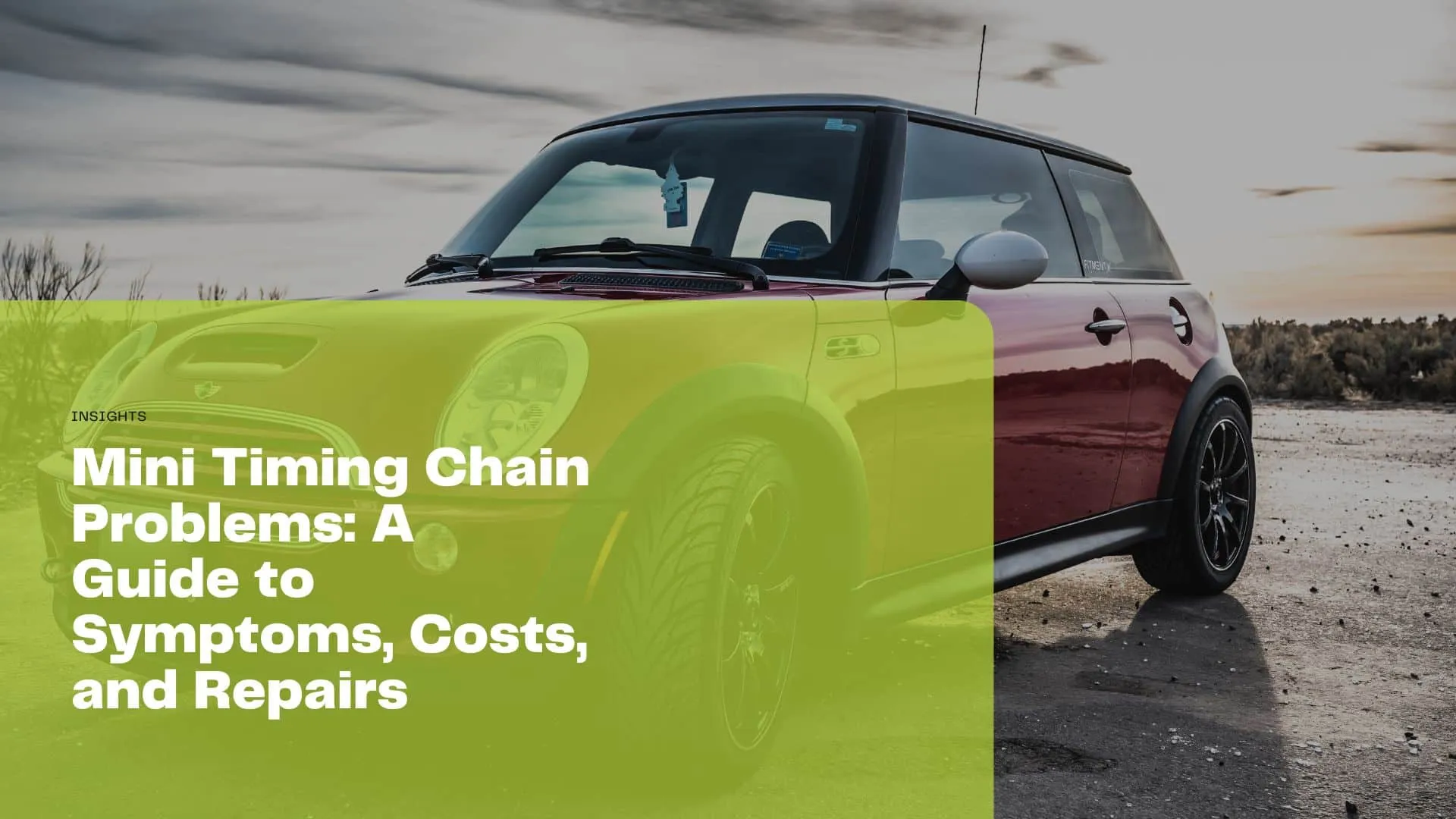
For many Mini owners, the car is more than just a way to get from A to B. It is a driving experience. However, that experience relies heavily on the engine running perfectly.
One of the most common and feared issues for Mini owners is the timing chain.
The timing chain is the heartbeat of your engine. When it works, you do not notice it. When it fails, it can be catastrophic.
If you are worried about a rattling noise on a cold start or a sudden drop in performance, this guide explains exactly what is happening under the bonnet and how to fix it.
What Is a Timing Chain and Why Does It Matter?
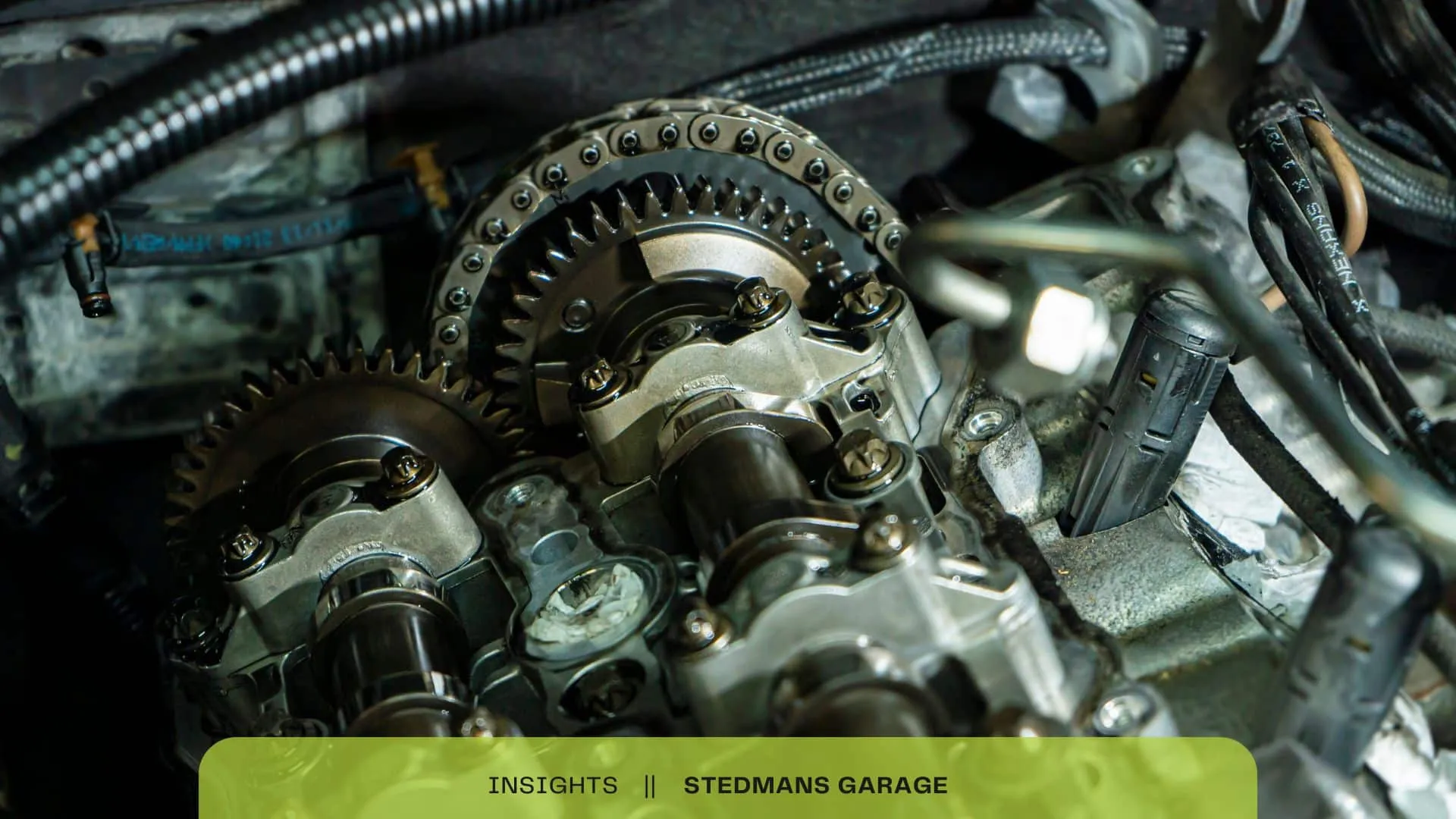
Think of the timing chain as the conductor of an orchestra. It is a metal chain, similar to a bicycle chain but much stronger, located inside the engine.
It connects the crankshaft (the bottom of the engine) to the camshafts (the top of the engine). Its job is to ensure the valves open and close at the exact millisecond the pistons move up and down.
Unlike a rubber timing belt which requires scheduled replacement, a timing chain is designed to last the life of the engine. However, in high-performance engines like those found in Minis, high temperatures and oil issues can cause them to stretch or fail prematurely.
The Warning Signs: How to Spot a Failing Chain
Mini timing chains rarely snap without giving you a warning first. If you know what to listen for, you can catch the problem before it destroys the engine.
1. The "Death Rattle"
This is the most common symptom in Mini models. When you start the car from cold (usually in the morning), you may hear a loud rattling or clattering sound from the engine bay.
This sounds like metal hitting metal. It happens because the hydraulic tensioner, which relies on oil pressure to keep the chain tight, has not built up enough pressure yet. A loose chain slaps against the plastic guides.
If the noise goes away after a few seconds, do not ignore it. This is the early warning sign.
2. Sluggish Performance
If the chain stretches, the timing of the engine is thrown off. The valves open slightly too late or too early.
You might notice the car feels lethargic when you accelerate, or it lacks that "go-kart" punch Minis are famous for.
3. Check Engine Light
Modern Minis are equipped with sensitive sensors. If the timing is out by even a fraction of a degree, the car’s computer (ECU) will detect it and trigger the Engine Management Light (EML).
Common fault codes often relate to "Camshaft Position Correlation" or "Vanos" issues.
4. Rough Idling
A healthy Mini should tick over smoothly. If the timing chain is loose, the engine may hunt for revs, vibrate excessively, or sound like it is struggling to stay running while stopped at traffic lights.
Why Do Mini Timing Chains Fail?
It is rarely a defect in the metal of the chain itself. The failure is usually caused by the environment the chain operates in.
Low Oil Levels This is the number one killer of Mini timing chains. The chain tensioner is hydraulic, meaning it needs oil pressure to work. If your oil level drops, the tensioner goes limp, the chain goes slack, and the damage begins.
Infrequent Oil Changes Old, dirty oil blocks the tiny oil galleries in the tensioner. Even if the oil level is full, if the quality is poor, the chain will suffer.
The Tensioner Itself In some older Mini models, the original tensioner design was prone to losing pressure. This allows the chain to thrash around, eventually breaking the plastic guides that keep it in place.
The Diagnostic Process
If you suspect an issue, a specialist garage will not just guess. They will follow a strict process.
Visual and Audio Inspection A mechanic will listen to the engine on a cold start. They may also use a stethoscope to pinpoint the location of the rattle.
Computer Diagnostics Using dealer-level software, technicians can read the "phase adaptation" values. This tells them exactly how much the chain has stretched in degrees.
Physical Check In some cases, the mechanic will measure the tensioner bolt. If the tensioner is fully extended but the chain is still loose, the chain is stretched beyond its limit.
Repair and Replacement: What to Expect
If your timing chain is diagnosed as faulty, it must be replaced immediately. This is not a repair you can delay. If the chain jumps a tooth or snaps, the pistons will hit the valves, likely requiring a completely new engine.
The Process Replacing a timing chain on a Mini is a complex job. It involves:
- Stripping down the side of the engine
- Locking the camshafts in a precise position
- Removing the old chain, guides, sprockets, and tensioner
- Installing the new kit
- Replacing the oil and filter
The Cost Because of the labour involved and the parts required, this is a significant investment.
The price varies depending on:
- The Model: A Mini One is generally cheaper to fix than a Mini Cooper S or JCW.
- The Parts: Always insist on OEM (Original Equipment Manufacturer) or high-quality aftermarket kits (like Febi or SWAG). Cheap kits often fail within months.
- Additional Damage: If the plastic guides have shattered and fallen into the oil sump, the sump must be removed and cleaned, which adds time to the job.
Prevention: How to Protect Your Engine
You cannot change the design of your engine, but you can significantly extend the life of your timing chain with two simple habits.
1. Check Your Oil Regularly Minis are known to consume a little oil. Do not wait for the warning light. Check the dipstick often. Keeping the oil at the maximum mark is the best insurance policy you have.
2. Change Oil More Frequently Manufacturer service intervals are often set for "ideal" conditions. For city driving or short journeys, consider changing your oil and filter every 6,000 to 8,000 miles rather than waiting for the standard interval.

Conclusion
A timing chain issue does not have to mean the end of your Mini. It is a mechanical part that wears out like brakes or tyres, just over a longer period.
The key is to listen to your car. If you hear that rattle on a cold morning, book it in for an inspection immediately.
Catching the issue early saves you from a broken engine and keeps your Mini driving exactly as it should. Fun, fast, and reliable.