
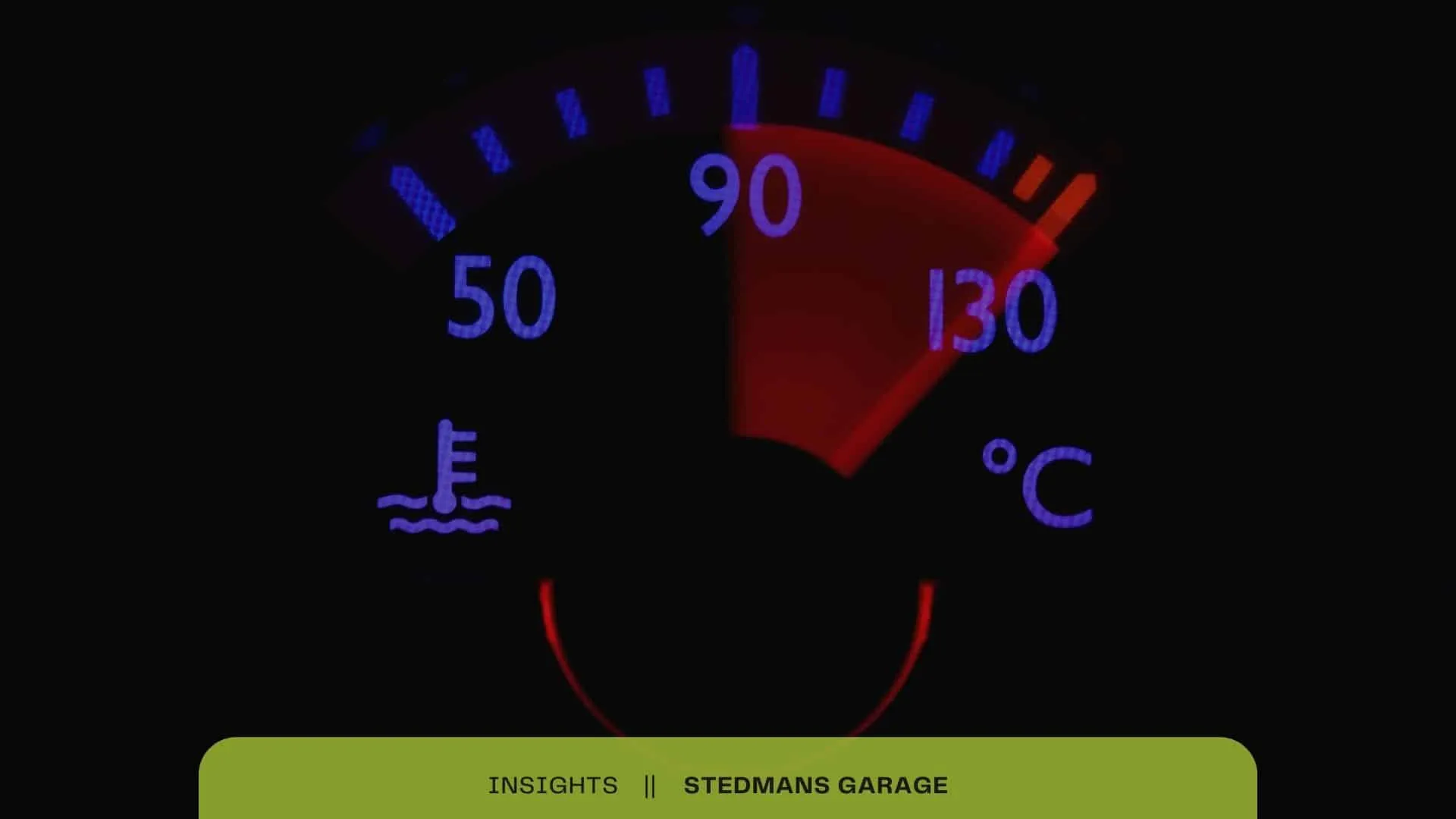
If the coolant warning on your Volkswagen turns red, or the temperature needle climbs past the middle of the gauge, stop as soon as it is safe and switch the engine off. On most VWs the cause is one of a short list: coolant lost through a leak, a leaking water pump and thermostat housing, a cooling fan that is not switching on, or the wrong coolant having been added. The yellow and red versions of the coolant warning mean different things, and knowing which one you have seen tells you whether you can carry on to a garage or should call for recovery.
What the VW Coolant Warning Light Is Telling You
Volkswagen uses the same coolant symbol in two colours. A yellow coolant light means the level in the expansion tank has dropped below the minimum mark. The engine is not necessarily hot yet, but the system is losing coolant from somewhere, so check the level once the engine is cold and top up with the correct coolant before driving on.
A red coolant light, and especially a flashing one, means the coolant temperature is too high or the level is too low to protect the engine. Volkswagen's own advice is to stop as soon as it is safe to do so and not to drive on. Carrying on with a red coolant warning is how a hose or thermostat repair becomes a cylinder head job.
The warning is triggered by a level sensor in the expansion tank, and that sensor can fail on its own. A warning with a tank that is visibly full is still worth having checked, because the only way to know whether it is the sensor or the coolant is to test both.
What to Do When the Warning Appears
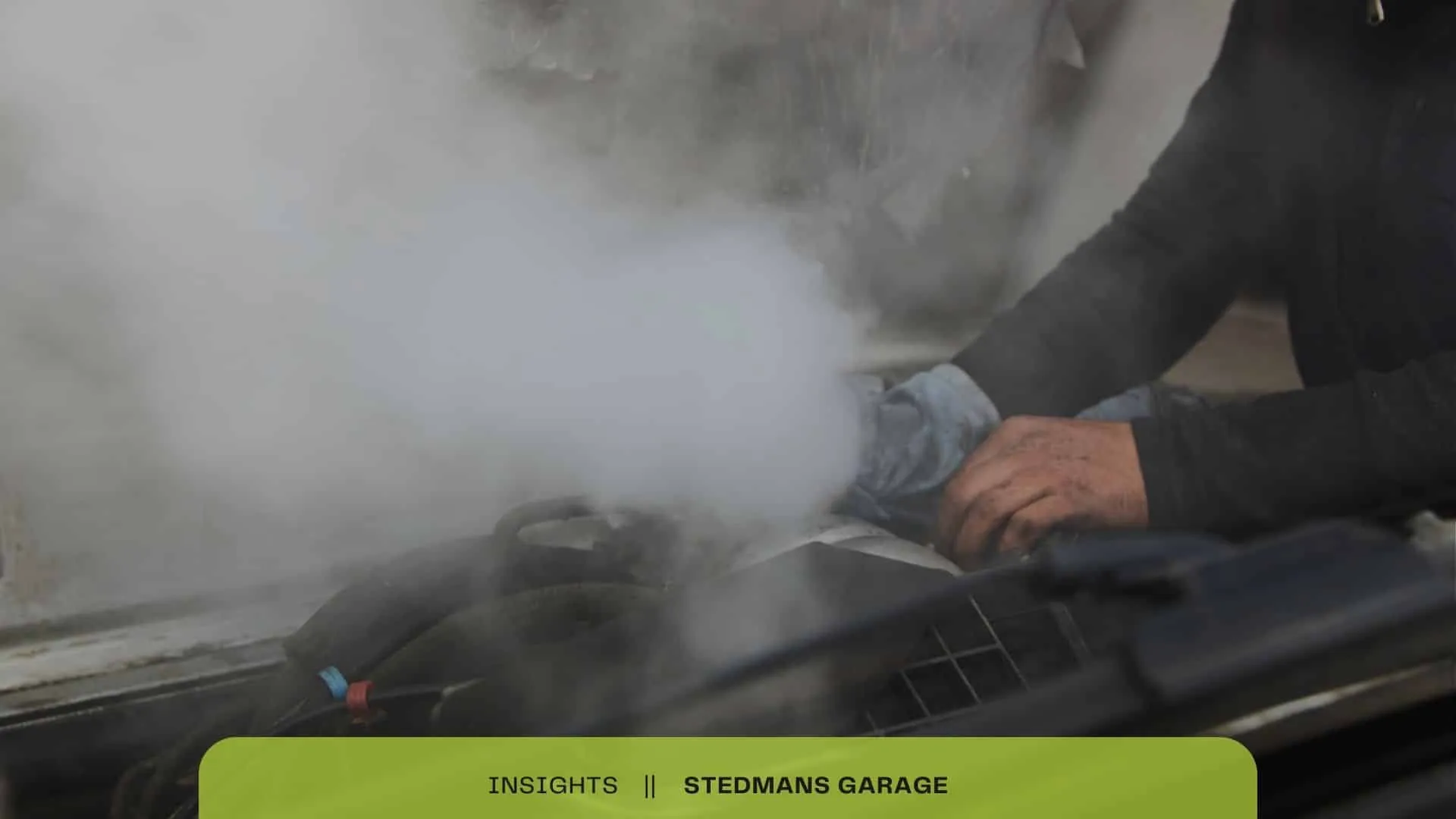
Pull over somewhere safe and switch off. Do not open the expansion tank cap while the engine is hot: the system is under pressure and the coolant can be well above boiling point. If there is steam from under the bonnet, keep the bonnet shut until it stops.
Once the engine has cooled, check the level against the MIN and MAX marks on the expansion tank and look for wet patches or pink crust around the hoses, the radiator and the side of the engine. If the level was low, or the warning comes back after a top-up, have the car recovered rather than driven, because whatever is losing the coolant has not gone away.
Common Causes of Volkswagen Engine Overheating
Water Pump and Thermostat Housing Leaks
On the 2.0 TSI petrol engine used in the Golf GTI, the Golf R and many other VWs from around 2013 (the third-generation EA888), the water pump and the thermostat housing are plastic parts bolted together as one module. Leaks from this module are one of the best-known faults on the engine. They often begin as a slow loss of coolant with no obvious puddle, a sweet smell after a motorway run, or pink or purple crust building up on the module itself. Because it starts slowly, it is often caught first by the yellow low-level warning.
Low or Incorrect Coolant
Volkswagen fills its engines with its own specification of coolant, the pink to purple G12 and G13 family. Topping up with plain water or a generic coolant dilutes the corrosion protection, and mixing types is best avoided, so use coolant that meets the VW specification listed for the car. A system that keeps needing topping up has a leak, and adding more coolant only hides it.
Cooling Fans That Do Not Switch On
VW radiator fans are electric and are switched on by the engine management when the coolant gets hot, and they can carry on running for a while after you switch off. If a fan, its control unit or its fuse fails, the car may stay cool at speed, where air is forced through the radiator, and then overheat in traffic. A car that only runs hot in queues is a strong pointer to the fans.
Blocked Radiator and Perished Hoses
Leaves and road dirt packed into the front of the radiator stop air getting through, and scale left by the wrong coolant or plain water can block it from the inside. Rubber hoses harden and split with age, and the plastic connectors on them can crack, so a hose that looks fine from above can still be weeping underneath.
Head Gasket Failure
If a VW has been overheated hard, or keeps losing coolant with no leak to be found, the head gasket is the possibility to rule out. The signs are bubbles in the expansion tank with the engine running, white exhaust smoke with a sweet smell, and pressure building quickly in the cooling system. It is confirmed with a combustion leak test, not guessed at.
How Overheating on a VW Is Diagnosed
A sensible diagnosis starts with the engine cold. The cooling system is pressure tested to find leaks that only show under pressure, which is how a weeping water pump module or a cracked connector gets found. A combustion leak test then checks the coolant for exhaust gas, which rules the head gasket in or out.
With a diagnostic tool connected, the engine control unit's fault memory and live data show the coolant temperature the engine is actually seeing, and the cooling fans can be commanded to run from the tool, which separates a failed fan from a wiring or control fault. Put together, that pinpoints the failed part before anything is ordered.
Preventing Overheating on Your Volkswagen
- Check the coolant level with the engine cold, against the MIN and MAX marks on the expansion tank.
- Treat any drop in the level as a leak to be found, not a top-up to be repeated.
- Use only coolant that meets the VW specification for your car.
- On a 2.0 TSI, look for pink or purple crust on the water pump and thermostat housing whenever the bonnet is up.
- Notice whether the car only runs warm in traffic, which points to the cooling fans.
- Ask for the cooling system to be checked at each service, including the hoses and connectors.
Volkswagen Cooling System Diagnostics in Worthing
If your VW has shown a coolant warning, even once, it is worth having the system tested rather than waiting to see whether it happens again. We can pressure test the cooling system, read the fault memory and live data, and establish whether the water pump module, a fan, a hose, the radiator or the head gasket is behind it before any parts are ordered. You can also see what we cover as a Volkswagen specialist.

Volkswagen Engine Overheating FAQs
What does the yellow coolant light mean on a Volkswagen?
A yellow coolant light means the coolant level in the expansion tank has dropped below the minimum mark. Check the level once the engine is cold and top up with coolant that meets the VW specification. If the level keeps dropping, the system is leaking and needs to be pressure tested.
Is it safe to drive a VW with the red coolant light on?
No. A red coolant light, particularly a flashing one, means the engine is too hot or the coolant is too low to protect it, and Volkswagen's advice is to stop as soon as it is safe and not drive on. Continuing to drive is what turns a leak or a thermostat fault into cylinder head damage.
Why does my VW keep losing coolant with no visible leak?
On the 2.0 TSI petrol engine the most common cause is a slow leak from the plastic water pump and thermostat housing, where coolant evaporates off the hot engine before it can drip. Other causes include a hose that only weeps under pressure and, if the car has been overheated, a failing head gasket. A pressure test and a combustion leak test tell them apart.
What coolant does a Volkswagen take?
VWs use coolant to Volkswagen's own specification, the pink to purple G12 and G13 family. The specification for your car is in the handbook. Avoid mixing types or topping up with plain water other than to get you home in an emergency, and if water has been added, have the mixture corrected.
Why does my VW only overheat in traffic?
At speed, air is forced through the radiator, so a car can run normally on the move even with a cooling fan that has stopped working. In slow traffic the electric fans have to do all the work, so a failed fan, fan control unit or fuse shows up as overheating in queues. A diagnostic tool can command the fans to run to check them.
Can Stedmans Garage diagnose a VW overheating problem?
Yes. We work on Volkswagens at our Worthing garage and can pressure test the cooling system, run a combustion leak test, read the fault memory and live data, and test the fans, so we can tell you which part has failed before any parts are ordered.