
P2015 Fault Code: Intake Manifold Flap Sensor (Bank 1)
A P2015 fault code means the engine ECU has seen an implausible signal from the intake manifold flap position sensor on bank 1. The flap that controls airflow through the inlet manifold is not reporting the position the ECU expects, which usually points to a sticking flap, a failed flap motor, or carbon build up. On VAG diesels it is one of the most common inlet manifold faults.
What does a P2015 fault code mean?
Meaning and definition
VAG records this code as 18447/P2015/008213, Intake Manifold Flap Position Sensor (Bank 1): Implausible Signal. Inside the inlet manifold are a set of flaps, often called swirl or tumble flaps, that change the way air flows into the cylinders. At low engine speeds they create turbulence that improves torque, fuel burn and emissions, then open up at higher speeds for maximum airflow. On most VAG engines the flaps are driven by an electric intake manifold flap motor (V157) with a built in position sensor.
The position sensor tells the ECU exactly where the flaps are. When the ECU commands a position and the sensor reports something that does not match, the signal is treated as implausible and P2015 is stored. It is a feedback fault rather than proof that one single part has failed, so the wiring, the motor and the flaps themselves all have to be checked.
How the ECU detects the code
The ECU commands the flap motor to a target position many times a second and constantly compares that command with the sensor feedback. If the two disagree by more than a set tolerance, or the flaps do not move when commanded, the ECU flags the circuit as implausible, stores P2015 and illuminates the engine warning light. On many cars it will also limit power to protect the engine while the fault is present.
Which VAG engines are most affected
P2015 is most often seen on the 2.0 TDI EA189 diesel family fitted to a wide range of Volkswagen specialists and Audi specialists models, as well as SEAT and Skoda. It also appears on 2.0 TFSI petrol engines such as BPY, CCTA and CBFA, and on older 1.9 PD TDI units. On these engines the inlet manifold and its flap motor are known wear items, which is why this is one of the codes we see regularly across the bench.
What are the symptoms of a P2015 code?
Engine warning light and limp mode
The first thing most drivers notice is the engine warning light. Because the flaps affect airflow, the ECU may also drop the car into limp mode, holding the revs and power down to protect the engine. Power usually returns after a restart, only for the light and the limp mode to come back once the fault is detected again.
Reduced power and rough running
With the flaps stuck or reporting the wrong position, the engine can feel flat, hesitate when you accelerate, and run slightly rough, especially from cold or at low revs. On diesels this often comes with sootier running and a small drop in fuel economy.
When there are no obvious symptoms
Sometimes P2015 stores with no real change in how the car drives, beyond the warning light. The flap fault is still genuine and still needs fixing, both to clear the light for the MOT and to stop it developing into a limp mode or emissions problem later.
What causes a P2015 code?
Carbon build up jamming the swirl flaps
On diesels the most common cause by far is carbon and oil build up inside the inlet manifold, which gums up the flaps and stops them moving freely. The motor then cannot reach the commanded position, the sensor reports a mismatch, and P2015 is set. Short journeys and missed services make this build up worse.
A failed intake manifold flap motor (V157)
The flap motor itself can fail electrically or mechanically, or the internal position sensor can become inaccurate. On several VAG engines the motor and manifold are supplied as one assembly, so a failed motor can mean replacing the complete inlet manifold. This is a well documented fault on the EA189 2.0 TDI.
Wiring, connector and software faults
Damaged wiring, a corroded connector or a poor earth on the flap motor circuit can all produce an implausible signal. On a smaller number of cars the fault is down to an ECU software version that needs updating to the latest level. A proper diagnosis tells these apart before any parts are bought.
How is a P2015 code diagnosed?
Reading the code and live data
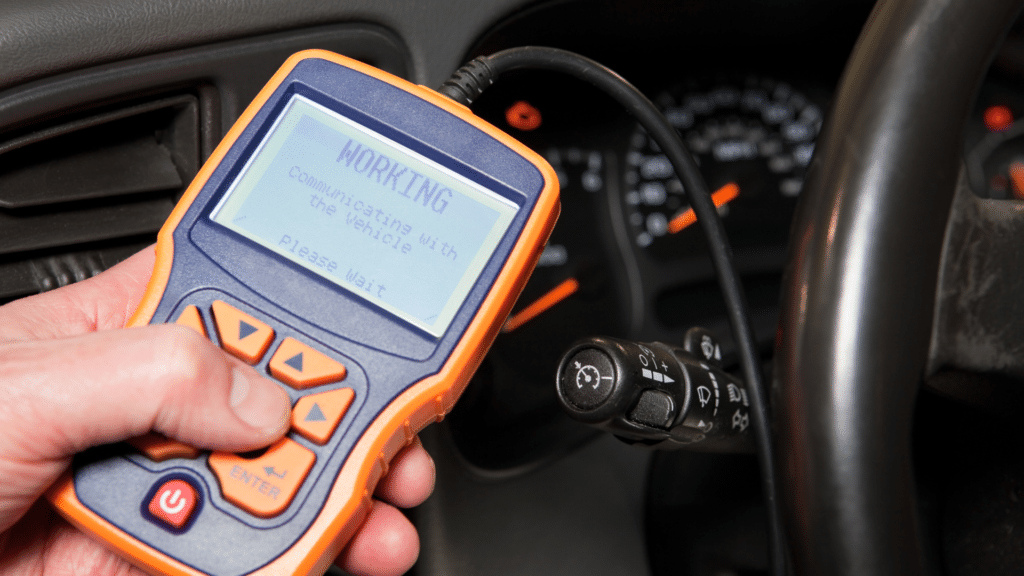
We start by reading the code and the freeze frame data with dealer level equipment, then watch the flap motor in live data. By commanding the flaps and watching the sensor feedback, we can see straight away whether the flaps are moving, sticking, or not responding at all. This is the quickest way to separate a jammed flap from an electrical fault. You can book this as part of our car diagnostics in Worthing.
Testing the flap motor and sensor
Next we check the supply, earth and signal wiring to the flap motor, and test the motor and its position sensor against the manufacturer values. This confirms whether the motor is being driven correctly and whether the sensor is reading accurately through its full range of travel.
Inspecting the inlet manifold
If the electrics check out, the manifold comes under inspection for carbon build up and seized flaps. On high mileage diesels it is common to find the flaps clogged solid. Confirming the mechanical condition stops us replacing electrical parts that were never the real problem.
How do you fix a P2015 code?
Cleaning or freeing the flaps
Where the flaps are sticking on carbon but the motor and wiring are sound, cleaning or freeing the mechanism can restore normal operation. This is checked carefully, because a flap that has already worn or distorted will not stay reliable and is better replaced.
Replacing the flap motor or inlet manifold
If the motor or its sensor has failed, or the manifold is worn, the affected part is replaced. On engines where the motor and manifold are one unit, that means a new inlet manifold assembly. We then carry out any adaptation the ECU needs so the new part reads correctly.
Software updates and clearing the code
Where the fault is traced to ECU software, the control unit is updated to the latest version. Once the repair is complete we clear the code, run the engine through the relevant conditions, and road test to confirm the flaps work and the light stays off. Pairing the repair with regular servicing helps keep the inlet system clean afterwards.
Can you drive with a P2015 code?
You can usually drive a short distance, but it is not something to leave. The car can drop into limp mode without warning, and a stuck flap affects emissions and can lead to further inlet problems if ignored. With the engine warning light on the car will also fail its MOT, so the sensible move is to have it diagnosed promptly rather than waiting for it to get worse. Our car repairs team can carry out the work once the fault is confirmed.
How to prevent P2015 coming back
Regular servicing and the right fuel
Keeping to the service schedule, using good quality fuel and the correct oil, and giving a diesel a proper run at motorway speeds all help slow the carbon build up that jams the flaps. Cars used only for short, cold journeys are the most prone to it.
Catching it early
Acting on the warning light quickly, rather than clearing it and carrying on, usually means a cheaper repair. A sticking flap caught early can sometimes be cleaned, while one left to seize often takes the whole manifold with it. For the full set of related codes, see our full VAG fault-code library and the VW and Audi error-code resource.
Frequently Asked Questions about P2015
P2015 means the engine ECU has detected an implausible signal from the intake manifold flap position sensor on bank 1. In VCDS it shows as 18447/P2015/008213. The flap that varies airflow through the inlet manifold is not reporting the position the ECU expects, so the ECU logs the fault and turns the engine warning light on.
Seeing P2015 on your VW or Audi?
A stored code tells you where to look, not what has failed. Our technicians read the live data, confirm the real cause and quote before any work begins - so you are not paying for guesswork.
Get the code read properly
Main-dealer-level diagnostics in Worthing, from the longest running garage in town. Call the workshop or book online in under a minute.