
How long an MOT takes
A standard car MOT takes around 45 to 60 minutes once the tester starts. You can usually drop your car off in the morning and collect it the same day, or wait at the garage if you book a time slot.
The tester follows the DVSA MOT Inspection Manual in a set order. Here is what happens at each step.
Step 1: Vehicle identification and paperwork
The tester confirms:
- The registration plate matches DVLA records and is correctly fitted.
- The VIN on the chassis matches the V5C.
- The number plate is legible, correctly spaced and meets BS AU 145e standards (post-September 2021 plates).
Step 2: Exterior checks
The tester walks around the car checking:
- Lights: headlights (high and low beam), sidelights, indicators, brake lights, fog lights, reversing light, number plate lights. All working, correctly coloured, correctly aimed.
- Mirrors: driver's side and rear-view mirrors present, secure, and not cracked in a way that obstructs view.
- Body condition: sharp edges from corrosion, loose body panels, missing or damaged trim that could injure pedestrians.
- Doors: all doors open from inside and outside, latches secure, hinges sound.
- Windscreen and wipers: any damage in the driver's central view larger than 10mm fails. Wipers must clear the screen properly and washer jets must reach the swept area.
- Number plates: front and rear, secure and legible.
Step 3: Interior and safety checks
The tester sits in the car and checks:
- Seats secure, with no broken adjustment mechanisms.
- All seat belts working, retracting and locking under sudden load.
- Airbag warning light goes out when the engine starts.
- Steering wheel free of excessive play.
- Horn works.
- Handbrake holds the car.
- Brake pedal feels firm.
- All dashboard warning lights extinguish as expected after engine start.
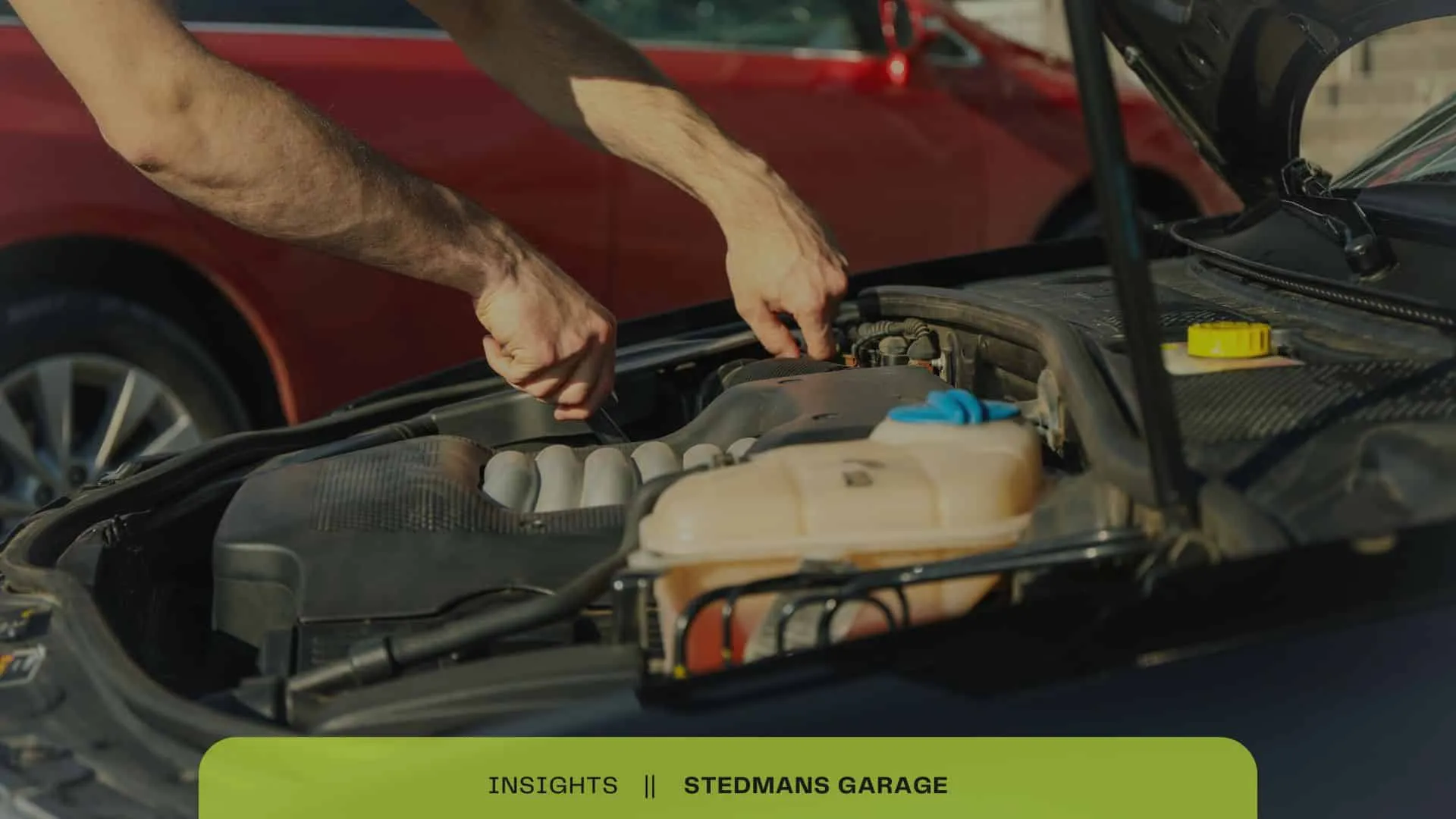
Step 4: Under the bonnet
The tester opens the bonnet and checks:
- Brake fluid level above minimum.
- Power steering reservoir (where applicable) above minimum.
- No fluid leaks dripping from the engine bay.
- Battery securely mounted.
- Engine mounting condition.
This is not a deep mechanical inspection. The tester is looking for obvious safety issues, not testing the engine.
Step 5: Underneath the car
The car goes on a lift or over a pit. The tester checks:
- Brake components: pads, discs, hoses, callipers, handbrake mechanism.
- Steering joints and rack: play in track rod ends, ball joints, drop links.
- Suspension: shock absorbers, springs, suspension arms, bushes.
- Exhaust system: secure mounting, no leaks, no missing catalytic converter (where fitted from new).
- Wheel bearings and CV joints: excessive play or damaged gaiters.
- Tyres: tread depth across the central three-quarters of the tyre, sidewall condition, correct size and load rating.
- Body structure: corrosion within prescribed areas around suspension and seat-belt mounts.
- Fuel system: no leaks, fuel cap seals.
Step 6: Brake test on the rollers
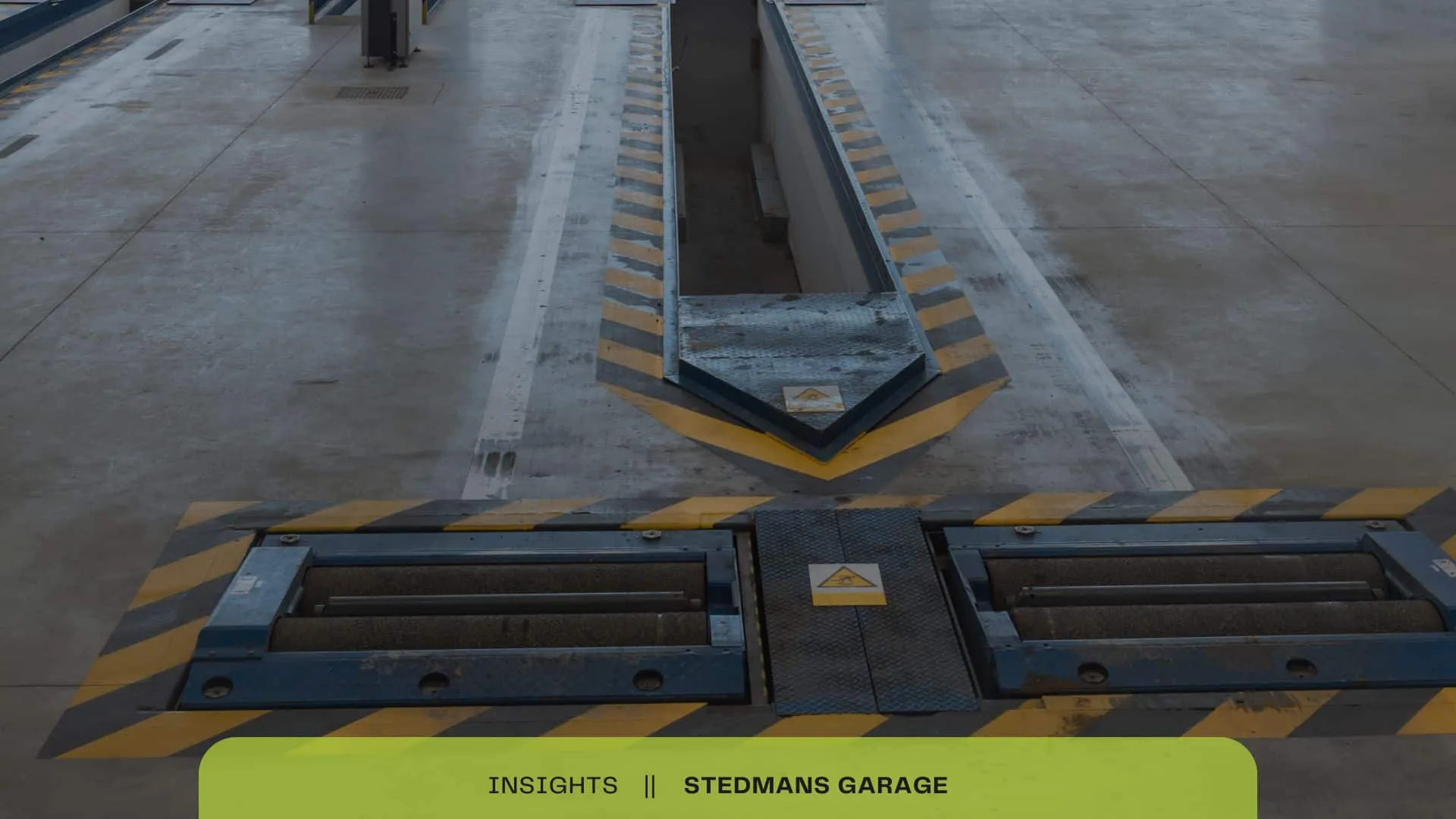
The car goes onto the roller brake tester. The tester measures the braking force at each wheel and checks:
- The brakes are strong enough overall (a minimum efficiency percentage).
- The front brakes are balanced left to right.
- The rear brakes are balanced left to right.
- The handbrake holds well enough on its own.
This is the test most likely to find brake faults you would never notice while driving.
Step 7: Emissions test
For petrol cars, the tester probes the exhaust with a gas analyser at idle and at fast idle. CO and HC levels are measured against limits for the car's age and engine type.
For diesel cars, a smoke meter measures particulate output during a free acceleration. This is the test that catches DPF (diesel particulate filter) problems and worn injectors.
Electric cars skip this step entirely.
After the test: pass, fail, or advisory
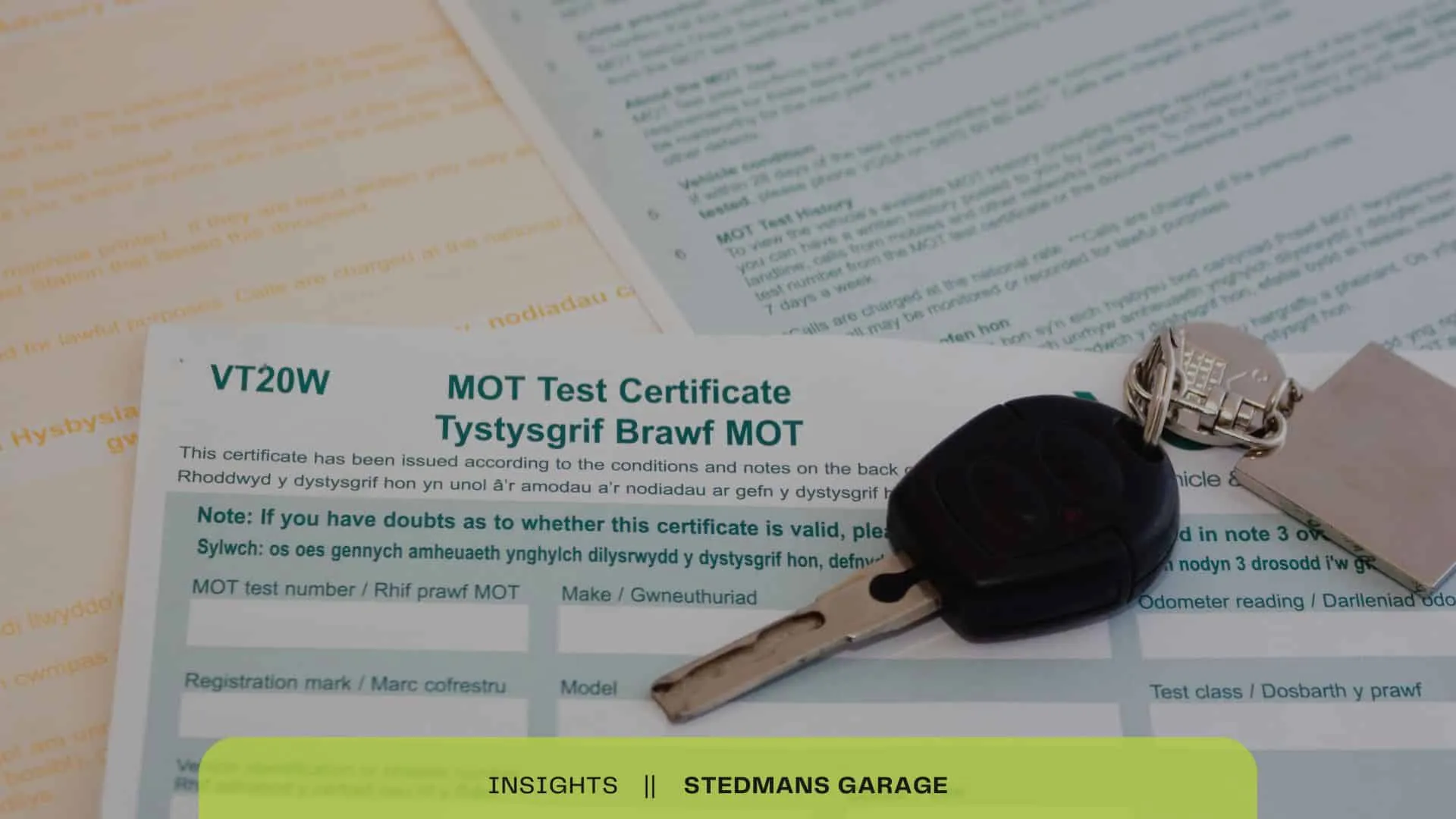
Once the test is complete, the tester logs results in the DVSA system and prints your certificate:
- Pass: the car meets all requirements. New MOT valid for one year from the previous expiry (or one year from today if you let the MOT lapse).
- Pass with advisories: the car passes, but the tester has flagged items to monitor. These do not fail today but probably will next year if left.
- Fail: at least one Dangerous or Major defect. Car cannot be driven (except to a booked repair). Once fixed, the car can be retested.
Book your MOT in Worthing
Stedmans Garage is a DVSA-approved MOT testing centre in Worthing. We test petrol, diesel, hybrid and electric cars, and you can combine your MOT with a service in the same visit.
Book an MOT in Worthing, or read more: