

When you buy a BMW, you are paying for the "Ultimate Driving Machine." A huge part of that reputation comes from the way the car handles. It should feel planted, precise, and comfortable.
However, the complex engineering that gives a BMW its superior ride also makes it sensitive to wear and tear.
If your car has started to feel loose in corners, or if every speed bump sounds like a bag of spanners, you are likely facing suspension issues.
This guide breaks down the most common BMW suspension problems, how to spot them, and what you need to do to get that showroom handling back.
How Your BMW Suspension Works
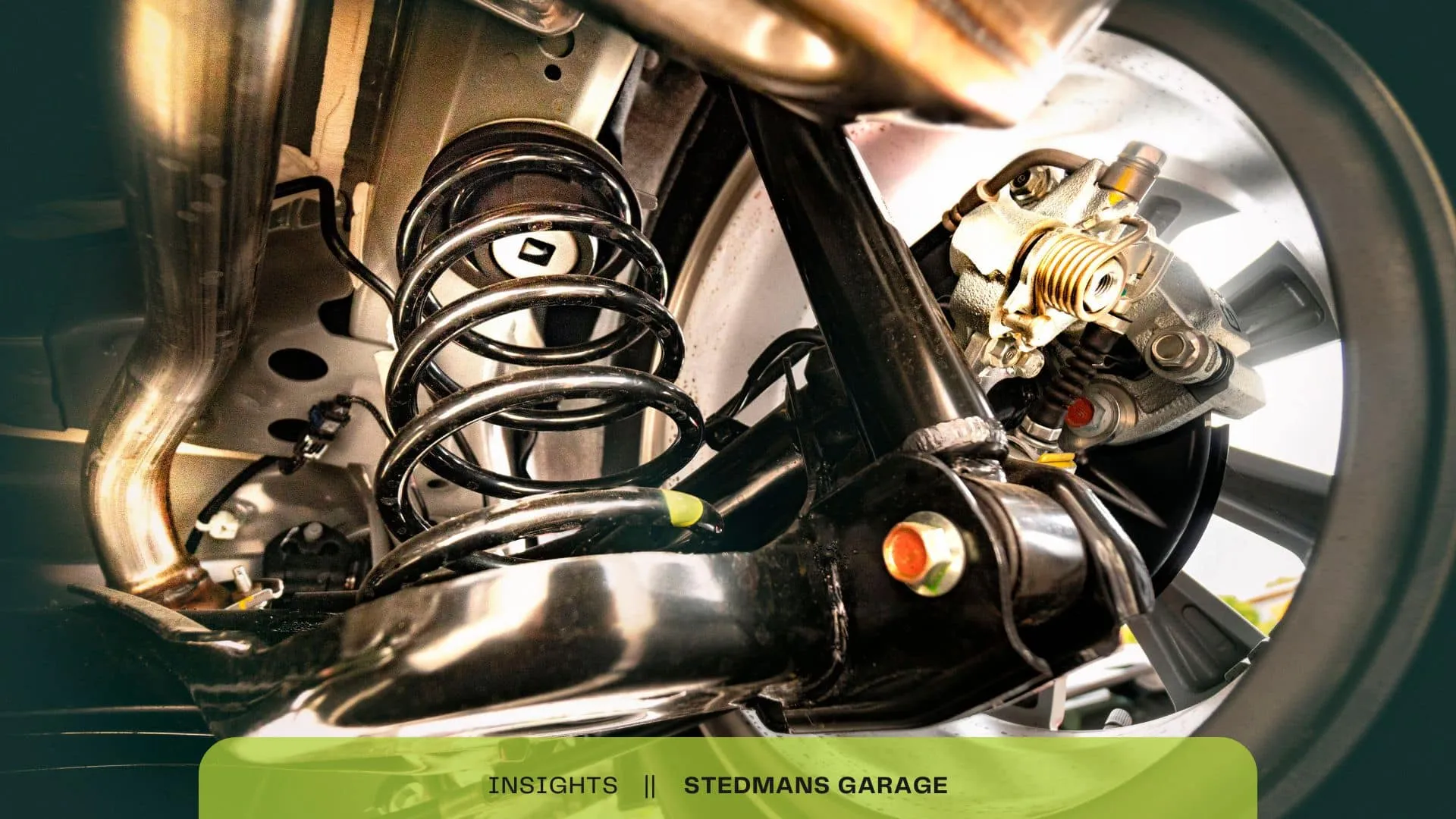
Before diving into the faults, it helps to understand what is happening under the wheel arches. BMW uses a sophisticated setup designed to balance sportiness with luxury.
Shock Absorbers and Struts These manage the impact from the road. They stop your car from bouncing up and down like a yo-yo after hitting a bump.
Control Arms and Bushings These are the metal links that connect the wheels to the frame of the car. They rely on rubber bushings to absorb vibration. In BMWs, these are often the first points of failure.
Coil Springs These support the weight of the vehicle and absorb the initial energy from road imperfections.
Top 4 Common BMW Suspension Problems
BMW suspension systems are robust, but they are not invincible. Here are the specific symptoms owners frequently encounter.
1. The "Clunk" Over Bumps
If you hear a knocking or clunking sound from the front suspension when going over speed bumps or potholes, the likely culprit is the control arm bushings.
BMW control arms (often called wishbones) use rubber, fluid-filled bushings. Over time, the rubber cracks and the fluid leaks out. This leaves metal hitting metal, causing that distinct clunking noise.
2. The "Floating" Feeling
Does your car feel like a boat? If you drive over a dip in the road and the car continues to bounce up and down more than once, your shock absorbers are worn out.
This is dangerous. Worn shocks increase your braking distance and make the car unstable during emergency manoeuvres.
3. Uneven Tyre Wear
Take a look at your front tyres. Is the inner edge worn down to the wire while the outer edge looks brand new?
This is a classic sign of misalignment or worn suspension components. When control arms or tie rods wear out, they can no longer hold the wheel at the correct angle. This drags the tyre across the tarmac rather than rolling it smoothly.
4. Steering Vibration
If the steering wheel shakes in your hands, particularly under braking, it is often blamed on warped brake discs. However, in many BMW models, this is actually caused by worn thrust arm bushings. The play in the suspension allows the wheel to flutter, transmitting that vibration up the steering column.
How to Diagnose the Issue
While a professional inspection is always best, there are simple checks you can do on your driveway.
The Bounce Test Go to one corner of the car and push down hard on the bodywork. Let go. The car should bounce up once and settle immediately. If it bounces two or three times, your shock absorbers need replacing.
The Visual Check Turn your steering wheel fully to one side and use a torch to look behind the wheel. Look at the black strut (the shock absorber). If you see oil coating the outside of it, the seal has failed.
The Tyre Inspection Run your hand over the tread of your tyres. If it feels "feathered" (smooth one way, rough the other) or uneven, your suspension geometry is out of alignment.
Repair Solutions: Doing It Right
Fixing BMW suspension problems is not just about bolting on new parts. It requires precision.
Replace in Pairs Never replace just one shock absorber or one spring. Always replace them in pairs (both fronts or both rears). Replacing just one will leave the car unbalanced and dangerous.
OEM vs. Aftermarket Parts This is the most critical decision you will make.
- Genuine/OEM: Brands like Lemförder, Sachs, and Bilstein often manufacture the parts for BMW. Buying these brands directly can save you money compared to "BMW boxed" parts while maintaining the exact same quality.
- Cheap Aftermarket: Avoid unbranded or budget suspension kits found on auction sites. BMW suspension is sensitive. Cheap rubber bushings will often fail again within a year.
The Importance of Alignment You must get a wheel alignment (tracking) done after any suspension work. If you change a control arm and skip the alignment, you will ruin your tyres in less than 1,000 miles. Ensure the garage uses a 4-wheel laser alignment machine for accuracy.
Maintenance Tips for Longevity
You can extend the life of your suspension with a few changes to your driving habits.
Avoid Potholes It sounds obvious, but hitting a pothole at speed is the number one cause of bent control arms and blown shocks. Scan the road ahead.
Slow Down for Speed Bumps Your BMW is a performance car, not an off-roader. Taking speed bumps too fast puts massive stress on the coil springs, which are prone to snapping on older models.
Regular Inspections Ask your mechanic to pry-bar check the bushings at every oil change. Catching a worn bushing early prevents it from putting stress on other expensive components.

Conclusion
Suspension issues are a matter of "when" not "if" for most vehicles. However, ignoring them ruins the driving experience and compromises safety.
If your BMW feels tired, loose, or noisy, do not wait for a breakdown. A refreshed suspension system transforms the car, bringing back the tight, responsive handling that made you buy a BMW in the first place.
Related reading: OEM parts, our BMW specialist services, and how BMW xDrive works.