
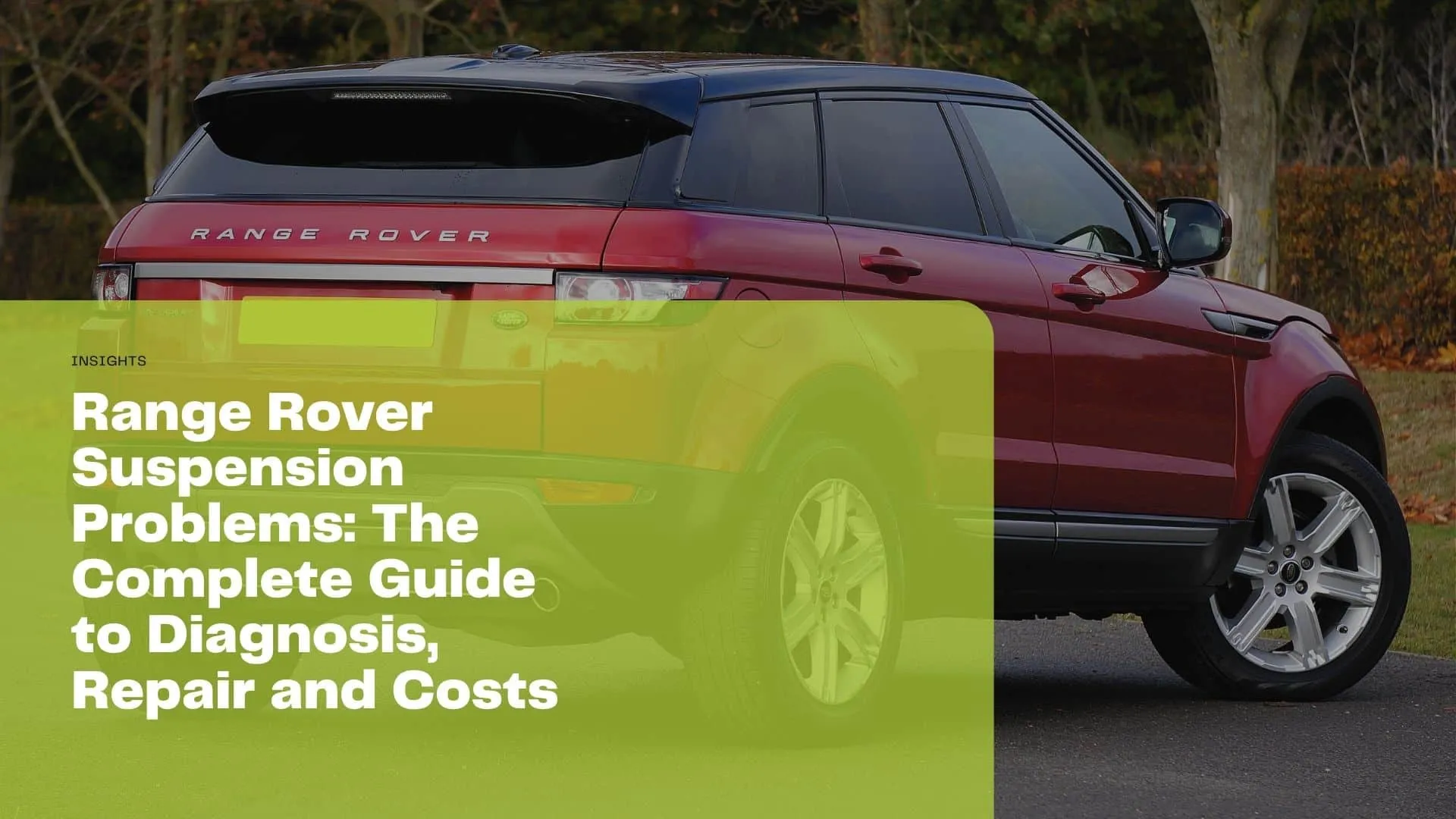
Why Range Rover Suspension Fails
Range Rovers are built for comfort and capability, and the suspension is where most of that comes from. On the full size Range Rover and the Sport that means an air system adjusting ride height for the road, for rough ground and for a loaded boot. On the Evoque, and on most Velars, it means conventional coil springs and dampers doing an unusually hard job under a heavy car. Both wear out, they fail in completely different ways, and telling them apart is the first step to not paying for the wrong repair.
Suspension is only one part of owning a Velar; the Range Rover Velar's common issues, from electrical faults to the transmission, are rounded up in their own reliability guide.
On the air-sprung cars the height change is only half of the off-road setup. The other half is Terrain Response 2, which adjusts the throttle, gearbox and traction settings to suit the surface, and the two are designed to work together.
At Stedmans Garage, we work on Range Rovers daily. This guide covers the suspension problems we see most often across every model from the L322 through to the current L460, the air system and the mechanical parts alike: coil springs, dampers, bushes, anti-roll bar links and wheel bearings. For faults beyond the suspension, see our overview of the most common Range Rover problems.
Air Suspension or Coil Springs? Check Which You Have First
Range Rover is not one suspension system, it is two, and half the diagnostic arguments we hear start with an owner assuming their car has air suspension when it does not. Get this right before you read anything else, because the faults, the symptoms and the repairs have almost nothing in common.
| Model | What it runs on as standard |
|---|---|
| Range Rover (L322, L405, L460) | Air suspension on all four corners |
| Range Rover Sport (L320, L494, L461) | Air suspension on the great majority of UK cars |
| Range Rover Velar | Coil springs as standard, with air suspension as an option and fitted to the higher output versions |
| Range Rover Evoque (both generations) | Coil springs and dampers only, with no air suspension option at any trim level |
If you are not sure, there are two quick checks. A car with air suspension has a ride height control, either a rocker switch by the gear selector or a suspension menu on the touchscreen, and it will visibly rise on its springs shortly after you start the engine. A coil sprung car has neither and sits at the same height whether it is running or not.
Worth knowing if you own more than one Land Rover: the Discovery Sport shares the Evoque's platform and its coil sprung layout, so the mechanical wear items described further down apply to it in the same way.
Air Suspension: How It Works and Why It Fails
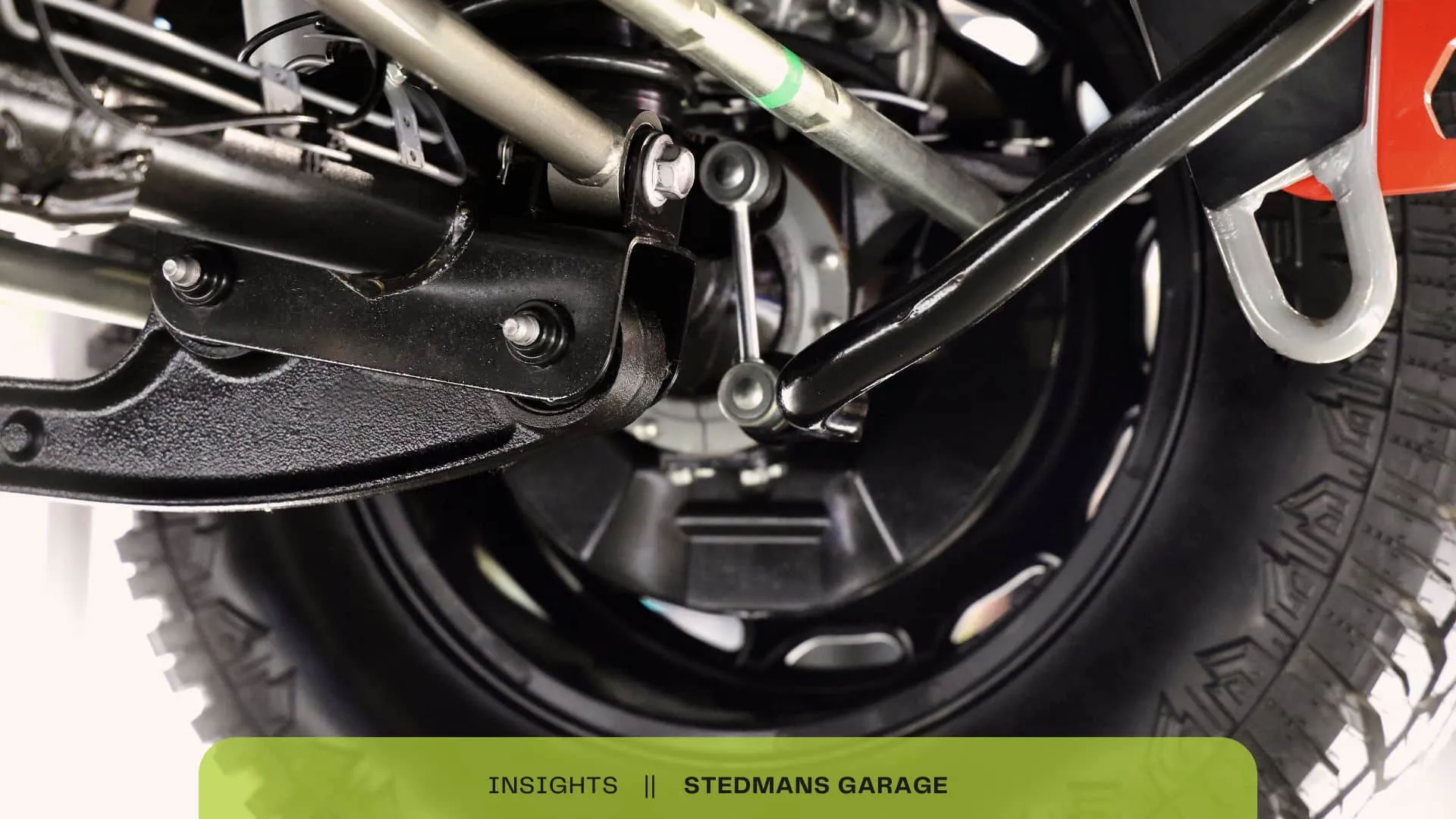
Most Range Rovers use an Electronic Air Suspension (EAS) system with four main components:
- Air springs: rubber bags at each corner that inflate and deflate to adjust ride height. They replace conventional metal springs.
- Compressor: an electric pump that pressurises air for the system. Older models use Hitachi units; newer models use the more reliable AMK compressor.
- Valve block: contains solenoid-operated valves that direct air to and from each spring. Internal O-ring seals are a common failure point.
- Height sensors: four variable-resistor sensors (one per corner) that tell the system where each corner of the vehicle sits relative to the ground.
When any one of these components fails, it puts additional strain on the others. A leaking air spring forces the compressor to run overtime. An overworked compressor sends moisture through the system, corroding the valve block. This cascade effect is why early diagnosis matters: catching a single failing component can prevent the whole system needing an overhaul. If it is the air system you are trying to get to the bottom of, our guide to common Land Rover air suspension issues goes through the symptoms, the diagnosis and the fixes in far more depth than this page has room for. What follows here is the Range Rover specific picture, air system and mechanical parts together.
Common Air Suspension Problems
Air Spring Leaks
The most common failure across all air-suspended Range Rovers. The rubber bags deteriorate over time from UV exposure, temperature cycling, road salt, and general ageing.
Where they fail: The crimped ends at the top and bottom of the bag, fold creases in the rubber bellows, and areas where road debris has caused abrasion. Rear springs tend to fail before fronts because they handle more load changes from boot loading and towing.
What you'll notice:
- Vehicle sitting low on one corner, especially after being parked overnight
- A sudden drop on one corner (a "bag burst") that can happen while driving
- The compressor running for longer than usual when you start the engine
- A hissing sound from underneath the vehicle
Typical lifespan: 80,000-120,000 miles or 6-10 years, though UK road salt and wet conditions often bring this forward.
Compressor Failure
The compressor is the heart of the system. When it fails, the vehicle cannot adjust ride height at all.
Hitachi compressors (fitted to pre-2012 models including the L322 and L320 Sport) are the weakest link. They're relatively small for the system demands and prone to overheating, especially when compensating for leaking air springs.
AMK compressors (fitted from 2012 onwards) are significantly more powerful and reliable, but still not immune to failure, particularly if the system has undiagnosed leaks forcing it to run constantly.
Warning signs:
- Compressor running for more than 20-30 seconds at a time
- Compressor running constantly but the vehicle still isn't level
- Compressor not running at all (may have tripped its thermal cut-out or blown a fuse)
- Unusual whining or grinding noises from the compressor location
Valve Block Seal Degradation
The valve block is often overlooked because its failures are subtle. Internal O-ring seals perish over time, causing slow air leaks between circuits.
The clue: The vehicle sags overnight but not consistently on the same corner. Cross-corner leaking through the valve block can affect different corners depending on temperature and which seals are worst.
Individual solenoid valves can also stick open (corner won't hold air) or closed (corner won't raise or lower). On the L320 Sport, the exhaust valve is particularly prone to sticking, preventing the suspension from lowering or causing it to pump up the front only.
Height Sensor Faults
Each corner has a sensor connected via a small plastic drop link to the suspension arm. They fail from corrosion (extremely common in the UK), physical damage from road debris, or the plastic link arms simply snapping.
A single failed sensor causes incorrect readings: the system may over-inflate or under-inflate a corner, or trigger a fault code and lock the system entirely. A "Suspension Fault" warning that leaves the car in normal height only typically points to a sensor issue.
The good news: height sensors are among the least expensive parts in the system, and replacement is straightforward for any specialist garage with the right diagnostic equipment.
Air Dryer Saturation
The compressor's air dryer removes moisture before it enters the system. When the dryer cartridge becomes saturated, moisture passes through into the valve block and air springs, causing internal corrosion that accelerates failures across the entire system. On most Range Rover setups the dryer is part of the compressor assembly rather than a separately scheduled item, so it is renewed when the compressor is renewed. Land Rover does not publish a standalone replacement interval for it, and the real trigger is evidence of moisture in the system rather than a figure on the odometer.
Dashboard Warning Messages Explained
The EAS system communicates through specific warnings. Understanding what each one means can help you respond appropriately:
| Warning | Severity | What It Means |
|---|---|---|
| Suspension Fault, normal height only | Amber | System has detected a fault but can maintain normal ride height. Off-road and access modes are disabled. |
| Flashing height indicator lights | Amber | System cannot adjust height but compressor continues to operate. |
| "Do Not Exceed 35 mph" | Red | Serious failure. Vehicle may drop to bump stops. Stop driving at speed immediately. |
| "EAS FAULT" with all rocker switch lights on | Red | Complete system lockout. Requires diagnostic reset even after repair. |
Important: Red "hard faults" cannot be cleared without specialist diagnostic equipment. Even after the underlying problem is fixed, the fault code must be reset using Land Rover SDD/Pathfinder or specialist tools like iLand, Nanocom, or Hawkeye.
Air Fault or Mechanical Fault? How to Tell Them Apart
This is the single most useful thing an owner can work out before booking anything in, and it is usually possible from the driveway. Air faults show up as changes in ride height and almost always bring a dashboard message with them. Mechanical faults show up as noise and handling changes while the car sits at its normal height and says nothing at all.
| What you are seeing or hearing | Where it usually points |
|---|---|
| One corner sits low overnight, then levels up after the engine has been running | Air: a leaking air spring, or a valve block seal letting go |
| One corner sits low permanently and no warning appears | Mechanical: a broken coil spring, on a coil sprung car |
| Any suspension warning message, or the height controls refusing to work | Air: the system has locked itself out and needs reading properly |
| Compressor audible for noticeably longer than it used to be | Air: it is compensating for a leak somewhere |
| Knock or clunk over speed bumps and potholes, height normal | Mechanical: anti-roll bar links, bushes or top mounts |
| Clunk under braking with vague steering | Mechanical: lower arm bushes |
| Car floats and keeps moving after a bump, tyres wearing unevenly | Mechanical: worn dampers |
| Drone or rumble that changes as you steer left and right at speed | Mechanical: a wheel bearing rather than the suspension at all |
The overlap worth watching for is a car that has both. An air sprung L405 with a slow leak can also have tired bushes, and fixing the leak will not stop the knocking. If the noise is still there once the height fault is cleared, the noise was never the height fault.
Problems by Model
Range Rover L322 (2002-2012)
The most notorious for air suspension failures. Uses the Wabco EAS system with Hitachi compressor (pre-2006) and Dunlop units. Problems typically start between 80,000-100,000 miles. Air spring leaks, compressor failures, valve block seal degradation, and height sensor corrosion are all common. If you own an L322 with original suspension components and over 80,000 miles, budget for air suspension work.
Range Rover L405 (2013-2022)
Improved over the L322 with AMK compressor and better-quality air springs. Problems typically emerge later, at around 60,000 to 80,000 miles, but the failure modes are the same. The more sophisticated electronics add additional potential fault sources.
Range Rover Sport L320 (2005-2013)
Shares the L322's platform and many of the same components. Same failure patterns, same weak Hitachi compressor. The exhaust valve sticking in the valve block is a notable L320-specific issue. We've written a detailed guide to L320 suspension problems covering compressor faults and height sensor issues in depth.
Range Rover Sport L494 (2014-2022)
Uses the more reliable AMK compressor and improved air spring compounds. Still an air suspension system with the same fundamental failure modes, just at higher mileages. The electronically controlled adaptive dampers are an additional failure point: they can cause a harsh or overly soft ride on one corner when they fail.
Range Rover Velar
This is where it differs. The Velar uses conventional coil springs as standard. Only higher-spec models have optional air suspension.
Coil spring models suffer from bush wear (particularly lower arm bushes), drop link failures causing a metallic rattle over bumps, damper wear, and, where the optional adaptive dampers are fitted, leaks or electronic faults on those. All of these are covered in more detail in the coil spring section below.
Air suspension models have the same issues as other Range Rovers, just typically at lower mileages since the system is lighter-duty.
Range Rover Evoque
No air suspension at all: the Evoque runs entirely on conventional coil springs and shock absorbers. But that doesn't mean it's trouble-free:
- Lower arm bush wear: the single most common fault. Clunking under braking and vague steering from around 40,000-60,000 miles.
- Drop link failures: metallic rattle over bumps and potholes. A frequent MOT advisory item.
- Damper wear: front dampers commonly wear between 40,000 and 60,000 miles, and sooner on cars fitted with the optional adaptive dampers, which add an electronic failure mode of their own.
- Anti-roll bar D-bush perishing: causes woolly steering feel and reduced body control when cornering.
Coil Spring, Damper and Bush Problems
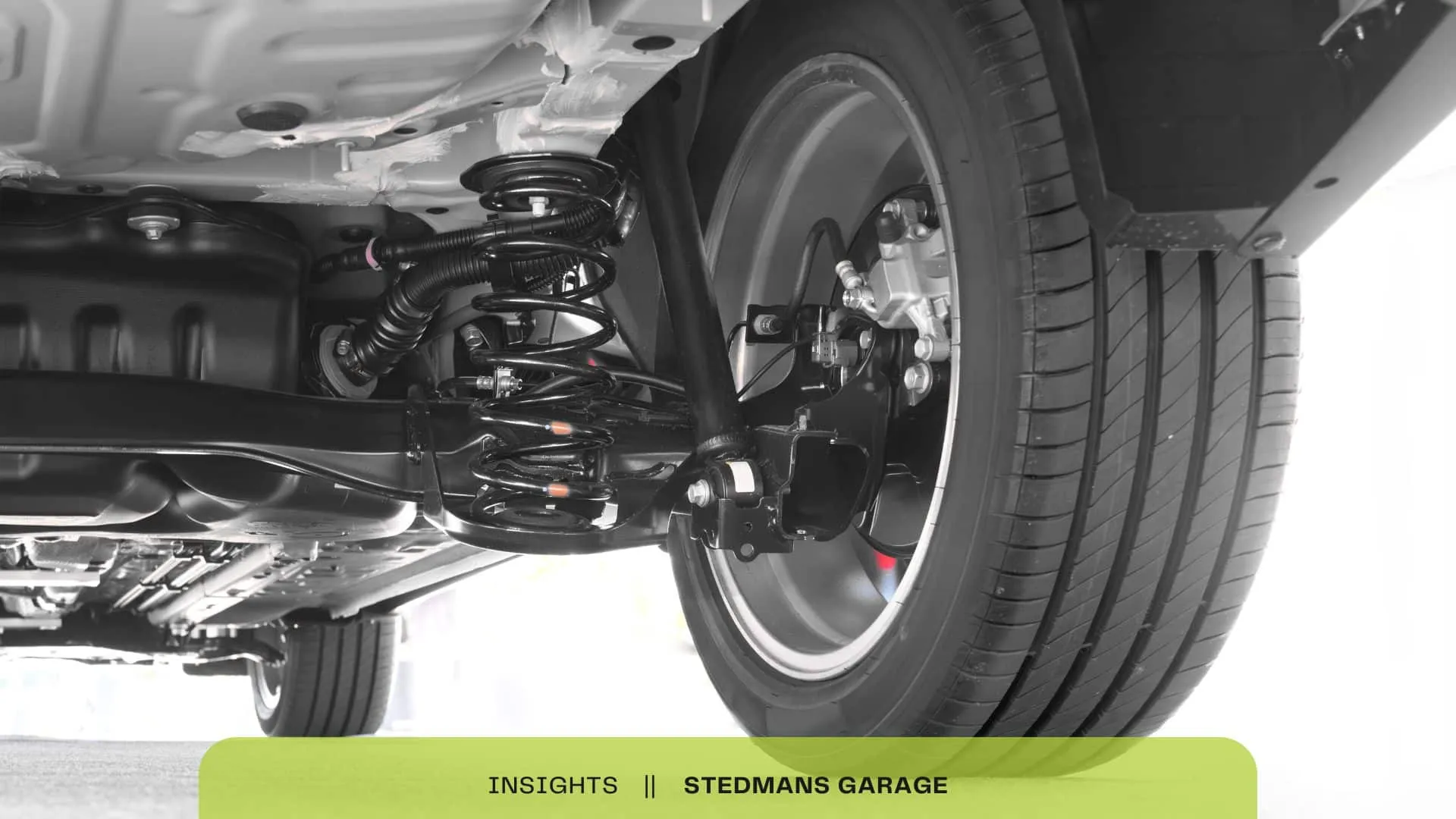
Every Range Rover has these parts, air suspension or not. On the Evoque and the coil sprung Velar they are the whole suspension; on an air sprung car they sit alongside it and wear out regardless of what is holding the car up. They are also where most MOT suspension defects come from, and they are the cheapest faults on the car to put right if they are caught early.
Broken Coil Springs
Springs almost never fail in the middle. They break at the tight end coil, where road grit collects, the protective coating gets chipped and corrosion works into the steel. Cold weather finishes them off, which is why so many break on the first hard frost of the winter.
What you notice: the car sits noticeably lower on one corner with no warning message, often with a rattle or a graunch over bumps as the broken end moves. A broken road spring is a major defect at MOT, and a broken end can cut into a tyre sidewall, so it is not something to leave. Springs are replaced in pairs across an axle so the car sits level.
Worn Dampers
Dampers, or shock absorbers, control what the spring does after it has been compressed. They wear gradually rather than failing outright, which is why owners rarely notice until the car is compared with a healthy one.
What you notice: the car floats over undulations and keeps moving after a bump instead of settling, the nose dives further than it used to under braking, and the tyres start to wear in patches rather than evenly. A damper that is visibly leaking oil down its body, or one that has weakened badly, is an MOT defect in its own right. Like springs, they are replaced in pairs.
Where adaptive dampers are fitted, Land Rover's Adaptive Dynamics system, there is an electronic failure mode on top of the mechanical one. A damper whose solenoid or wiring has failed can leave one corner permanently harsh or permanently soft and will usually log a fault code, so the car needs reading before anything is unbolted.
Lower Arm and Subframe Bushes
Bushes are the rubber and fluid filled mounts that locate the suspension arms to the body and subframe. They take every impact the tyres do not absorb, and on a car this heavy they take a lot. UK roads are unkind to them: potholes tear them, and road salt corrodes the metal sleeves inside.
What you notice: a clunk under braking, steering that feels vague and wanders on the motorway, and a car that no longer holds a line through a corner. Front lower arm bushes are the usual culprits, and on the Evoque they are the most common suspension fault we see. Badly deteriorated bushes fail an MOT, and worn ones knock the geometry out, which quietly ruins a set of tyres.
Anti-Roll Bar Links and D-Bushes
The anti-roll bar ties the two sides of an axle together so the car stays flat through a bend. It connects to the suspension through a short drop link at each end and is clamped to the body by rubber D-bushes. Both are small, cheap and among the first things to wear out.
What you notice: a light metallic rattle or knock over broken surfaces and speed bumps, worst at low speed, and a car that leans further than it should through a roundabout once the D-bushes have perished. Drop link failures are one of the most common MOT advisory items on any Range Rover, and they are quick to replace before they become a failure.
Top Mounts and Strut Bearings
The top of each front strut is held by a rubber mount with a bearing that lets the strut rotate as you steer. When the rubber perishes or the bearing dries out, the strut binds instead of turning smoothly.
What you notice: a creak, groan or knock from the top of the wheel arch when you turn the wheel at parking speed, and sometimes a steering wheel that does not want to self centre. It is often mistaken for a power steering fault, which is why the noise is worth reproducing for a technician rather than describing over the phone.
Wheel Bearings
Not strictly suspension, but it produces a noise owners almost always report as a suspension problem, so it belongs here. A wheel bearing carries the whole corner's load and eventually roughens up.
What you notice: a drone or rumble that rises with road speed, and crucially one that changes as you steer gently left and right, because weight transfers on and off the failing side. A bearing that is excessively rough or has developed play is an MOT failure, and a badly worn one can eventually let the hub move.
When Do Problems Start?
One thing to be clear about before the table: these are the mileages and ages at which we see these parts giving trouble, not a Land Rover service schedule. There is no published interval at which any of them is replaced as a matter of routine. Plenty of cars run well past these figures, and a car that lives on salted roads or spends its life towing will get there sooner.
| Component | Typical Mileage | Typical Age |
|---|---|---|
| Drop links | 30,000-50,000 miles | 3-5 years |
| Lower arm bushes | 40,000-60,000 miles | 4-6 years |
| Anti-roll bar D-bushes | 40,000-60,000 miles | 4-7 years |
| Height sensors | 60,000-100,000 miles | 5-10 years |
| Conventional shock absorbers | 50,000-100,000 miles | 5-8 years |
| Air compressor (Hitachi) | 60,000-100,000 miles | 5-8 years |
| Air springs | 80,000-120,000 miles | 6-10 years |
| Air compressor (AMK) | 80,000-130,000 miles | 7-12 years |
| Valve block seals | 80,000-120,000 miles | 7-12 years |
UK conditions such as road salt, standing moisture and repeated temperature cycling tend to bring these timelines forward. Vehicles used for towing or regularly loaded will wear rear air springs and compressors faster, and the same load goes through the rear bushes and dampers on a coil sprung car.
What Decides the Cost of Range Rover Suspension Work
We are not going to publish a price list, because the honest answer is that two Range Rovers with the same warning message routinely need very different work. What is worth knowing is which factors actually move the number, so you can read a quote and tell whether it is reasonable.
- Air or coil. A coil spring and a damper are ordinary mechanical parts. An air strut is a pressurised assembly with its own electronics behind it, and it sits at the expensive end of anything on this page.
- One corner or all four. Springs, dampers and air struts are replaced in pairs across an axle so the car sits and handles evenly. If the parts are all the same age, doing all four in one visit is usually cheaper than four separate visits, because most of the labour is shared.
- Whether the compressor has been cooked. A compressor that has been running against an unrepaired leak for months is often beyond saving. Catching the leak first is the difference between one repair and two.
- Reseal or replace. Some valve block faults are internal seals and can be resealed. Others are a failed solenoid, which is not. Which one you have is a diagnosis, not a guess.
- Access. Some jobs are an hour with the wheel off. Others need the subframe dropped or pressed bushes machined out, and the labour dwarfs the part.
- Genuine or quality aftermarket. There are well regarded aftermarket suspension manufacturers whose parts we are happy to fit, and there is cheap stock that fails again inside a year. This is where the difference between a good and a bad quote usually lives.
- Diagnosis before parts. The most expensive route through any of this is replacing components in sequence until the fault goes away. Reading the system properly first is the cheapest thing on the list.
For the wider picture on where the difference between a specialist and a franchised dealer actually comes from, see our guide to independent vs dealer servicing.
Preventive Maintenance Tips
- Inspect air springs at every service: look for cracks, abrasion, and deterioration in the rubber, particularly at the crimped ends and fold creases. Catching a failing spring before it bursts prevents compressor damage.
- Listen to the compressor: if it runs for more than 20-30 seconds when you start the car, or takes noticeably longer to level the vehicle, investigate immediately. An overworking compressor is compensating for a leak somewhere.
- Replace the air dryer with the compressor: a saturated dryer sends moisture through the entire system, corroding the valve block and air springs from the inside.
- Keep the system exercised: if the vehicle sits parked for weeks, the air springs can develop flat spots and crack. Periodically raise and lower the suspension through its full range.
- Wash the underside regularly: UK road salt corrodes height sensors, air lines, bushes, and mounting hardware. A regular underbody wash in winter makes a real difference.
- Don't ignore warning lights: a minor amber warning left unaddressed turns into a red "Do Not Exceed 35 mph" hard fault. A leaking spring kills the compressor. A failing compressor sends moisture through the system. The cascade effect turns a single small repair into a full system overhaul, which is where the serious money goes.
- Consider replacing all four air springs together: if one has failed, the others are the same age and condition. Replacing all four at once costs less than doing them individually over the following year, and protects your new compressor from being damaged by a second failing spring.
- For conventional suspension: check drop links and bushes at every service. They're cheap parts but worn ones accelerate tyre wear and can cause MOT failures.
Range Rover Suspension: Frequently Asked Questions
How do I know whether my Range Rover has air suspension or coil springs?
Look for a ride height control, either a rocker switch near the gear selector or a suspension menu on the touchscreen, and watch whether the car rises on its springs shortly after you start the engine. A car with neither is coil sprung. As a rule the full size Range Rover and the Sport run air suspension, the Evoque never does, and the Velar is coil sprung as standard with air as an option on higher output versions.
Can you drive a Range Rover with a broken coil spring?
It should not be driven any further than it has to be. A broken road spring is a major defect at MOT, the car will sit low and handle unpredictably on that corner, and a broken end can cut into the tyre sidewall. Springs are replaced in pairs across the axle so the car sits level afterwards.
What does a clunk from the front of a Range Rover over bumps usually mean?
If the car is sitting at its normal height and there is no suspension warning, a clunk over bumps is mechanical rather than an air fault. The usual causes are worn anti-roll bar drop links, perished lower arm bushes or a tired top mount. A knock specifically under braking points more towards the lower arm bushes, and a light metallic rattle at low speed more towards the drop links.
Does a suspension warning message always mean the air system?
On an air sprung car, essentially yes. The suspension warnings and the height controls belong to the air system, so a message there means the system has detected a fault and often locked itself out. Mechanical wear does not usually trigger a message at all, which is why a knocking noise with a clean dashboard is not something to wait for a warning about.
Do Range Rover Evoques have air suspension problems?
No, because the Evoque has no air suspension at any trim level in either generation. Its suspension faults are mechanical: lower arm bushes are the most common by a distance, followed by anti-roll bar drop links, dampers and top mounts. Where adaptive dampers are fitted there is also an electronic failure mode that logs a fault code.
Can Stedmans Garage diagnose a Range Rover suspension fault?
Yes. We work on Range Rovers daily at our workshop in Worthing and carry the diagnostic equipment needed to read the air suspension system properly rather than just pulling a code, as well as doing the mechanical inspection that finds worn springs, dampers, bushes and bearings. The aim is to identify the part that has actually failed, so you are not paying to replace the ones that have not.
Why Choose Stedmans for Range Rover Suspension Work?
Stedmans Garage has been looking after vehicles in Worthing since 1923. We work on Range Rovers daily and carry the diagnostic equipment needed to properly diagnose EAS faults, not just read codes but pinpoint the root cause so you're not paying to replace parts that don't need replacing.
We service all Range Rover and Land Rover models:
- Range Rover (L322, L405, L460)
- Range Rover Sport (L320, L494, L461)
- Range Rover Velar
- Range Rover Evoque
- Land Rover Defender
- Discovery 3, 4, and 5
- Discovery Sport
For more detail on Land Rover air suspension diagnostics, see our dedicated guide.
No jargon, no upselling. Just honest diagnosis and repair, and a clear explanation of what your car actually needs and what can safely wait.
Book a suspension inspection online or call us on 01903 691666.