
Does Your BMW Have a Timing Belt or a Timing Chain?
What the Timing Belt or Chain Does
Every BMW engine needs something to keep the camshafts turning in step with the crankshaft, so the valves open and close at exactly the right moment relative to the pistons. On some engines that job is done by a timing belt, also called a cambelt: a toothed rubber belt running on sprockets behind a cover at the front of the engine. On others it is done by a metal timing chain, which runs inside the engine and is lubricated by the engine oil. If either one breaks or jumps a tooth, the engine stops running properly, and on most engines the valves can strike the pistons.
Which BMW Engines Use a Timing Belt?
Far fewer than most owners expect. BMW's belt-driven engines are older designs: the M20 six-cylinder petrol engine, used in E30 3 Series and early E34 5 Series models, and the M40 four-cylinder petrol engine, used in E30 and early E36 3 Series models. The M40 was replaced by the chain-driven M43 in the mid-1990s, and the M50 that took over from the M20 also uses a chain.
BMW's modern petrol and diesel engines all use timing chains. So if your BMW was built from the mid-1990s onwards, it has a chain and there is no timing belt to replace. If you are not sure which engine your car has, the engine code is in the vehicle documents, and a garage can look it up from the registration. Our guide to how BMW timing chains and belts compare goes into the difference in more detail.
Many owners who search for a BMW timing belt are actually looking at the auxiliary drive belt: the ribbed belt you can see at the front of the engine, which drives the alternator, the air conditioning compressor and, on some models, the water pump or power steering pump. That belt does wear out on every BMW, and it is covered below.
Signs Your BMW's Timing Belt or Chain Needs Attention
An Older Belt-Driven BMW with No Record of a Belt Change
Belts age as well as wear, so a timing belt is due on age as well as mileage, whichever comes first. A belt-driven BMW is now over 30 years old, and many of these cars cover few miles a year, so it is usually the age limit that decides. If there is no invoice showing when the belt, tensioner and water pump were last changed, treat the belt as due.
Noises from the Front of the Engine
On a chain-driven BMW, a rattle from the front or back of the engine for a few seconds after a cold start is the classic sign of a stretched chain or a worn tensioner or guide, and it should be checked rather than ignored. On a belt-driven engine, a whine or growl from behind the timing cover usually points to a worn tensioner, idler pulley or water pump bearing. A squeal that changes when the air conditioning switches on is far more often the auxiliary drive belt. A ticking noise can come from many places, including the valve gear and low oil, so it needs diagnosing before anyone blames the belt or chain.
Visible Wear on the Belt
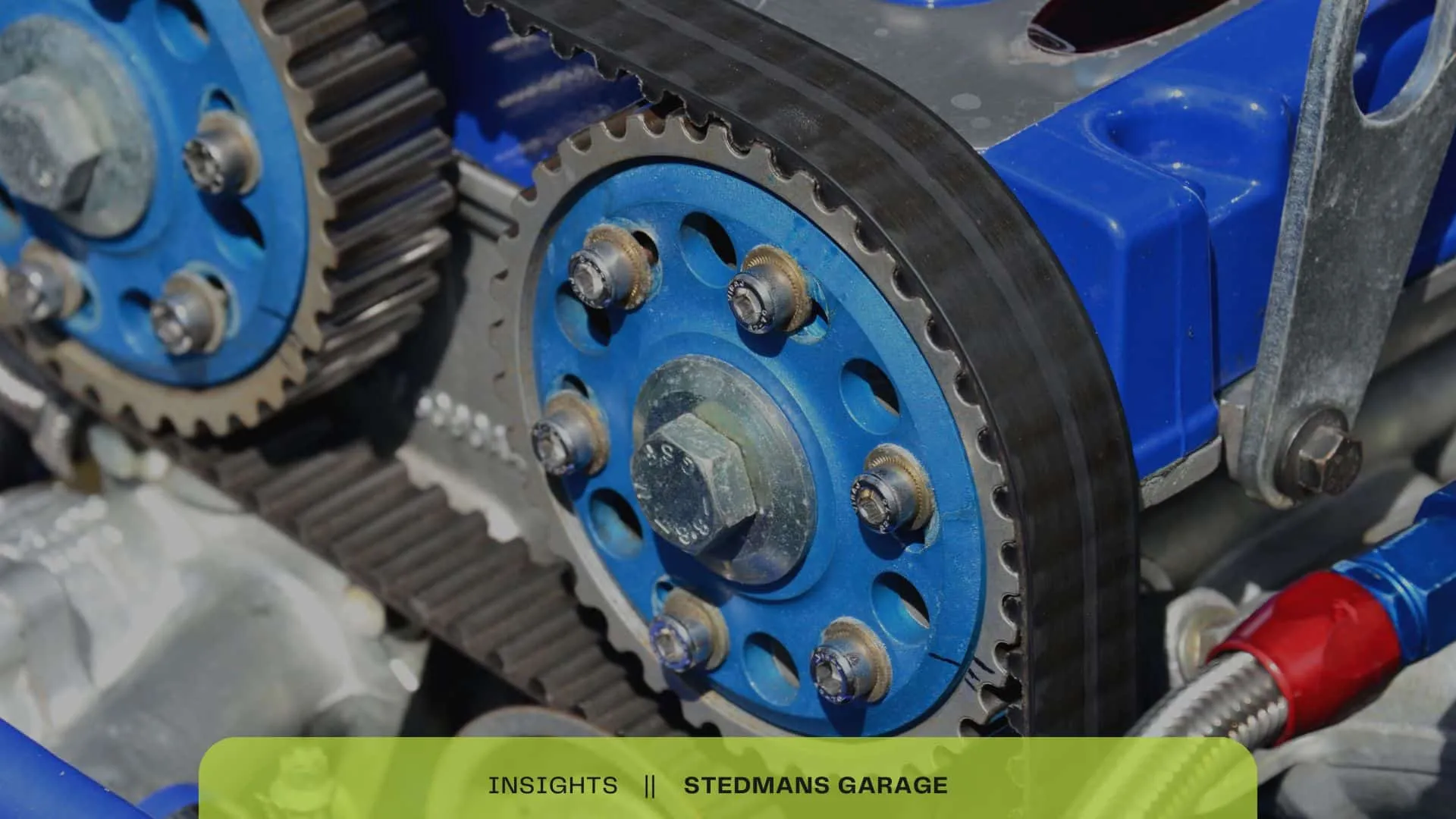
On a belt-driven engine the timing belt sits behind a cover, so checking it is a garage job. Cracks across the back of the belt, frayed edges, a shiny, glazed surface from heat and age, oil contamination and worn or missing teeth all mean it should be replaced. A belt that looks fine can still be past its age limit, so condition is a reason to replace early, never a reason to leave it longer.
Starting and Running Problems
A belt or chain that has jumped a tooth leaves the valve timing out, which can cause rough running, a lack of power and a warning light, often with camshaft and crankshaft correlation fault codes stored. If the belt or chain has broken, the starter will usually spin the engine over, often faster than normal, but it will not start. Do not keep cranking it: on an interference engine every turn risks more damage.
The Belt Every BMW Has: the Auxiliary Drive Belt
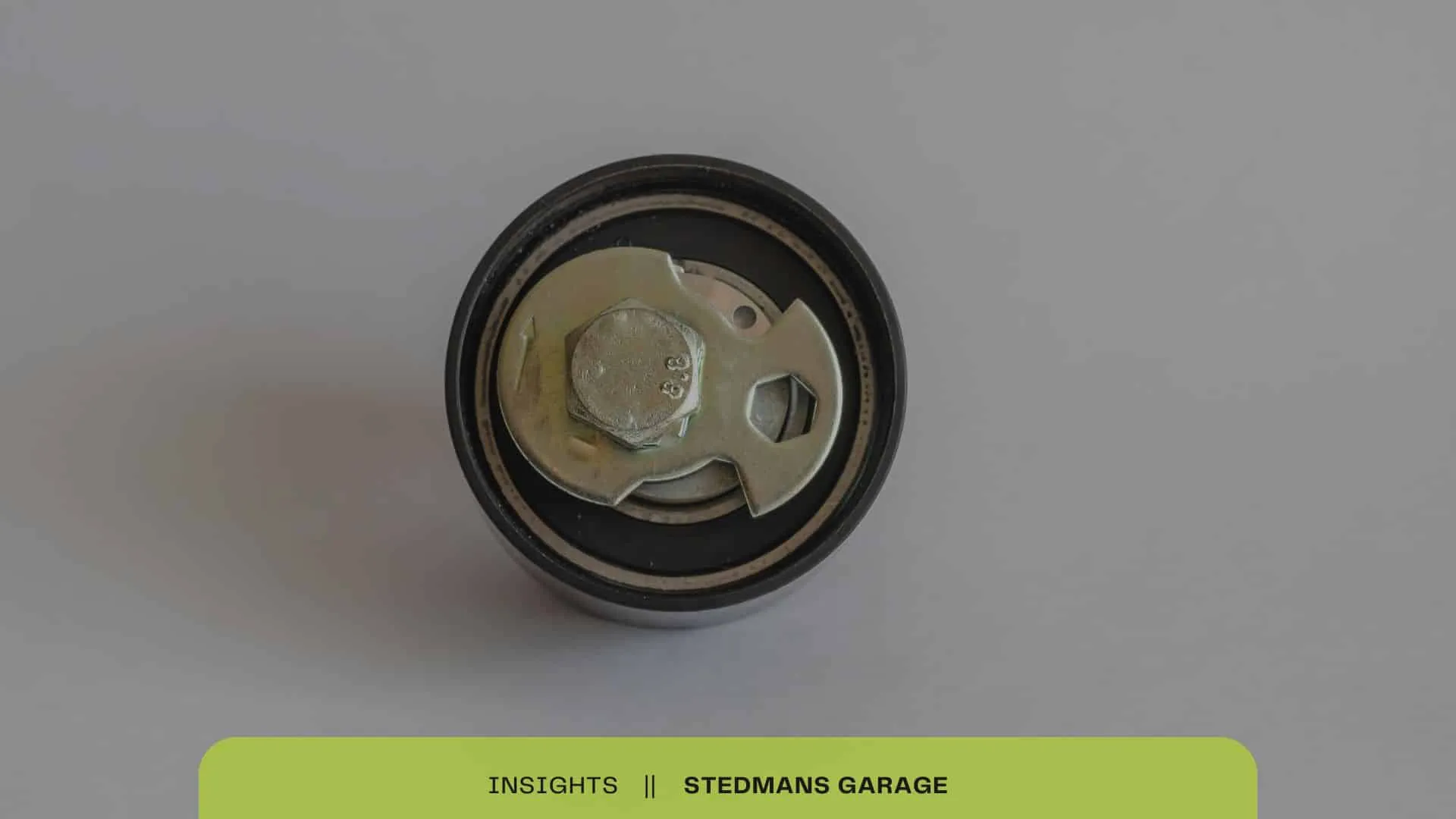
Whether your BMW has a timing belt or a chain, it will have at least one auxiliary drive belt. It is a flat, ribbed belt on the outside of the engine, and it runs the accessories rather than the valve timing. A failed auxiliary belt does not damage the engine the way a timing belt can, but the car can lose its charging and air conditioning, and on some models its power steering or cooling, so it still needs attention.
Signs it is wearing:
- Squealing: especially on a cold start, in wet weather or when the air conditioning switches on.
- Cracks and missing chunks: visible across the ribs on the inside of the belt.
- Fraying or a shredded edge: often caused by a misaligned or worn pulley.
- A noisy or wobbling tensioner or idler pulley: the belt only lasts as long as the parts that guide it.
When the belt is replaced, the tensioner and idler pulleys are checked at the same time and replaced where they are worn. A belt that has started to shred should be dealt with straight away, because loose pieces can be drawn into the pulleys and seals at the front of the engine.
What a Timing Belt Replacement Involves on an Older BMW
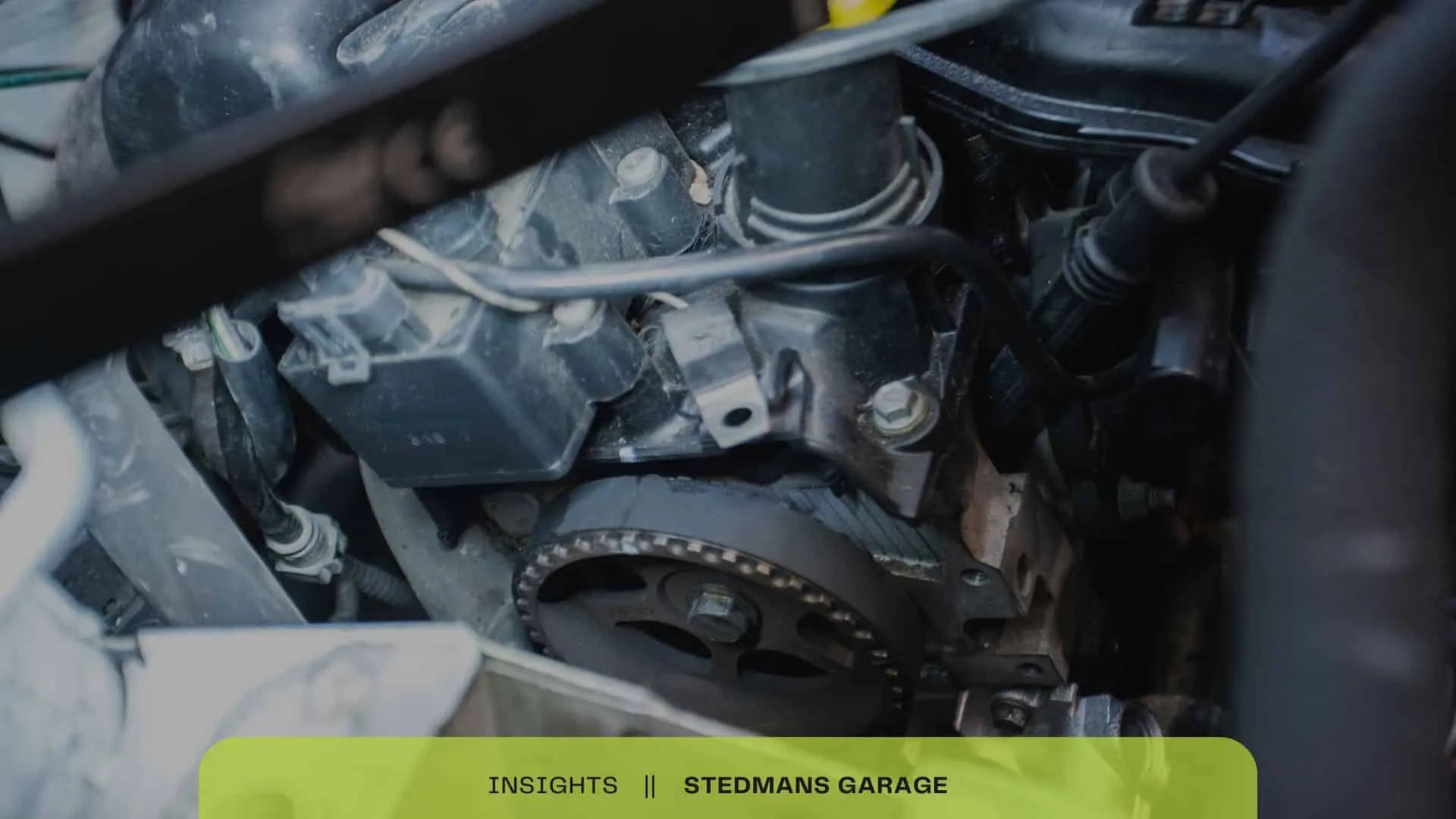
On a belt-driven BMW, replacing the timing belt means removing the auxiliary belt, the cooling fan and the timing cover, setting the engine to its timing marks, fitting the new belt and tensioner, and then turning the engine over by hand to confirm the marks still line up before anything is reassembled.
It is precise work. One tooth out is enough to cost power, and more than that can bend valves. The tensioner has to be set correctly for the engine, and every bolt tightened to the right figure. The exact procedure varies from engine to engine, which is why it is a job for a BMW specialist.
Timing chain work on a modern BMW is a different job again. On some engines the chain sits at the back of the engine, against the gearbox, so reaching it is a much bigger task. Our guide to BMW timing chain problems covers the symptoms and the repair.
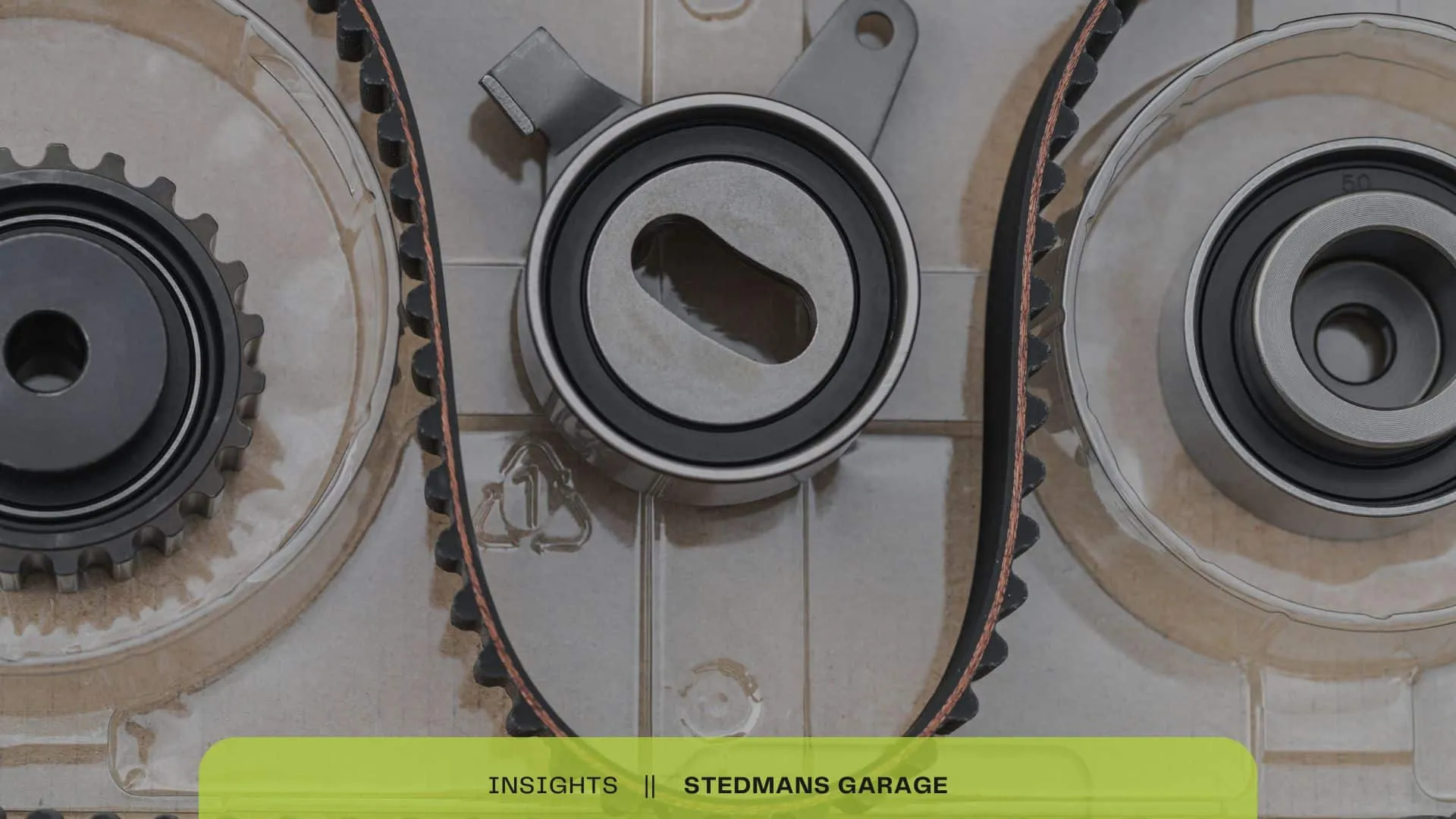
Parts Worth Replacing with the Timing Belt
The Water Pump
On many belt-driven engines the water pump is driven by the timing belt or sits behind it. Replacing it with the belt avoids taking the front of the engine apart again if the old pump starts to leak or its bearing fails.
Tensioner and Idler Pulleys
These guide the belt and keep it at the right tension. They wear alongside it, and a seized pulley or a weak tensioner can destroy a new belt, so they are normally replaced as a set.
Seals and Gaskets
With the cover off, it is the right time to check for leaks:
- Crankshaft and camshaft seals: an oil leak from either one contaminates the belt and shortens its life.
- Valve cover gasket: not part of the timing belt system, but oil leaking from it can run down onto the belt.
The Auxiliary Drive Belt
The auxiliary belt has to come off to reach the timing belt, so it makes sense to fit a new one, along with any worn pulleys, while the engine is apart.
Timing Chains on Modern BMWs
A timing chain is designed to last much longer than a belt, and there is no routine replacement interval for it. That does not mean it lasts forever. Chains stretch, their plastic guides and oil-fed tensioners wear, and some BMW engines are known for it. The chain relies on clean oil at the right level, so regular oil changes to the correct specification are the best protection it gets.
If a chain-driven BMW rattles on start-up, has camshaft timing fault codes or runs roughly, have it diagnosed early. Our guide to when a BMW timing chain needs replacing covers the replacement decision.
Keep the Records
Whichever your BMW has, keep the invoices for timing belt, tensioner, water pump and chain work. They prove what has been done, they stop the same work being paid for twice, and on an older belt-driven car they are the only way to know when the belt is next due. For the general warning signs of a worn belt on any make, see our guide to timing belt replacement signs.
Why This Is a Job for a Garage
What Goes Wrong
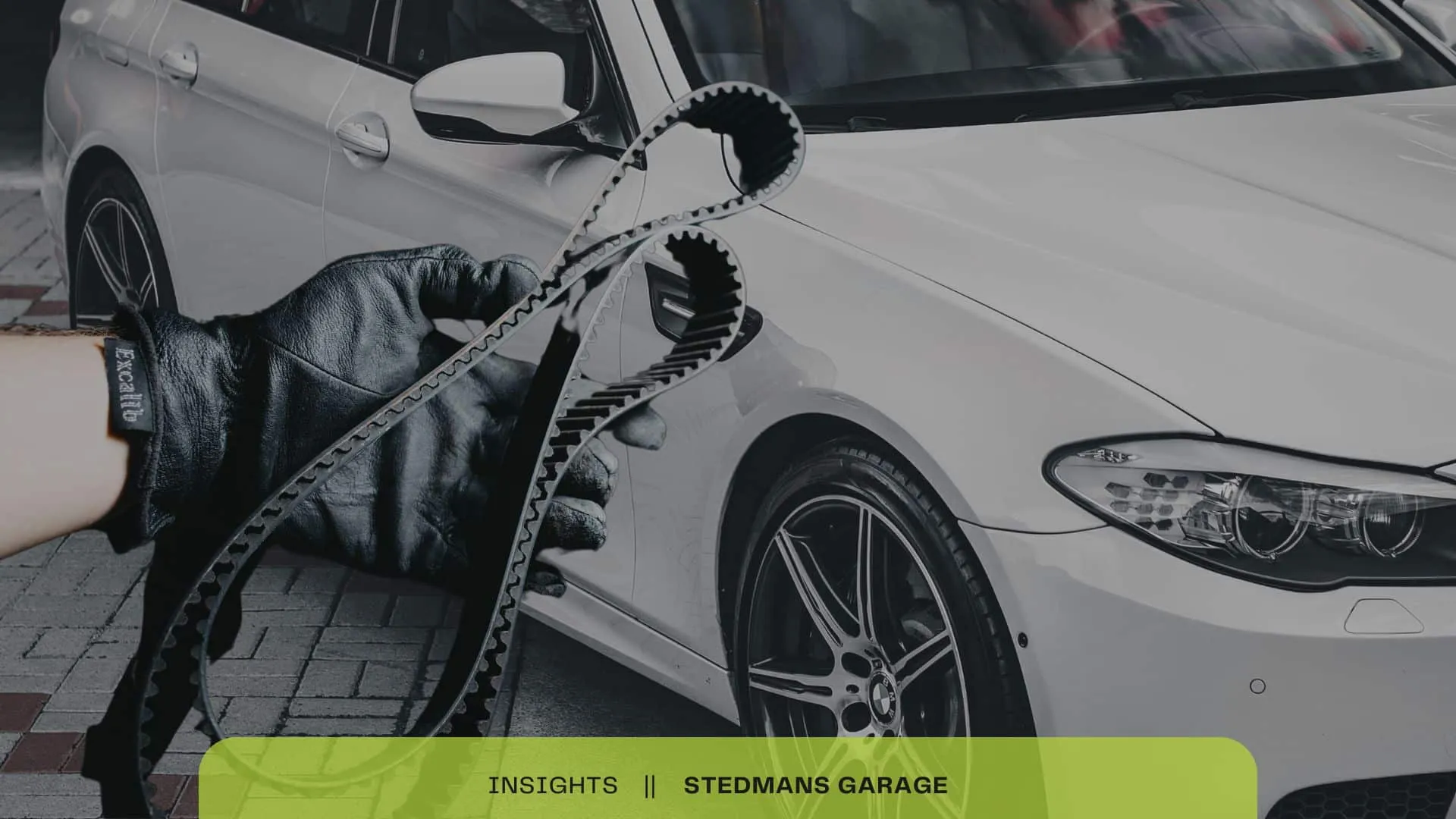
Timing belt and chain work leaves no room for error. The engine has to be set exactly to its timing marks, and a belt or chain fitted one tooth out, or a tensioner set wrongly, can lead to bent valves and damaged pistons on an interference engine. Older BMWs also need their parts sourced carefully, because the correct belt, tensioner and pump vary by engine.
Stedmans Garage in Worthing
Stedmans Garage is a DVSA-approved, long-standing Worthing garage that services and repairs BMWs. We will tell you whether your car has a belt or a chain, check the belt, chain, tensioners and water pump, and explain what needs doing and why before any work starts. Contact us or book online.
Frequently Asked Questions
Does my BMW have a timing belt or a timing chain?
Almost certainly a chain. BMW's belt-driven engines are older designs, mainly the M20 six-cylinder and M40 four-cylinder petrol engines found on 1980s and early 1990s models such as the E30 3 Series. BMW's modern engines use chains. A garage can confirm your engine from the registration.
How often does a BMW timing belt need replacing?
It depends on the engine, and the limit is set by both mileage and age, whichever comes first. Belt-driven BMWs are now old enough that age usually decides it, so if there is no record of the last change, treat the belt as due.
Does a BMW timing chain need replacing?
There is no routine interval, but a chain, its guides and its tensioner can wear. A rattle on a cold start, timing fault codes or rough running are reasons to have it checked.
What is the belt I can see at the front of my BMW's engine?
That is the auxiliary drive belt, which runs the alternator, air conditioning and other accessories. A timing belt, on the engines that have one, sits behind a cover. The auxiliary belt is a wearing part on every BMW and should be replaced when it is cracked, frayed or noisy.
What happens if a timing belt or chain fails?
The engine stops and will not restart. On an interference engine the valves can hit the pistons, which can mean a cylinder head rebuild or a replacement engine. Replacing a belt on time, or acting on chain rattle early, costs far less than the repair after a failure.
Should the water pump be replaced with the timing belt?
Where the water pump is driven by the timing belt or sits behind it, yes. It saves taking the engine apart a second time if the old pump fails.