
P1339 VAG Fault Code: Crank and Engine Speed Sensors Cross-Connected (Often After Recent Work)
If your VW, Audi, SEAT or Skoda is throwing a P1339 fault code, here’s the first question to ask: has the car had recent work done that involved removing or replacing sensors at the front of the engine? Timing belt or chain replacement, oil pump or sump work, camshaft or crankshaft sensor replacement, or any engine removal and refit can all be the trigger. P1339 on the VAG platform is defined as “Crankshaft Position Sensor / Engine Speed Sensor: Cross-Connected” – in plain English, the two sensors’ connectors have been plugged into each other’s harnesses during a previous repair, and the ECU has detected it.
This guide explains what P1339 actually is on a VAG vehicle, why it usually appears immediately after a workshop visit, the symptoms drivers notice, and how it gets fixed. The fix itself takes minutes once the issue is identified – but the diagnosis is unusual because there’s nothing wrong with the car’s parts. If you’d prefer a professional VAG-level diagnostic check at our Worthing workshop, we can confirm and correct it quickly.
What P1339 actually means on a VAG vehicle
P1339 is a VAG manufacturer-specific Diagnostic Trouble Code (its VAG-internal number is 17747). The “P1” prefix tells you it’s manufacturer-defined rather than a generic SAE J2012 code, which is why P1339 means something completely different on other brands (BMW, for instance, uses P1339 as a camshaft position sensor B fault).
On Volkswagen, Audi, SEAT and Skoda vehicles, P1339 means the connectors for the crankshaft position sensor (G28) and the engine speed sensor have been physically swapped – plugged into each other’s harnesses by mistake. On most VAG engines these two sensors live close together at the front or rear of the block, the connectors are physically very similar (often differentiated only by colour – typically one black, one grey), and they fit each other’s harnesses despite being intended for different roles. During a busy repair that disturbs both sensors it’s easy for them to go back in the wrong sockets.
The ECU then receives crank timing data from a sensor it thinks is the speed sensor and vice versa. Because the timing data is wildly out, ignition and injection events can’t be properly synchronised with the actual piston positions – the engine often won’t start at all, and if it does fire it runs very roughly.
P1339 is a workmanship code, not a wear-related fault
This is the key insight that makes P1339 different from almost every other fault code. The car’s parts are fine. The sensors are fine. The wiring is fine. The fix isn’t to replace anything – it’s to unplug both sensors, identify which connector belongs to which, and plug them back into their correct positions. Once that’s done, the code clears and stays clear.
Common symptoms of P1339
Engine management light immediately after a repair
The classic giveaway. The car was running fine, went in for work, and came back with the MIL on. If P1339 is the code logged, the cross-connection happened during whatever was just done.
No-start or extended cranking
The most common symptom with P1339 active is that the engine simply won’t fire, or cranks for a long time without starting. The ECU can’t synchronise spark and fuel to the actual piston positions, so the engine has nothing usable to ignite.
Very rough running if the engine does fire
On some VAG ECUs the engine may stagger into running on incorrect timing, in which case it’ll be extremely rough, lacking power, and almost certainly drop into limp mode immediately. This is a “barely running” condition, not a “slightly off” condition.
Stalling
If it does fire, expect repeated stalling – especially when warm or under any load.
What causes P1339 on VAG vehicles
The sole real-world cause is human error during a previous repair. The most common scenarios:
In every case the underlying mistake is the same: the connectors fit each other, the colour-coding is subtle, and in a busy workshop with limited daylight under a car on a ramp, it’s easy to plug them in wrong.
- Timing belt or chain replacement – both sensors normally need to be unplugged for clearance during the job
- Oil pump or sump work – sensor connectors are often disturbed
- Replacement of either the crankshaft position sensor (G28) or the engine speed sensor – the unaffected sensor’s connector gets disturbed in the process
- Engine removal and refit – all sensor connectors get unplugged and re-routed
- Auxiliary belt or front-end work on engines where the sensors live near the front cover
Diagnostic process for P1339
Step 1 – VAG-level scan
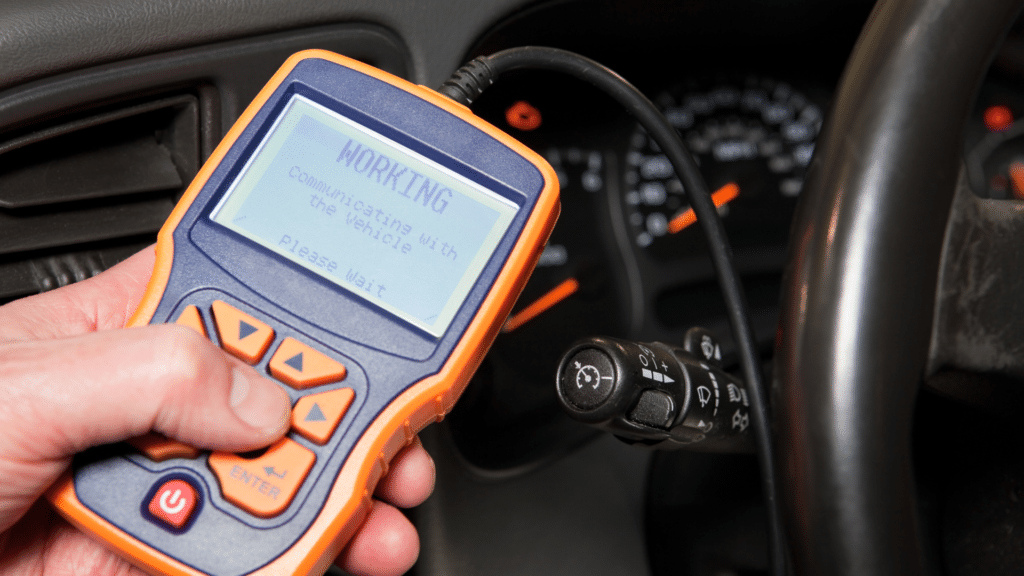
Connect VCDS, ODIS or an equivalent VAG-specific scan tool and confirm the exact P1339 code text. On VAG-specific software the description will reference cross-connected crank and engine speed sensors. Generic OBD-II readers may show the Ford or BMW definition of P1339 instead, which is wrong for a VAG.
Step 2 – Confirm recent work history
Ask the owner what work has been done recently. If P1339 appeared after a timing job, sump work or sensor replacement, the diagnosis is essentially confirmed.
Step 3 – Inspect both sensor connectors
Locate the crankshaft position sensor (G28) and the engine speed sensor on the engine. Trace each connector back to the loom and verify which harness goes to which sensor against the wiring diagram. If the wrong harness is on the wrong sensor, the issue is confirmed.
Step 4 – Rule out a damaged connector
Less commonly, P1339 can be triggered by a damaged or pushed-back pin causing a signal cross-over inside one of the connectors. A visual inspection of the pins confirms whether all the terminals are seated correctly.
The fix – it’s mechanical, not parts-based
Once the cross-connection has been confirmed:
The whole correction normally takes ten to fifteen minutes once the issue has been identified. No parts are needed.
- Unplug both sensor connectors
- Use the VAG wiring diagram for the specific engine to identify which connector belongs to which sensor (the colour coding and pin layout should align with the diagram)
- Plug each connector into its correct sensor
- Clear the fault code with the scan tool
- Start the engine – it should fire normally on the first attempt
- Drive a short distance to allow the OBD readiness monitors to complete
- Re-scan to confirm the code has not returned
Is it safe to drive with a P1339 code?
In most cases the car won’t be drivable at all – it will refuse to start or won’t stay running. If the engine is cranking but not firing, stop turning the key. Repeated extended cranking can flood the cylinders and discharge the battery. Get the car looked at before further attempts. If you’re local to West Sussex, our Worthing diagnostics team can confirm and correct the connector cross-wiring in a single visit.
Will P1339 fail the MOT?
Yes – and in practice, if P1339 is live the car probably won’t run normally enough to even reach the MOT bay. A permanently illuminated engine management light is an automatic MOT fail under current DVSA rules regardless. The good news is the fix is fast: correct the connectors, clear the code, complete a short drive so the OBD readiness monitors set, then present the car for MOT.
Should I take the car back to whoever did the original work?
That’s the natural first thought, and reasonable if the repair was recent. The cross-connection happened during their work, so the proper fix is for them to put it right at no charge. If you’re not local to the original workshop or you’d prefer an independent diagnosis, any VAG specialist with VCDS or equivalent can identify and correct it quickly. Our Volkswagen specialist team and Audi specialist team handle these in routine practice.
VAG models most affected by P1339
P1339 can appear on any VAG vehicle where the crankshaft position sensor and engine speed sensor live close enough together to be cross-connected during a repair – which covers most petrol and diesel models. It’s not a model-specific code; it’s a workshop-practice code. The 1.8T, 2.0 TFSI EA888, 1.4 and 1.6 TSI, 1.9 and 2.0 TDI, and older 1.6 and 2.0 FSI engines can all produce P1339 after the right kind of repair work.
How workshops prevent P1339
Good practice is to label sensor connectors with masking tape and a marker before disconnecting anything, so they go back into the right sockets without relying on memory or colour-coding alone. After any repair that disturbed both sensors, a quick scan-tool check before handing the car back catches a cross-connection before the customer notices a no-start. At Stedmans we treat both as standard practice for any job that involves these sensors.
Conclusion
P1339 on a VAG vehicle is the crankshaft position sensor and engine speed sensor connectors being plugged into each other’s harnesses – a workmanship code caused by human error during a previous repair, not a wear-related parts fault. The fix is mechanical: unplug both, identify the correct routing from the wiring diagram, plug them in correctly, clear the code. It normally takes ten to fifteen minutes once identified and requires no replacement parts.
If you’re local to West Sussex and your car has thrown P1339 after recent workshop work, you can book a VAG diagnostic check with our Worthing team and we’ll have it sorted in a single visit. For a wider explanation of how VAG fault codes are structured, see our complete VAG error-code reference.
Frequently Asked Questions about P1339
P1339 is a VAG manufacturer-specific code (VAG number 17747). On Volkswagen, Audi, SEAT and Skoda vehicles it is defined as ‘Crankshaft Position Sensor / Engine Speed Sensor: Cross Connected’. In plain English, the ECU has detected that the connectors for the crankshaft position sensor (G28) and the engine speed sensor have been plugged into each other’s harnesses. The two sensors live close together, the connectors are physically similar, and they’re easy to swap during a service that disturbs both.
Related fault codes
Other codes affecting the same system. A stored code often arrives alongside its neighbours.
Seeing P1339 on your VW or Audi?
A stored code tells you where to look, not what has failed. Our technicians read the live data, confirm the real cause and quote before any work begins - so you are not paying for guesswork.
Get the code read properly
Main-dealer-level diagnostics in Worthing, from the longest running garage in town. Call the workshop or book online in under a minute.